Mossarium reference · Animals reviewed 16 October 2026
Terrarium animals
120 entries across 36 groups for researching vivarium inhabitants, bioactive cleanup crews and separate cultures. Species, unresolved trade cultures and broader groups are labelled individually.
Read the individually cited facts first. Each retains its life stage, units, source location and evidence scope. General profiles are planning synthesis. Missing care topics and known source disagreements are shown on every entry; a species name alone does not make a complete care sheet.
Compare entries for planning
Use “Add to comparison” on up to four entries. This compares documented requirements and gaps; overlapping conditions do not establish safe cohabitation.
No entries selected.
Browse animals
120 entries
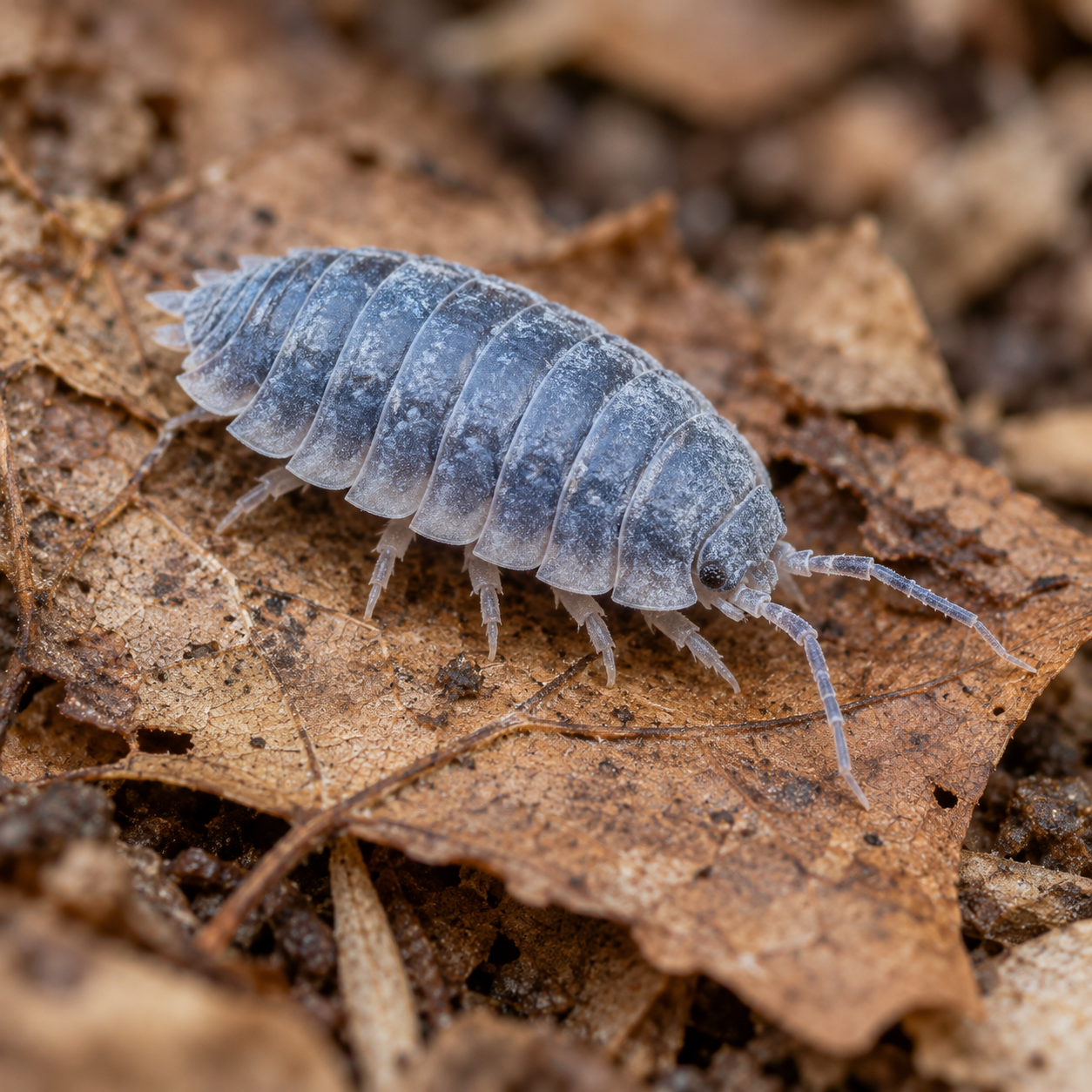
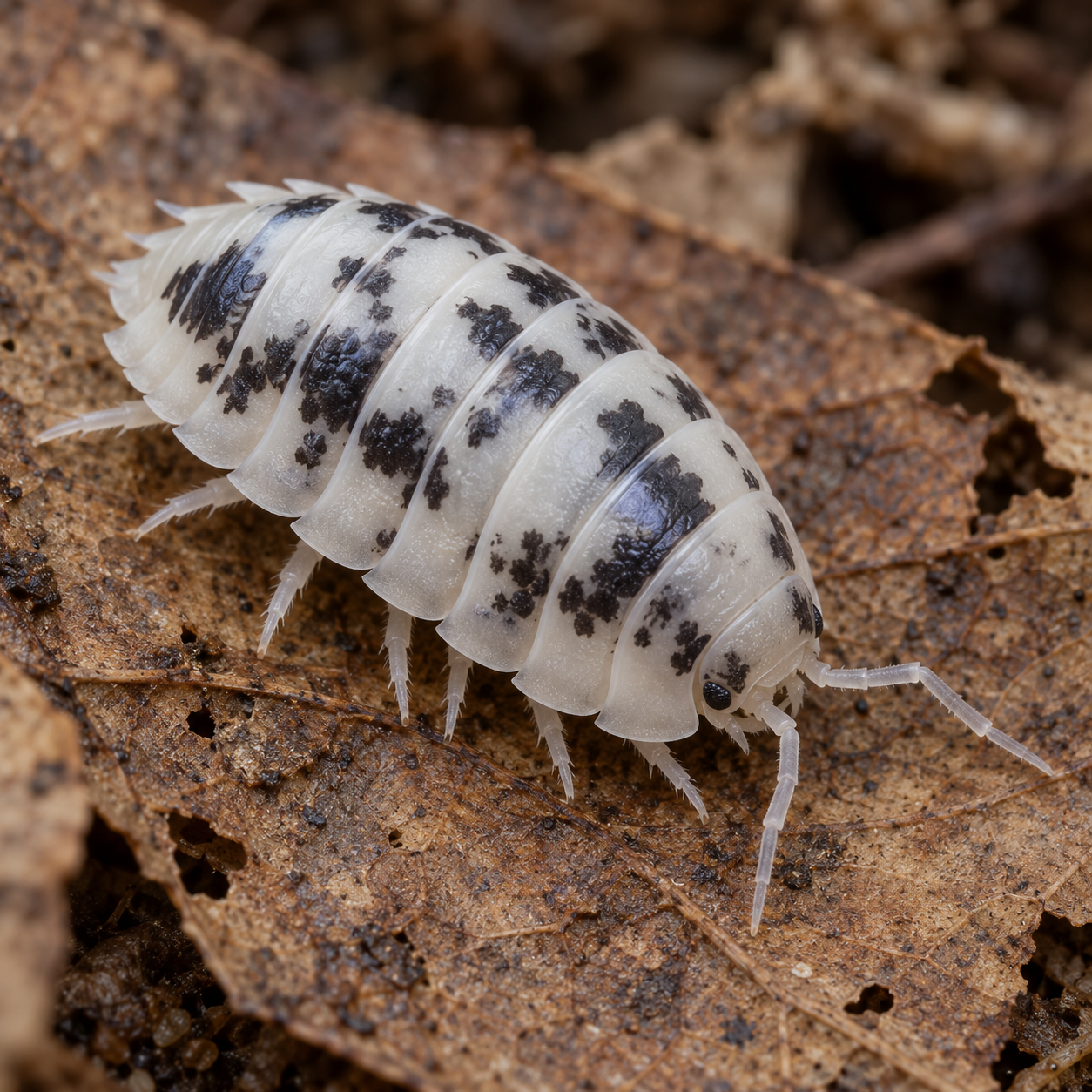
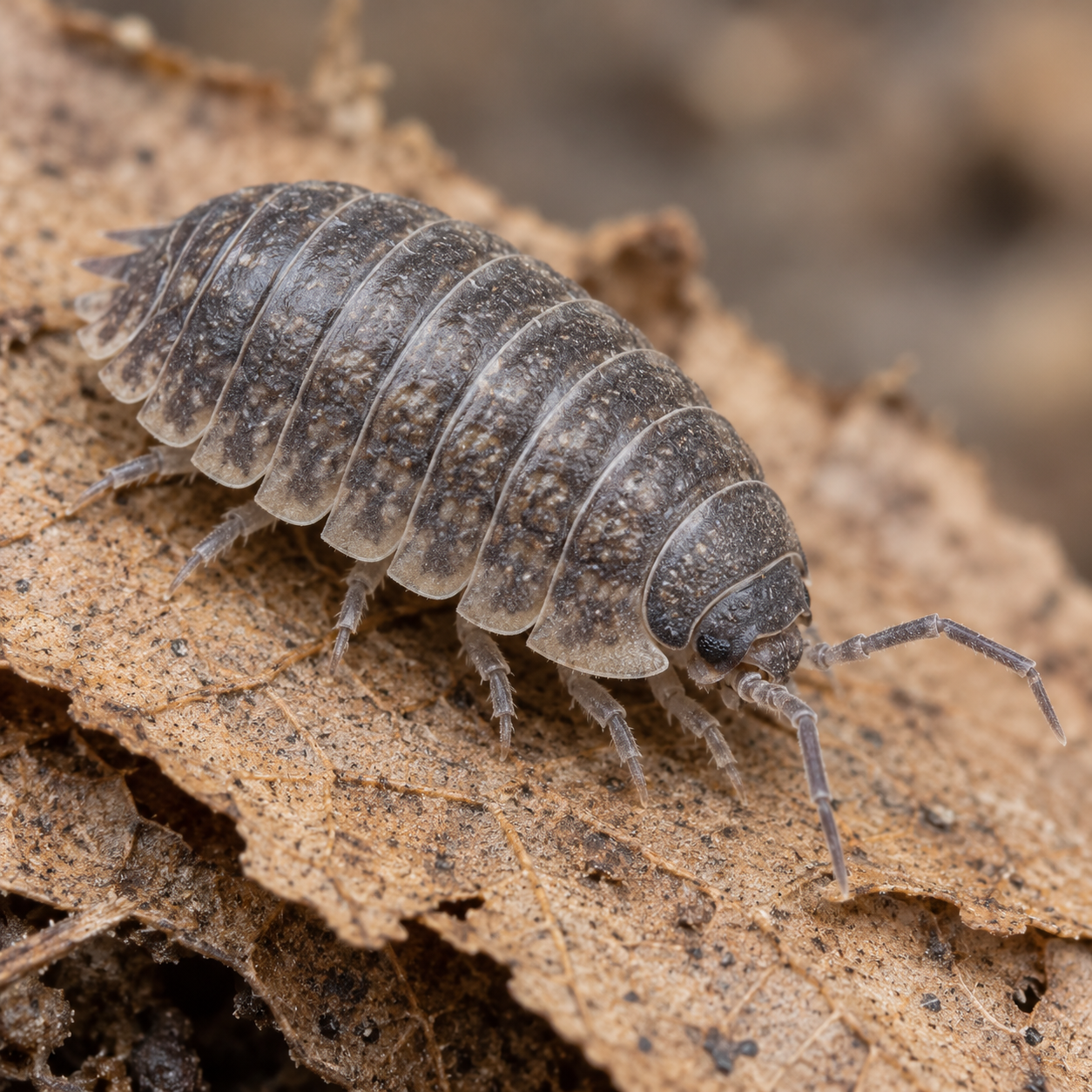
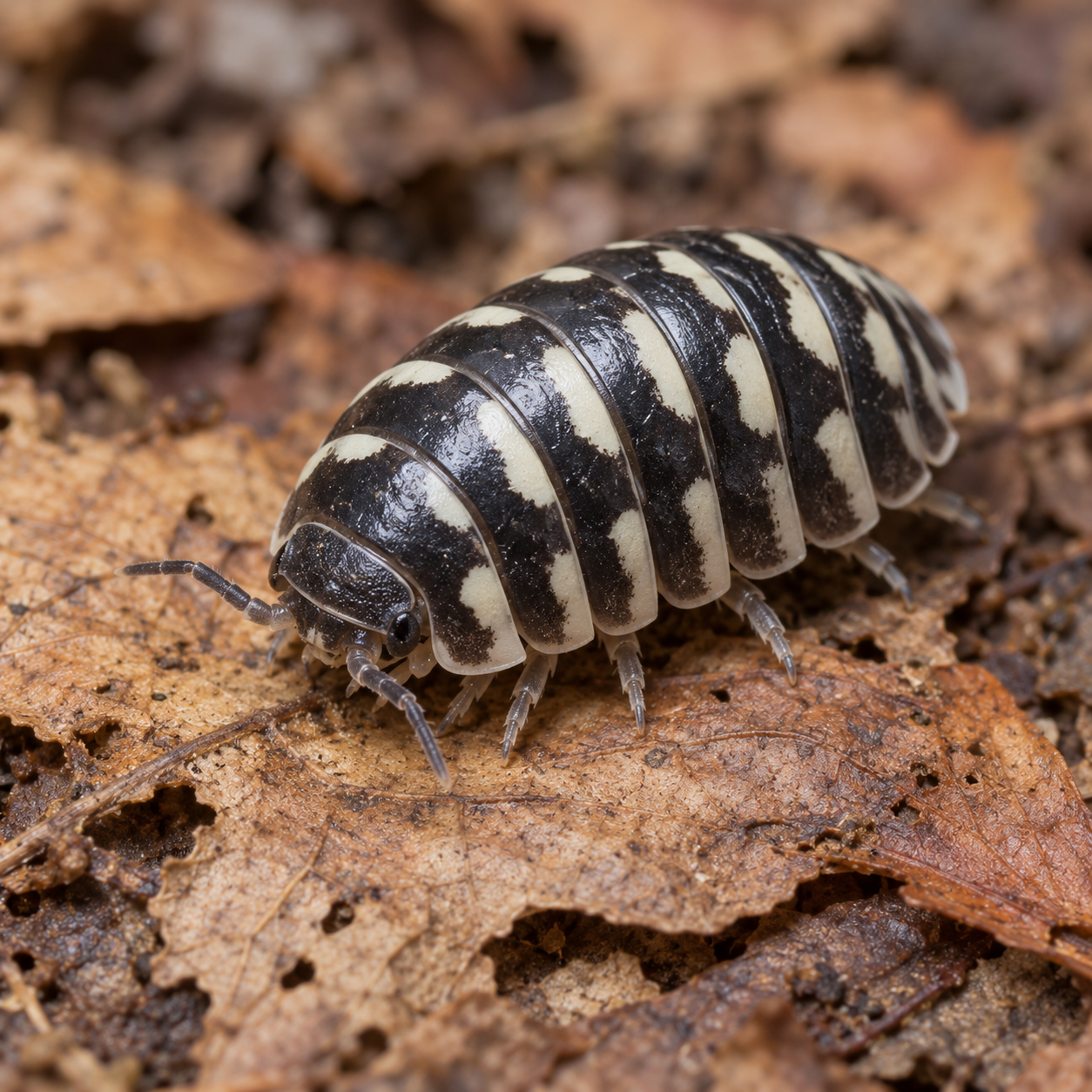
A001 Dwarf white isopod
Trichorhina tomentosa
Small hidden cleanup colony candidate; reserve a separate culture to replace losses to predators.
Group
Isopods
Role
Cleanup crew / display colony
Habitat
Humid terrestrial
Humid moss display
Conditional
Record type
species
Evidence scope
Species / culture facts
Partial care evidence Care topics still to verify: enclosure; temperature; moisture; substrate; diet; water; light_uvb; grouping.
Shared profile synthesis; this section does not establish species care values.
Enclosure
Ventilated terrestrial colony with several hides and access to both a moist refuge and a drier area.
Moisture and ventilation
Maintain a local moist refuge and a substantial drier area; a permanently soaked isopod enclosure is inappropriate. See the cited culture-specific gradient.
Substrate and leaf litter
Organic substrate, abundant pesticide-free dead leaves and decayed wood; replenish as consumed.
Water
Hydration through the moist refuge; avoid trapping animals in deep water.
Climate and lighting
Use the culture’s verified temperature needs; avoid sun-heated jars.
Plant and moss impact · inferred
May graze tender plants or moss and disturb eggs or vulnerable molts; effects depend on species, feeding and colony density.
Grouping and cohabitation
Keep one identified isopod culture per colony as the default. Vertebrate and molting-invertebrate compatibility needs separate assessment.
Breeding, molts and escape
Monitor population, food supply and tiny juveniles at vents; keep a separate backup culture.
Identity limits
Name follows the cited keeper/reference usage; the actual purchased stock has not been independently identified.
Numerical care limits
Source-specific numerical facts, when present, retain life stage, location and units; blank topics remain unreviewed.
Qualitative selection synthesis remains separate from the individually cited source facts.
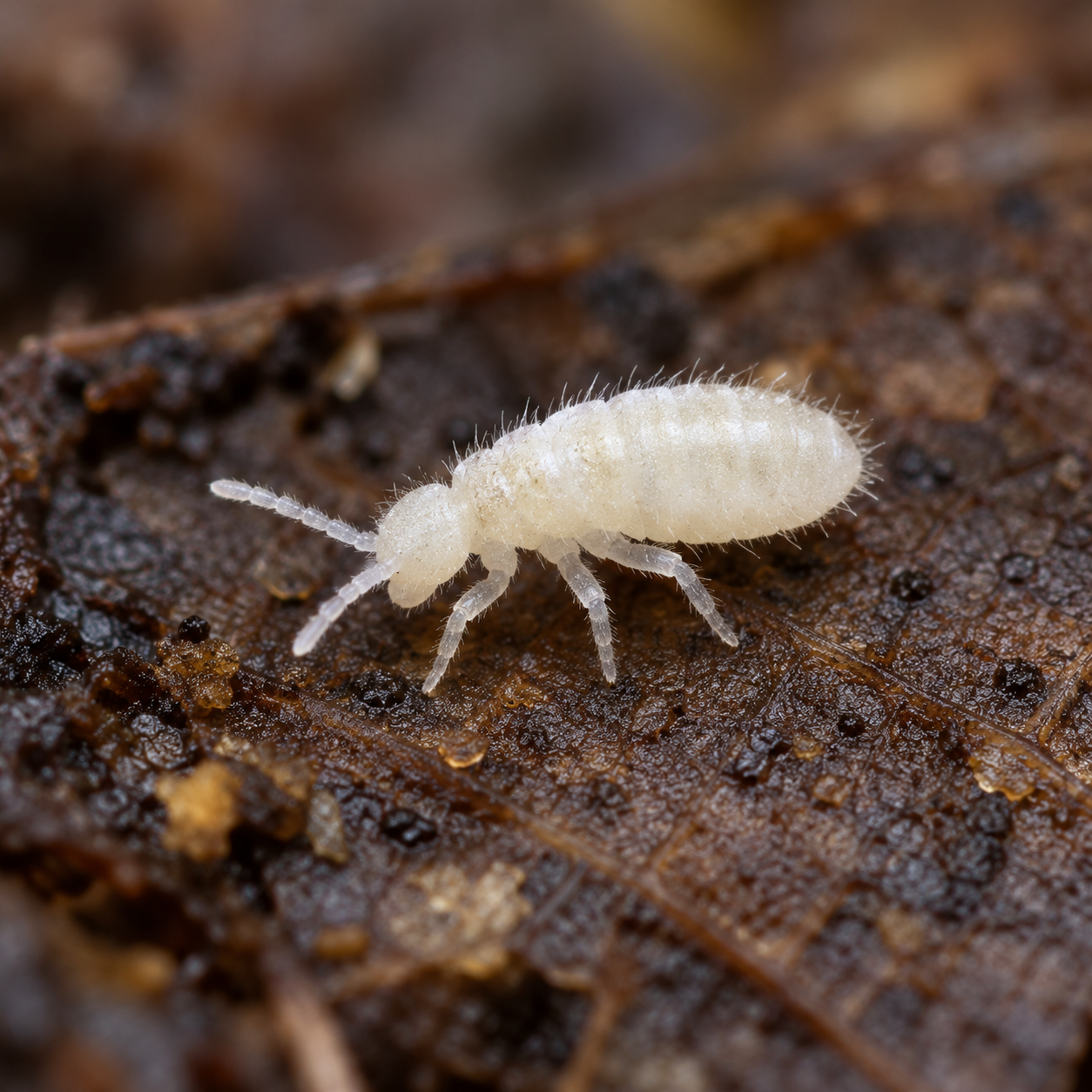
AI illustration · Intended subject: Folsomia candida. Not verified for species identification.
Potential soil-community member; establish a separate culture and check its performance in the actual enclosure.
Group
Springtails
Role
Cleanup crew
Habitat
Humid terrestrial
Humid moss display
Conditional
Record type
species
Evidence scope
Species / culture facts
Partial care evidence Care topics still to verify: enclosure; moisture; diet; water; light_uvb; grouping.
Reviewed source facts (2)
Listed culture media: Soil, clay, plaster or charcoal cultureCaptive care reported by the cited source · colony · scope: named cultureMethods are culture options, not vertebrate enclosure instructions.AS03 · Folsomia candida section → Substrates
Keeper culture temperature: 65–80 °FProduction guidance for the supplier’s F. candida culture · colony · scope: named cultureAS04 · Tips for culturing springtails
General planning guidance and identity notes
Shared profile synthesis; this section does not establish species care values.
Enclosure
Fine-vented culture or suitable soil/leaf-litter layer; a culture box is distinct from a vertebrate habitat.
Moisture and ventilation
A reliable damp refuge and oxygenated substrate. Do not flood the terrestrial layer.
Substrate and leaf litter
Culture method depends on species; soil, clay or charcoal methods are not interchangeable for every culture.
Water
Damp substrate; prevent accidental drying of the culture.
Climate and lighting
Select a culture that matches the enclosure climate, rather than assuming all springtails are tropical.
Plant and moss impact · inferred
Usually a minor physical impact on established planting; abundance follows food, moisture and predators.
Grouping and cohabitation
Can be evaluated as part of a compatible soil community; predation means a reserve culture is useful.
Breeding, molts and escape
Tiny animals can leave through gaps. Keep cultures separate from pesticide treatments.
Identity limits
Name follows the cited keeper/reference usage; the actual purchased stock has not been independently identified.
Numerical care limits
Source-specific numerical facts, when present, retain life stage, location and units; blank topics remain unreviewed.
Qualitative selection synthesis remains separate from the individually cited source facts.
Also find as: Coecobrya tenebricosa; tropical white springtail (ambiguous former catalog label)
Potential soil-community member; establish a separate culture and check its performance in the actual enclosure.
Group
Springtails
Role
Cleanup crew
Habitat
Humid terrestrial
Humid moss display
Conditional
Record type
species
Evidence scope
Species / culture facts
Partial care evidence Care topics still to verify: enclosure; temperature; moisture; diet; water; light_uvb; grouping.
Reviewed source facts (1)
Listed culture media: Soil or clay cultureCaptive care reported by the cited source · colony · scope: named cultureMethods are culture options, not vertebrate enclosure instructions.AS03 · Coecobrya tenebricosa section → Substrates
General planning guidance and identity notes
Shared profile synthesis; this section does not establish species care values.
Enclosure
Fine-vented culture or suitable soil/leaf-litter layer; a culture box is distinct from a vertebrate habitat.
Moisture and ventilation
A reliable damp refuge and oxygenated substrate. Do not flood the terrestrial layer.
Substrate and leaf litter
Culture method depends on species; soil, clay or charcoal methods are not interchangeable for every culture.
Water
Damp substrate; prevent accidental drying of the culture.
Climate and lighting
Select a culture that matches the enclosure climate, rather than assuming all springtails are tropical.
Plant and moss impact · inferred
Usually a minor physical impact on established planting; abundance follows food, moisture and predators.
Grouping and cohabitation
Can be evaluated as part of a compatible soil community; predation means a reserve culture is useful.
Breeding, molts and escape
Tiny animals can leave through gaps. Keep cultures separate from pesticide treatments.
Identity limits
Name follows the cited keeper/reference usage; the actual purchased stock has not been independently identified.
Numerical care limits
Source-specific numerical facts, when present, retain life stage, location and units; blank topics remain unreviewed.
Qualitative selection synthesis remains separate from the individually cited source facts.
Potential soil-community member; establish a separate culture and check its performance in the actual enclosure.
Group
Springtails
Role
Cleanup crew
Habitat
Humid terrestrial
Humid moss display
Conditional
Record type
species
Evidence scope
Species / culture facts
Partial care evidence Care topics still to verify: enclosure; temperature; moisture; diet; water; light_uvb; grouping.
Reviewed source facts (1)
Listed culture media: Soil, clay, plaster or charcoal cultureCaptive care reported by the cited source · colony · scope: named cultureMethods are culture options, not vertebrate enclosure instructions.AS03 · Pseudosinella violenta section → Substrates
General planning guidance and identity notes
Shared profile synthesis; this section does not establish species care values.
Enclosure
Fine-vented culture or suitable soil/leaf-litter layer; a culture box is distinct from a vertebrate habitat.
Moisture and ventilation
A reliable damp refuge and oxygenated substrate. Do not flood the terrestrial layer.
Substrate and leaf litter
Culture method depends on species; soil, clay or charcoal methods are not interchangeable for every culture.
Water
Damp substrate; prevent accidental drying of the culture.
Climate and lighting
Select a culture that matches the enclosure climate, rather than assuming all springtails are tropical.
Plant and moss impact · inferred
Usually a minor physical impact on established planting; abundance follows food, moisture and predators.
Grouping and cohabitation
Can be evaluated as part of a compatible soil community; predation means a reserve culture is useful.
Breeding, molts and escape
Tiny animals can leave through gaps. Keep cultures separate from pesticide treatments.
Identity limits
Name follows the cited keeper/reference usage; the actual purchased stock has not been independently identified.
Numerical care limits
Source-specific numerical facts, when present, retain life stage, location and units; blank topics remain unreviewed.
Qualitative selection synthesis remains separate from the individually cited source facts.
Potential soil-community member; establish a separate culture and check its performance in the actual enclosure.
Group
Springtails
Role
Cleanup crew
Habitat
Humid terrestrial
Humid moss display
Conditional
Record type
species
Evidence scope
Species / culture facts
Partial care evidence Care topics still to verify: enclosure; temperature; moisture; diet; water; light_uvb; grouping.
Reviewed source facts (1)
Listed culture media: Soil cultureCaptive care reported by the cited source · colony · scope: named cultureMethods are culture options, not vertebrate enclosure instructions.AS03 · Ceratophysella isabellae section → Substrates
General planning guidance and identity notes
Shared profile synthesis; this section does not establish species care values.
Enclosure
Fine-vented culture or suitable soil/leaf-litter layer; a culture box is distinct from a vertebrate habitat.
Moisture and ventilation
A reliable damp refuge and oxygenated substrate. Do not flood the terrestrial layer.
Substrate and leaf litter
Culture method depends on species; soil, clay or charcoal methods are not interchangeable for every culture.
Water
Damp substrate; prevent accidental drying of the culture.
Climate and lighting
Select a culture that matches the enclosure climate, rather than assuming all springtails are tropical.
Plant and moss impact · inferred
Usually a minor physical impact on established planting; abundance follows food, moisture and predators.
Grouping and cohabitation
Can be evaluated as part of a compatible soil community; predation means a reserve culture is useful.
Breeding, molts and escape
Tiny animals can leave through gaps. Keep cultures separate from pesticide treatments.
Identity limits
Name follows the cited keeper/reference usage; the actual purchased stock has not been independently identified.
Numerical care limits
Source-specific numerical facts, when present, retain life stage, location and units; blank topics remain unreviewed.
Qualitative selection synthesis remains separate from the individually cited source facts.
Potential soil-community member; establish a separate culture and check its performance in the actual enclosure.
Group
Springtails
Role
Cleanup crew
Habitat
Humid terrestrial
Humid moss display
Conditional
Record type
species
Evidence scope
Species / culture facts
Partial care evidence Care topics still to verify: enclosure; temperature; moisture; water; light_uvb; grouping.
Reviewed source facts (2)
Listed culture media: Soil cultureCaptive care reported by the cited source · colony · scope: named cultureMethods are culture options, not vertebrate enclosure instructions.AS03 · Yuukianura aphoruroides section → Substrates
Supplementary culture food: Protein-containing food is included by this keeperCaptive care reported by the cited source · colony · scope: named cultureAS03 · Yuukianura aphoruroides → Diet
General planning guidance and identity notes
Shared profile synthesis; this section does not establish species care values.
Enclosure
Fine-vented culture or suitable soil/leaf-litter layer; a culture box is distinct from a vertebrate habitat.
Moisture and ventilation
A reliable damp refuge and oxygenated substrate. Do not flood the terrestrial layer.
Substrate and leaf litter
Culture method depends on species; soil, clay or charcoal methods are not interchangeable for every culture.
Water
Damp substrate; prevent accidental drying of the culture.
Climate and lighting
Select a culture that matches the enclosure climate, rather than assuming all springtails are tropical.
Plant and moss impact · inferred
Usually a minor physical impact on established planting; abundance follows food, moisture and predators.
Grouping and cohabitation
Can be evaluated as part of a compatible soil community; predation means a reserve culture is useful.
Breeding, molts and escape
Tiny animals can leave through gaps. Keep cultures separate from pesticide treatments.
Identity limits
Name follows the cited keeper/reference usage; the actual purchased stock has not been independently identified.
Numerical care limits
Source-specific numerical facts, when present, retain life stage, location and units; blank topics remain unreviewed.
Qualitative selection synthesis remains separate from the individually cited source facts.
Keep locality and supplier details; this name covers an unresolved species complex.
Group
Millipedes
Role
Display detritivore
Habitat
Humid terrestrial
Humid moss display
Dedicated display
Record type
species complex
Evidence scope
Group guidance / overview
Overview only Care topics still to verify: enclosure; temperature; moisture; substrate; diet; water; light_uvb; grouping.
Reviewed source facts (1)
Food substrate: Decomposed hardwood and leaves; protect underground moltsCaptive care reported by the cited source · juvenile and adult · scope: round-bodied millipede groupGroup guidance; does not establish a species-specific depth or climate.AS05 · Substrate and molting sections
General planning guidance and identity notes
Shared profile synthesis; this section does not establish species care values.
Enclosure
Dedicated floor-oriented enclosure with enough deep edible substrate for burrowing and protected molts.
Moisture and ventilation
Moist, aerated lower substrate with ventilation; avoid waterlogging and complete drying.
Substrate and leaf litter
Well-decayed hardwood and suitable decomposed leaves are food. Plain coir is not a complete food substrate.
Water
Moist substrate; any water provision must avoid a trapping hazard.
Climate and lighting
Confirm species-specific temperature. Do not heat a small sealed container.
Plant and moss impact · inferred
Burrowing and feeding can disturb fine moss, seedlings and roots. The food substrate must remain available.
Grouping and cohabitation
No automatic mixed-species housing. As a precaution, do not add isopods around vulnerable molts without a reviewed plan.
Breeding, molts and escape
Molts and eggs can be underground; leave them undisturbed and replenish food substrate carefully.
Identity limits
Species assignment unresolved; common names and numbered cultures are not taxonomic determinations.
Numerical care limits
Source-specific numerical facts, when present, retain life stage, location and units; blank topics remain unreviewed.
Qualitative selection synthesis remains separate from the individually cited source facts.
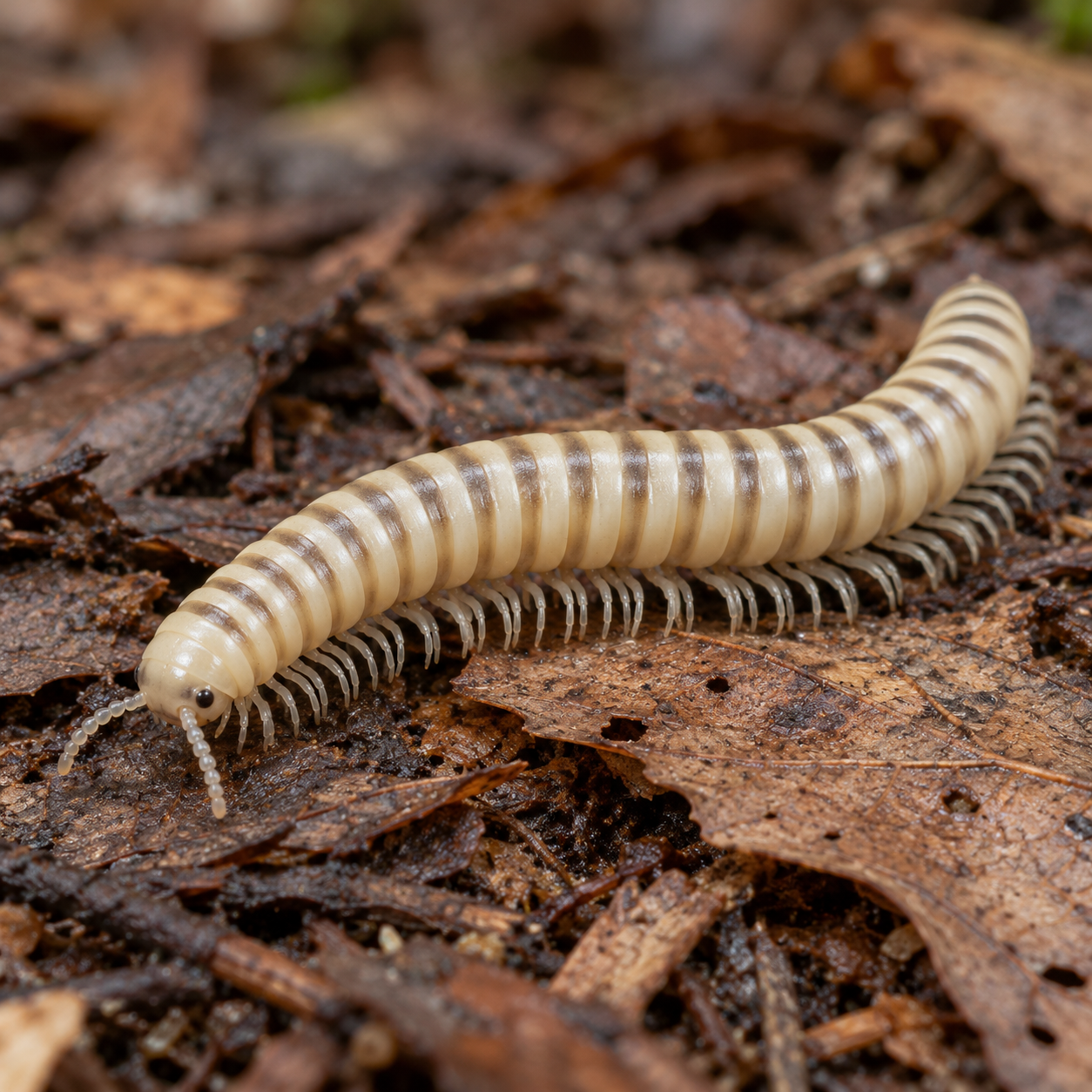
AI illustration · Intended subject: Chicobolus spinigerus. Not verified for species identification.
Dedicated edible-substrate display; a thin decorative moss soil layer is inadequate.
Group
Millipedes
Role
Display detritivore
Habitat
Humid terrestrial
Humid moss display
Dedicated display
Record type
species
Evidence scope
Species / culture facts
Partial care evidence Care topics still to verify: enclosure; temperature; moisture; substrate; diet; water; light_uvb; grouping.
Reviewed source facts (3)
Food substrate: Decomposed hardwood and leaves; protect underground moltsCaptive care reported by the cited source · juvenile and adult · scope: round-bodied millipede groupGroup guidance; does not establish a species-specific depth or climate.AS05 · Substrate and molting sections
Reported adult length: About 4 inCaptive care reported by the cited source · adult · scope: speciesApproximate supplier report; not measured in this project.AS06 · Description
Reported lifespan: Up to 10 yearsCaptive care reported by the cited source · adult · scope: speciesReported upper age, not a guaranteed lifespan.AS06 · Description
General planning guidance and identity notes
Shared profile synthesis; this section does not establish species care values.
Enclosure
Dedicated floor-oriented enclosure with enough deep edible substrate for burrowing and protected molts.
Moisture and ventilation
Moist, aerated lower substrate with ventilation; avoid waterlogging and complete drying.
Substrate and leaf litter
Well-decayed hardwood and suitable decomposed leaves are food. Plain coir is not a complete food substrate.
Water
Moist substrate; any water provision must avoid a trapping hazard.
Climate and lighting
Confirm species-specific temperature. Do not heat a small sealed container.
Plant and moss impact · inferred
Burrowing and feeding can disturb fine moss, seedlings and roots. The food substrate must remain available.
Grouping and cohabitation
No automatic mixed-species housing. As a precaution, do not add isopods around vulnerable molts without a reviewed plan.
Breeding, molts and escape
Molts and eggs can be underground; leave them undisturbed and replenish food substrate carefully.
Identity limits
Name follows the cited keeper/reference usage; the actual purchased stock has not been independently identified.
Numerical care limits
Source-specific numerical facts, when present, retain life stage, location and units; blank topics remain unreviewed.
Qualitative selection synthesis remains separate from the individually cited source facts.
A large dedicated enclosure and deep food substrate take priority over a small moss display.
Group
Millipedes
Role
Display detritivore
Habitat
Humid terrestrial
Humid moss display
Dedicated display
Record type
species
Evidence scope
Group guidance / overview
Overview only Care topics still to verify: enclosure; temperature; moisture; substrate; diet; water; light_uvb; grouping.
Reviewed source facts (1)
Food substrate: Decomposed hardwood and leaves; protect underground moltsCaptive care reported by the cited source · juvenile and adult · scope: round-bodied millipede groupGroup guidance; does not establish a species-specific depth or climate.AS05 · Substrate and molting sections
General planning guidance and identity notes
Shared profile synthesis; this section does not establish species care values.
Enclosure
Dedicated floor-oriented enclosure with enough deep edible substrate for burrowing and protected molts.
Moisture and ventilation
Moist, aerated lower substrate with ventilation; avoid waterlogging and complete drying.
Substrate and leaf litter
Well-decayed hardwood and suitable decomposed leaves are food. Plain coir is not a complete food substrate.
Water
Moist substrate; any water provision must avoid a trapping hazard.
Climate and lighting
Confirm species-specific temperature. Do not heat a small sealed container.
Plant and moss impact · inferred
Burrowing and feeding can disturb fine moss, seedlings and roots. The food substrate must remain available.
Grouping and cohabitation
No automatic mixed-species housing. As a precaution, do not add isopods around vulnerable molts without a reviewed plan.
Breeding, molts and escape
Molts and eggs can be underground; leave them undisturbed and replenish food substrate carefully.
Identity limits
Name follows the cited keeper/reference usage; the actual purchased stock has not been independently identified.
Numerical care limits
Source-specific numerical facts, when present, retain life stage, location and units; blank topics remain unreviewed.
Qualitative selection synthesis remains separate from the individually cited source facts.
The sold name is retained with uncertainty; confirm culture identity and husbandry with the breeder.
Group
Millipedes
Role
Display detritivore
Habitat
Humid terrestrial
Humid moss display
Dedicated display
Record type
tentative trade identification
Evidence scope
Species / culture facts
Partial care evidence Care topics still to verify: enclosure; moisture; substrate; diet; water; light_uvb; grouping.
Reviewed source facts (2)
Food substrate: Decomposed hardwood and leaves; protect underground moltsCaptive care reported by the cited source · juvenile and adult · scope: round-bodied millipede groupGroup guidance; does not establish a species-specific depth or climate.AS05 · Substrate and molting sections
Keeper heat note: Room-temperature culture; no extra heat specifiedBreeder’s stated setup; room temperature is not a numeric range · adult · scope: trade cultureAS07 · Description
General planning guidance and identity notes
Shared profile synthesis; this section does not establish species care values.
Enclosure
Dedicated floor-oriented enclosure with enough deep edible substrate for burrowing and protected molts.
Moisture and ventilation
Moist, aerated lower substrate with ventilation; avoid waterlogging and complete drying.
Substrate and leaf litter
Well-decayed hardwood and suitable decomposed leaves are food. Plain coir is not a complete food substrate.
Water
Moist substrate; any water provision must avoid a trapping hazard.
Climate and lighting
Confirm species-specific temperature. Do not heat a small sealed container.
Plant and moss impact · inferred
Burrowing and feeding can disturb fine moss, seedlings and roots. The food substrate must remain available.
Grouping and cohabitation
No automatic mixed-species housing. As a precaution, do not add isopods around vulnerable molts without a reviewed plan.
Breeding, molts and escape
Molts and eggs can be underground; leave them undisturbed and replenish food substrate carefully.
Identity limits
Species assignment unresolved; common names and numbered cultures are not taxonomic determinations.
Numerical care limits
Source-specific numerical facts, when present, retain life stage, location and units; blank topics remain unreviewed.
Qualitative selection synthesis remains separate from the individually cited source facts.
Numbered hobby culture, not an identified species. Retain origin as well as the number because numbering is not globally consistent.
Group
Millipedes
Role
Display detritivore
Habitat
Humid terrestrial
Humid moss display
Dedicated display
Record type
unresolved trade culture
Evidence scope
Species / culture facts
Partial care evidence Care topics still to verify: enclosure; temperature; moisture; substrate; diet; water; light_uvb; grouping.
Reviewed source facts (2)
Food substrate: Decomposed hardwood and leaves; protect underground moltsCaptive care reported by the cited source · juvenile and adult · scope: round-bodied millipede groupGroup guidance; does not establish a species-specific depth or climate.AS05 · Substrate and molting sections
Trade identity: Number “1” is used inconsistently; retain origin and supplierCaptive care reported by the cited source · adult · scope: trade cultureAS08 · Spirostreptidae sp. “1”
General planning guidance and identity notes
Shared profile synthesis; this section does not establish species care values.
Enclosure
Dedicated floor-oriented enclosure with enough deep edible substrate for burrowing and protected molts.
Moisture and ventilation
Moist, aerated lower substrate with ventilation; avoid waterlogging and complete drying.
Substrate and leaf litter
Well-decayed hardwood and suitable decomposed leaves are food. Plain coir is not a complete food substrate.
Water
Moist substrate; any water provision must avoid a trapping hazard.
Climate and lighting
Confirm species-specific temperature. Do not heat a small sealed container.
Plant and moss impact · inferred
Burrowing and feeding can disturb fine moss, seedlings and roots. The food substrate must remain available.
Grouping and cohabitation
No automatic mixed-species housing. As a precaution, do not add isopods around vulnerable molts without a reviewed plan.
Breeding, molts and escape
Molts and eggs can be underground; leave them undisturbed and replenish food substrate carefully.
Identity limits
Species assignment unresolved; common names and numbered cultures are not taxonomic determinations.
Numerical care limits
Source-specific numerical facts, when present, retain life stage, location and units; blank topics remain unreviewed.
Qualitative selection synthesis remains separate from the individually cited source facts.
A purpose-built frog vivarium may include moss, but leaf litter, feeding access and retreats remain necessary.
Group
Dart frogs
Role
Display animal
Habitat
Humid terrestrial
Humid moss display
Dedicated display
Record type
species
Evidence scope
Species / culture facts
Partial care evidence Care topics still to verify: enclosure; temperature; moisture; water; light_uvb.
Reviewed source facts (4)
Ground cover: Leaf litter predominates; moss is a supplementary planted featureHistorical keeper recommendation; page declares update about 2012 · adult · scope: speciesAR08 · Housing
Adult food: Supplemented fruit flies and other appropriately small cultured preyCaptive care reported by the cited source · adult · scope: speciesAR09 · General care & feeding
Social plan: Most morphs are described as best in male/female pairsHistorical breeder account; assess actual morph, sex and aggression · adult · scope: speciesAR08 · Housing
Feeding commitment: Regular supplemented small live prey is requiredCaptive care reported by the cited source · juvenile and adult · scope: named species groupAS10 · Before you buy → feeding
Source disagreements and review notes
Historical care reference · caution NEHERP explicitly marks its tinctorius guide as last updated about 2012. Retain stable qualitative context with the age warning; do not promote historical stocking/ventilation numbers.
General planning guidance and identity notes
Shared profile synthesis; this section does not establish species care values.
Enclosure
Dedicated planted enclosure with usable floor area, dense cover, leaf litter and accessible retreats.
Moisture and ventilation
Humid refuges with fresh air and drainage; do not equate high humidity with stagnant, saturated soil.
Substrate and leaf litter
Drainable soil with a renewed leaf-litter surface; retain feeding and inspection access.
Water
Adult land habitat with safe access and exits if water is offered. Tadpole water care is a separate system.
Climate and lighting
Establish safe species temperatures and a lighting/supplement plan before stocking; moss lighting is not an animal care specification.
Plant and moss impact · inferred
Select planting around the animal’s enclosure, light, movement and feeding needs. Delicate moss may need protected patches.
Grouping and cohabitation
Keep species and locality/morph lines separate. Select sex ratios and numbers for the particular species; monitor aggression.
Breeding, molts and escape
Secure tiny froglets and feeders. Breeding can require separate tadpole and juvenile rearing space.
Identity limits
Name follows the cited keeper/reference usage; the actual purchased stock has not been independently identified.
Numerical care limits
Source-specific numerical facts, when present, retain life stage, location and units; blank topics remain unreviewed.
Qualitative selection synthesis remains separate from the individually cited source facts.
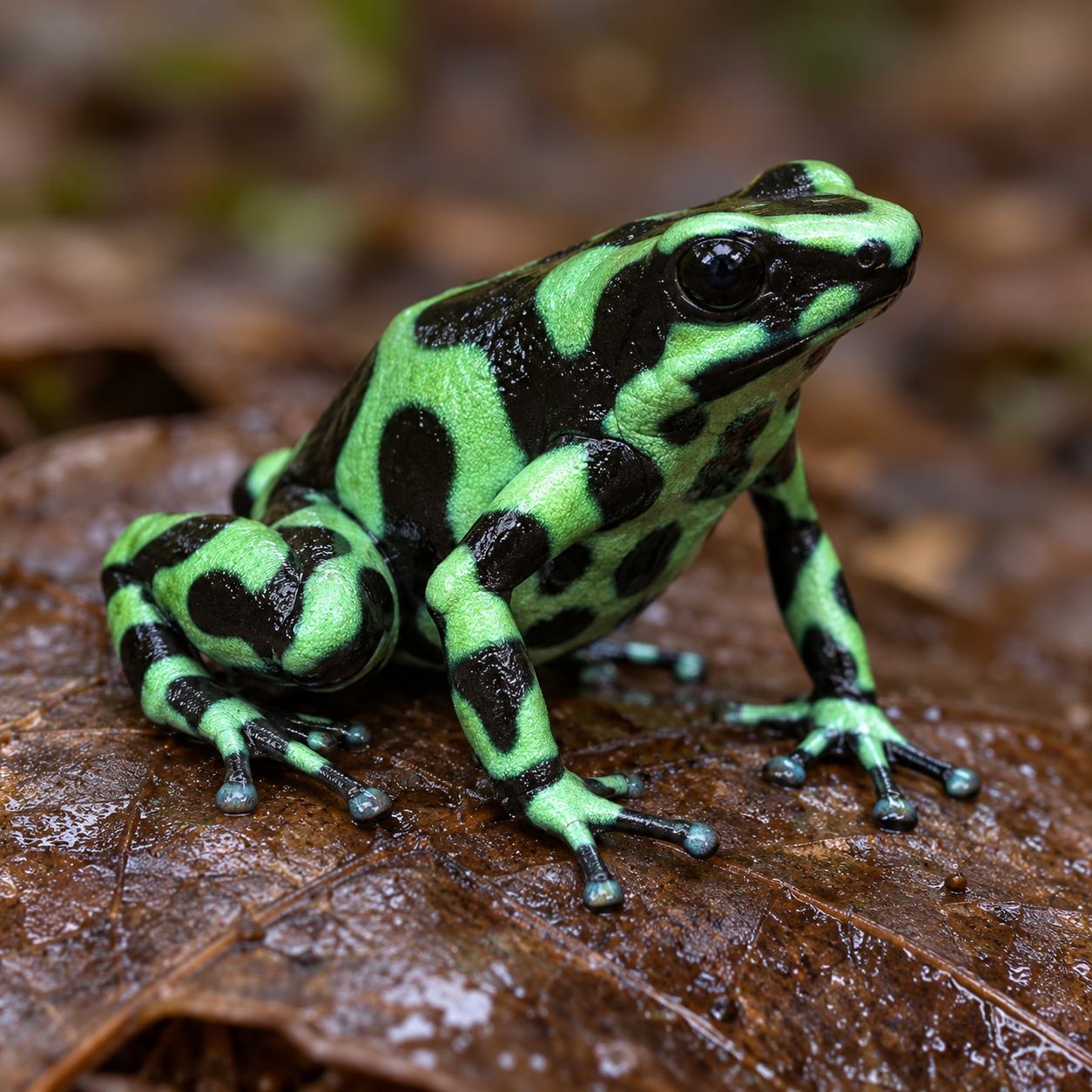
AI illustration · Intended subject: Dendrobates auratus. Not verified for species identification.
A purpose-built frog vivarium may include moss, but leaf litter, feeding access and retreats remain necessary.
Group
Dart frogs
Role
Display animal
Habitat
Humid terrestrial
Humid moss display
Dedicated display
Record type
species
Evidence scope
Group guidance / overview
Overview only Care topics still to verify: enclosure; temperature; moisture; substrate; diet; water; light_uvb; grouping.
Reviewed source facts (1)
Feeding commitment: Regular supplemented small live prey is requiredCaptive care reported by the cited source · juvenile and adult · scope: named species groupAS10 · Before you buy → feeding
General planning guidance and identity notes
Shared profile synthesis; this section does not establish species care values.
Enclosure
Dedicated planted enclosure with usable floor area, dense cover, leaf litter and accessible retreats.
Moisture and ventilation
Humid refuges with fresh air and drainage; do not equate high humidity with stagnant, saturated soil.
Substrate and leaf litter
Drainable soil with a renewed leaf-litter surface; retain feeding and inspection access.
Water
Adult land habitat with safe access and exits if water is offered. Tadpole water care is a separate system.
Climate and lighting
Establish safe species temperatures and a lighting/supplement plan before stocking; moss lighting is not an animal care specification.
Plant and moss impact · inferred
Select planting around the animal’s enclosure, light, movement and feeding needs. Delicate moss may need protected patches.
Grouping and cohabitation
Keep species and locality/morph lines separate. Select sex ratios and numbers for the particular species; monitor aggression.
Breeding, molts and escape
Secure tiny froglets and feeders. Breeding can require separate tadpole and juvenile rearing space.
Identity limits
Name follows the cited keeper/reference usage; the actual purchased stock has not been independently identified.
Numerical care limits
Source-specific numerical facts, when present, retain life stage, location and units; blank topics remain unreviewed.
Qualitative selection synthesis remains separate from the individually cited source facts.
A purpose-built frog vivarium may include moss, but leaf litter, feeding access and retreats remain necessary.
Group
Dart frogs
Role
Display animal
Habitat
Humid terrestrial
Humid moss display
Dedicated display
Record type
species
Evidence scope
Group guidance / overview
Overview only Care topics still to verify: enclosure; temperature; moisture; substrate; diet; water; light_uvb; grouping.
Reviewed source facts (1)
Feeding commitment: Regular supplemented small live prey is requiredCaptive care reported by the cited source · juvenile and adult · scope: named species groupAS10 · Before you buy → feeding
General planning guidance and identity notes
Shared profile synthesis; this section does not establish species care values.
Enclosure
Dedicated planted enclosure with usable floor area, dense cover, leaf litter and accessible retreats.
Moisture and ventilation
Humid refuges with fresh air and drainage; do not equate high humidity with stagnant, saturated soil.
Substrate and leaf litter
Drainable soil with a renewed leaf-litter surface; retain feeding and inspection access.
Water
Adult land habitat with safe access and exits if water is offered. Tadpole water care is a separate system.
Climate and lighting
Establish safe species temperatures and a lighting/supplement plan before stocking; moss lighting is not an animal care specification.
Plant and moss impact · inferred
Select planting around the animal’s enclosure, light, movement and feeding needs. Delicate moss may need protected patches.
Grouping and cohabitation
Keep species and locality/morph lines separate. Select sex ratios and numbers for the particular species; monitor aggression.
Breeding, molts and escape
Secure tiny froglets and feeders. Breeding can require separate tadpole and juvenile rearing space.
Identity limits
Name follows the cited keeper/reference usage; the actual purchased stock has not been independently identified.
Numerical care limits
Source-specific numerical facts, when present, retain life stage, location and units; blank topics remain unreviewed.
Qualitative selection synthesis remains separate from the individually cited source facts.
Floor space, leaf litter and reliable feeding access take priority over decorative water features.
Group
Dart frogs
Role
Display animal
Habitat
Humid terrestrial
Humid moss display
Dedicated display
Record type
species
Evidence scope
Species / culture facts
Partial care evidence Care topics still to verify: enclosure; moisture; substrate; water; light_uvb.
Reviewed source facts (4)
Temperature guidance: Ideal in the low-to-mid 70s °F; avoid heat above 80 °FCaptive care reported by the cited source · adult · scope: speciesQualitative target retained; endpoints are not converted into a broad survival range.AS13 · Temperature
Food: Vitamin/mineral-dusted small live preyCaptive care reported by the cited source · adult · scope: speciesAS13 · Diet
Reported social structure: Pairs or conspecific groupsCaptive care reported by the cited source · adult · scope: speciesNeeds adequate space, cover and individual monitoring.AS13 · Social structure
Adult female length: About 2 in; males smallerApproximate female body length · adult · scope: speciesAS13 · Adult size
General planning guidance and identity notes
Shared profile synthesis; this section does not establish species care values.
Enclosure
Dedicated planted enclosure with usable floor area, dense cover, leaf litter and accessible retreats.
Moisture and ventilation
Humid refuges with fresh air and drainage; do not equate high humidity with stagnant, saturated soil.
Substrate and leaf litter
Drainable soil with a renewed leaf-litter surface; retain feeding and inspection access.
Water
Adult land habitat with safe access and exits if water is offered. Tadpole water care is a separate system.
Climate and lighting
Establish safe species temperatures and a lighting/supplement plan before stocking; moss lighting is not an animal care specification.
Plant and moss impact · inferred
Select planting around the animal’s enclosure, light, movement and feeding needs. Delicate moss may need protected patches.
Grouping and cohabitation
Keep species and locality/morph lines separate. Select sex ratios and numbers for the particular species; monitor aggression.
Breeding, molts and escape
Secure tiny froglets and feeders. Breeding can require separate tadpole and juvenile rearing space.
Identity limits
Name follows the cited keeper/reference usage; the actual purchased stock has not been independently identified.
Numerical care limits
Source-specific numerical facts, when present, retain life stage, location and units; blank topics remain unreviewed.
Qualitative selection synthesis remains separate from the individually cited source facts.
Provide climbing cover and tiny prey; parental care and tadpole management require a separate plan.
Group
Dart frogs
Role
Display animal
Habitat
Humid arboreal
Humid moss display
Dedicated display
Record type
species
Evidence scope
Species / culture facts
Partial care evidence Care topics still to verify: enclosure; temperature; moisture; substrate; diet; water; light_uvb.
Reviewed source facts (2)
Keeper grouping recommendation: Pairs; group advice differs among keeper sourcesKeeper experience, not universal social tolerance · adult · scope: speciesAS12 · Groups and breeding
Tadpole management: Parental care and tadpole feeding require a separate breeding planCaptive care reported by the cited source · larval · scope: speciesAS12 · Breeding and tadpoles
General planning guidance and identity notes
Shared profile synthesis; this section does not establish species care values.
Enclosure
Dedicated enclosure with fine branches, foliage, hides and functional vertical space as well as leaf litter.
Moisture and ventilation
Humid microhabitats with airflow; provide accessible feeding areas.
Substrate and leaf litter
Drainable leaf-litter floor plus planted climbing structure.
Water
Breeding water sites and tadpole husbandry are species-specific; a large pool is not a default requirement.
Climate and lighting
Set climate and lighting for the frog, then choose plants that tolerate it.
Plant and moss impact · inferred
Select planting around the animal’s enclosure, light, movement and feeding needs. Delicate moss may need protected patches.
Grouping and cohabitation
A pair is a conservative starting plan here. Keeper sources differ on groups; do not treat social tolerance as guaranteed.
Breeding, molts and escape
Tiny adults, froglets and prey need fine escape protection; manage separate breeding lines.
Identity limits
Name follows the cited keeper/reference usage; the actual purchased stock has not been independently identified.
Numerical care limits
Source-specific numerical facts, when present, retain life stage, location and units; blank topics remain unreviewed.
Qualitative selection synthesis remains separate from the individually cited source facts.
Small climbing frog listed for further research; keep species and locality lines distinct and verify territorial needs.
Group
Dart frogs
Role
Display animal
Habitat
Humid arboreal
Humid moss display
Dedicated display
Record type
species
Evidence scope
Species / culture facts
Partial care evidence Care topics still to verify: enclosure; temperature; moisture; substrate; diet; water; light_uvb.
Reviewed source facts (2)
Breeding behavior: Adults deposit tadpoles in small water sites; parental care differs by speciesCaptive care reported by the cited source · breeding adult and larval · scope: speciesAR30 · Breeding and tadpoles
Tadpole predation: Keeper recommends separate tadpole rearing because cannibalism can occurCaptive care reported by the cited source · larval · scope: speciesAR30 · Tadpoles
General planning guidance and identity notes
Shared profile synthesis; this section does not establish species care values.
Enclosure
Dedicated enclosure with fine branches, foliage, hides and functional vertical space as well as leaf litter.
Moisture and ventilation
Humid microhabitats with airflow; provide accessible feeding areas.
Substrate and leaf litter
Drainable leaf-litter floor plus planted climbing structure.
Water
Breeding water sites and tadpole husbandry are species-specific; a large pool is not a default requirement.
Climate and lighting
Set climate and lighting for the frog, then choose plants that tolerate it.
Plant and moss impact · inferred
Select planting around the animal’s enclosure, light, movement and feeding needs. Delicate moss may need protected patches.
Grouping and cohabitation
Pairs versus groups depend on species and keeper experience; separate animals if aggression or poor feeding occurs.
Breeding, molts and escape
Tiny adults, froglets and prey need fine escape protection; manage separate breeding lines.
Identity limits
Name follows the cited keeper/reference usage; the actual purchased stock has not been independently identified.
Numerical care limits
Source-specific numerical facts, when present, retain life stage, location and units; blank topics remain unreviewed.
Qualitative selection synthesis remains separate from the individually cited source facts.
Small climbing frog listed for further research; keep species and locality lines distinct and verify territorial needs.
Group
Dart frogs
Role
Display animal
Habitat
Humid arboreal
Humid moss display
Dedicated display
Record type
species
Evidence scope
Species / culture facts
Partial care evidence Care topics still to verify: enclosure; temperature; moisture; substrate; diet; water; light_uvb; grouping.
Reviewed source facts (2)
Breeding behavior: Adults deposit tadpoles in small water sites; parental care differs by speciesCaptive care reported by the cited source · breeding adult and larval · scope: speciesAR31 · Breeding and tadpoles
Parent-reared young: Keeper reports feeder-egg care and leaving tadpoles with parentsReported keeper method, not a universal breeding instruction · larval · scope: speciesAR31 · Tadpoles
General planning guidance and identity notes
Shared profile synthesis; this section does not establish species care values.
Enclosure
Dedicated enclosure with fine branches, foliage, hides and functional vertical space as well as leaf litter.
Moisture and ventilation
Humid microhabitats with airflow; provide accessible feeding areas.
Substrate and leaf litter
Drainable leaf-litter floor plus planted climbing structure.
Water
Breeding water sites and tadpole husbandry are species-specific; a large pool is not a default requirement.
Climate and lighting
Set climate and lighting for the frog, then choose plants that tolerate it.
Plant and moss impact · inferred
Select planting around the animal’s enclosure, light, movement and feeding needs. Delicate moss may need protected patches.
Grouping and cohabitation
Pairs versus groups depend on species and keeper experience; separate animals if aggression or poor feeding occurs.
Breeding, molts and escape
Tiny adults, froglets and prey need fine escape protection; manage separate breeding lines.
Identity limits
Name follows the cited keeper/reference usage; the actual purchased stock has not been independently identified.
Numerical care limits
Source-specific numerical facts, when present, retain life stage, location and units; blank topics remain unreviewed.
Qualitative selection synthesis remains separate from the individually cited source facts.
Small climbing frog listed for further research; keep species and locality lines distinct and verify territorial needs.
Group
Dart frogs
Role
Display animal
Habitat
Humid arboreal
Humid moss display
Dedicated display
Record type
species
Evidence scope
Species / culture facts
Partial care evidence Care topics still to verify: enclosure; moisture; substrate; diet; water; light_uvb.
Reviewed source facts (3)
Seasonal temperature table: Month-specific daytime and nighttime bands; do not flatten into one targetSeasonal keeper schedule · adult · scope: speciesChoose locality and seasonal plan before transcribing endpoints into an enclosure controller.AR32 · Page 1 → management overview
Breeding unit: Pairs or developing families in this care protocolCaptive care reported by the cited source · adult · scope: speciesAR32 · Page 1 → breeding introductions
Larval nutrition: Egg-feeding parental care matters; generic fish-food tadpole care is insufficientCaptive care reported by the cited source · larval · scope: speciesAR32 · Breeding and larval care
General planning guidance and identity notes
Shared profile synthesis; this section does not establish species care values.
Enclosure
Dedicated enclosure with fine branches, foliage, hides and functional vertical space as well as leaf litter.
Moisture and ventilation
Humid microhabitats with airflow; provide accessible feeding areas.
Substrate and leaf litter
Drainable leaf-litter floor plus planted climbing structure.
Water
Breeding water sites and tadpole husbandry are species-specific; a large pool is not a default requirement.
Climate and lighting
Set climate and lighting for the frog, then choose plants that tolerate it.
Plant and moss impact · inferred
Select planting around the animal’s enclosure, light, movement and feeding needs. Delicate moss may need protected patches.
Grouping and cohabitation
Pairs versus groups depend on species and keeper experience; separate animals if aggression or poor feeding occurs.
Breeding, molts and escape
Tiny adults, froglets and prey need fine escape protection; manage separate breeding lines.
Identity limits
Name follows the cited keeper/reference usage; the actual purchased stock has not been independently identified.
Numerical care limits
Source-specific numerical facts, when present, retain life stage, location and units; blank topics remain unreviewed.
Qualitative selection synthesis remains separate from the individually cited source facts.
Consider only a dedicated cool forest-floor setup; do not transfer warm tropical dart-frog settings automatically.
Group
Mantellas
Role
Display animal
Habitat
Cool humid terrestrial
Humid moss display
Dedicated display
Record type
species
Evidence scope
Species / culture facts
Partial care evidence Care topics still to verify: enclosure; substrate; diet; light_uvb; grouping.
Reviewed source facts (3)
Reported ordinary humidity: 60–70% RHCaptive care reported by the cited source · adult · scope: speciesBreeding conditions are discussed separately; this is not a saturated-soil prescription.AS15 · Humidity
Heat caution: Keeper advises avoiding temperatures over 80 °FReported heat caution, not an optimum or safe upper-limit experiment · adult · scope: speciesAS15 · Temperature
Water access: Shallow clean water dishCaptive care reported by the cited source · adult · scope: speciesAS15 · Humidity
General planning guidance and identity notes
Shared profile synthesis; this section does not establish species care values.
Enclosure
Dedicated planted terrestrial enclosure with abundant cover and leaf litter.
Moisture and ventilation
Damp refuges with air exchange and drainage; keep away from tropical heat assumptions.
Substrate and leaf litter
Drainable substrate and abundant pesticide-free leaf litter.
Water
Safe shallow access where used; breeding and larval water care are a separate task.
Climate and lighting
Confirm the particular species and seasonal requirements; monitor warm weather closely.
Plant and moss impact · inferred
Select planting around the animal’s enclosure, light, movement and feeding needs. Delicate moss may need protected patches.
Grouping and cohabitation
Use a species-specific social plan and keep different species and origins separate.
Breeding, molts and escape
Small frogs need secure vents; seasonal breeding is not evidence that a mixed tank is suitable.
Identity limits
Name follows the cited keeper/reference usage; the actual purchased stock has not been independently identified.
Numerical care limits
Source-specific numerical facts, when present, retain life stage, location and units; blank topics remain unreviewed.
Qualitative selection synthesis remains separate from the individually cited source facts.
Also find as: Litoria caerulea; Ranoidea caerulea; Dryopsophus caeruleus
Sturdy perches and cleaning access matter more than delicate moss cover; confirm the current name when recording stock.
Group
Tree frogs
Role
Display animal
Habitat
Humid arboreal
Humid moss display
Dedicated display
Record type
species
Evidence scope
Species / culture facts
Partial care evidence Care topics still to verify: enclosure; substrate; diet; light_uvb; grouping.
Reviewed source facts (3)
Daytime air: 24–29 °CVeterinary husbandry guide; daytime air, not basking surface · adult · scope: speciesAS18 · Temperature
Ambient humidity: 50–70% RHCaptive care reported by the cited source · adult · scope: speciesKeep substrate moist, not fully soaked.AS18 · Humidity & water
Water treatment: Use water treated for both chlorine and chloramine where presentCaptive care reported by the cited source · adult · scope: speciesAeration alone does not reliably remove chloramine; verify the water treatment method.AS18 · Humidity & water
General planning guidance and identity notes
Shared profile synthesis; this section does not establish species care values.
Enclosure
Tall dedicated enclosure with sturdy perches, foliage and access for cleaning.
Moisture and ventilation
Ventilation and a wet/drier cycle appropriate to the frog; avoid stagnant continuously wet surfaces.
Substrate and leaf litter
Drainable floor substrate; leaf litter complements, but does not replace, climbing space.
Water
Clean water provision suitable for soaking/drinking, with easy exits and regular cleaning.
Climate and lighting
Set a measured species-specific heat and lighting/UVB plan; verify exposure and access to shade.
Plant and moss impact · inferred
Select planting around the animal’s enclosure, light, movement and feeding needs. Delicate moss may need protected patches.
Grouping and cohabitation
Consider size-matched conspecifics only under a species care plan; do not mix frog species.
Breeding, molts and escape
A secure lid is essential; separate breeding requirements from routine adult housing.
Identity limits
Name follows the reviewed taxonomic authority. Older combinations are retained as aliases; purchased specimens still require reliable identification.
Numerical care limits
Source-specific numerical facts, when present, retain life stage, location and units; blank topics remain unreviewed.
Qualitative selection synthesis remains separate from the individually cited source facts.
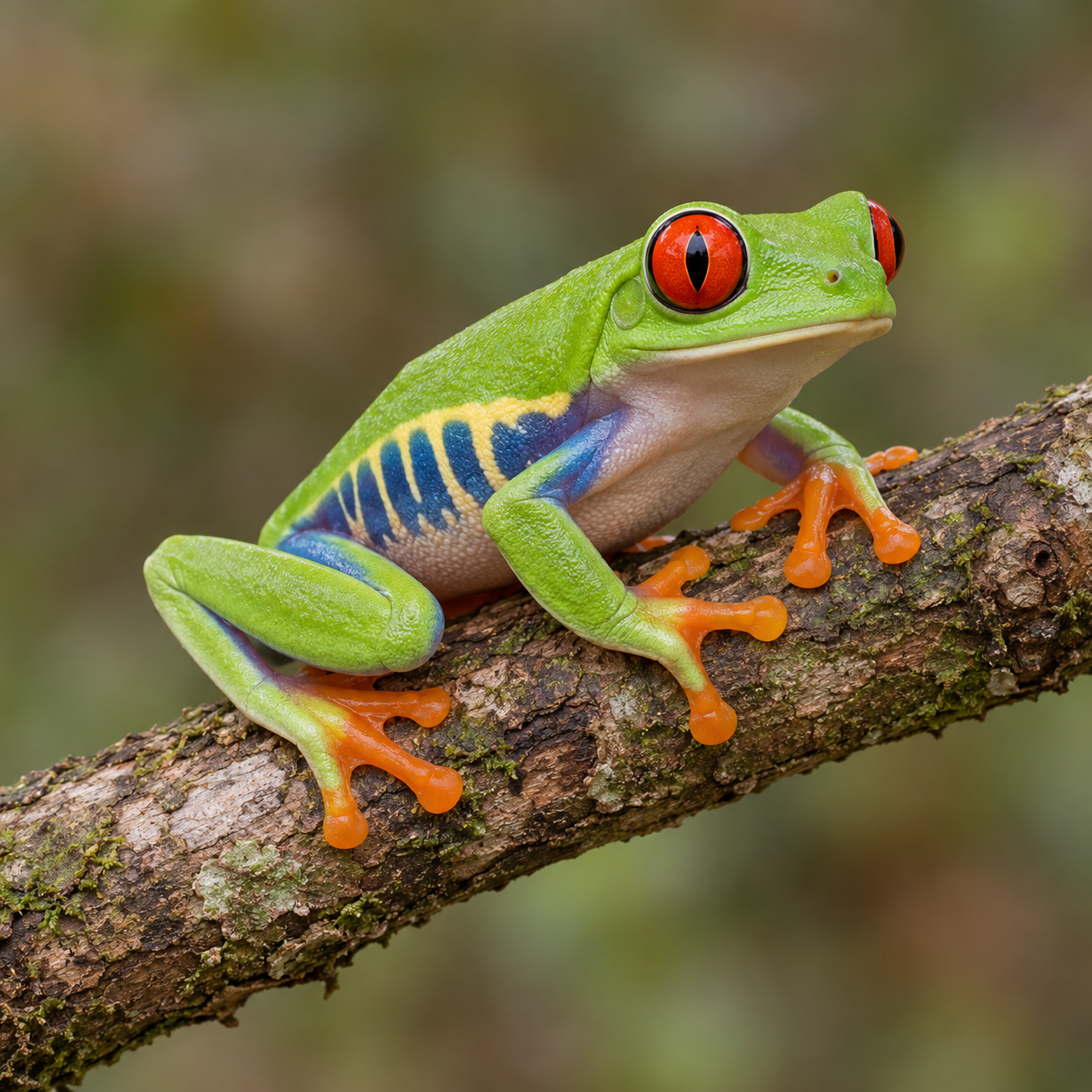
AI illustration · Intended subject: Agalychnis callidryas. Not verified for species identification.
Use a dedicated tall planted enclosure and plan for daytime hiding, night activity and feeder access.
Group
Tree frogs
Role
Display animal
Habitat
Humid arboreal
Humid moss display
Dedicated display
Record type
species
Evidence scope
Species / culture facts
Partial care evidence Care topics still to verify: substrate; diet; water; light_uvb; grouping.
Reviewed source facts (3)
Daytime ambient: 22–26 °CCaptive care reported by the cited source · adult · scope: speciesWarm perch and nighttime temperatures are distinct.AS19 · Temperature & humidity
Baseline humidity: 60–70% RH with brief misting spikesBaseline; not a constant post-mist maximum · adult · scope: speciesAS19 · Temperature & humidity
Architecture: Vertical enclosure with strong cross ventilationCaptive care reported by the cited source · adult · scope: speciesAS19 · Enclosure
General planning guidance and identity notes
Shared profile synthesis; this section does not establish species care values.
Enclosure
Tall dedicated enclosure with sturdy perches, foliage and access for cleaning.
Moisture and ventilation
Ventilation and a wet/drier cycle appropriate to the frog; avoid stagnant continuously wet surfaces.
Substrate and leaf litter
Drainable floor substrate; leaf litter complements, but does not replace, climbing space.
Water
Clean water provision suitable for soaking/drinking, with easy exits and regular cleaning.
Climate and lighting
Set a measured species-specific heat and lighting/UVB plan; verify exposure and access to shade.
Plant and moss impact · inferred
Select planting around the animal’s enclosure, light, movement and feeding needs. Delicate moss may need protected patches.
Grouping and cohabitation
Consider size-matched conspecifics only under a species care plan; do not mix frog species.
Breeding, molts and escape
A secure lid is essential; separate breeding requirements from routine adult housing.
Identity limits
Name follows the cited keeper/reference usage; the actual purchased stock has not been independently identified.
Numerical care limits
Source-specific numerical facts, when present, retain life stage, location and units; blank topics remain unreviewed.
Qualitative selection synthesis remains separate from the individually cited source facts.
A burrowing solitary predator; likely to disrupt fine planting and consume accessible tankmates.
Group
Horned frogs
Role
Display predator
Habitat
Humid terrestrial
Humid moss display
Dedicated display
Record type
species
Evidence scope
Group guidance / overview
Overview only Care topics still to verify: enclosure; temperature; moisture; substrate; diet; water; light_uvb; grouping.
Reviewed source facts (1)
Burrowing requirement: Enough substrate to bury the bodyCaptive care reported by the cited source · adult · scope: Ceratophrys groupGroup guide; dimensions and climate need species review.AS20 · Housing
Source disagreements and review notes
Group care only · caution The veterinary guide discusses multiple Ceratophrys; individual species ranges may differ. Do not publish its group temperature band as a verified C. cranwelli range.
General planning guidance and identity notes
Shared profile synthesis; this section does not establish species care values.
Enclosure
Dedicated terrestrial enclosure with deep burrowing area and accessible feeding.
Moisture and ventilation
Damp, clean substrate with ventilation; no standing swamp.
Substrate and leaf litter
Burrowable substrate selected to limit feeding contamination and allow inspection.
Water
Clean shallow water with easy exit; this is not an aquatic adult frog.
Climate and lighting
Confirm species temperatures, heat controls and lighting with the linked care reference.
Plant and moss impact · inferred
Select planting around the animal’s enclosure, light, movement and feeding needs. Delicate moss may need protected patches.
Grouping and cohabitation
Solitary default; can consume or injure other inhabitants.
Breeding, molts and escape
Monitor body condition and buried animals; remove uneaten live feeders.
Identity limits
Name follows the cited keeper/reference usage; the actual purchased stock has not been independently identified.
Numerical care limits
Source-specific numerical facts, when present, retain life stage, location and units; blank topics remain unreviewed.
Qualitative selection synthesis remains separate from the individually cited source facts.
Its name describes camouflage; it needs a dedicated cool semi-aquatic habitat, not just living moss.
Group
Mossy frogs
Role
Display animal
Habitat
Paludarium
Humid moss display
Paludarium only
Record type
species
Evidence scope
Species / culture facts
Partial care evidence Care topics still to verify: enclosure; moisture; substrate; diet; light_uvb; grouping.
Reviewed source facts (2)
Habitat use: Largely aquatic; provide clean water and resting exitsCaptive care reported by the cited source · adult · scope: speciesAS17 · General care & feeding
Heat caution: Avoid exposure above 80 °F in this supplier guideReported caution; no universal tolerance limit inferred · adult · scope: speciesAS17 · General care & feeding
General planning guidance and identity notes
Shared profile synthesis; this section does not establish species care values.
Enclosure
Dedicated paludarium with clean water, submerged/emerged perches and secure climbing cover.
Moisture and ventilation
Humid air with ventilation; the water section requires its own maintenance.
Substrate and leaf litter
Secure water-safe furnishings and accessible resting sites; soil must not foul the water.
Water
Maintain water quality and accessible exits; plan larval care separately.
Climate and lighting
Use a cool species-specific regime, not generic tropical heat.
Plant and moss impact · inferred
Select planting around the animal’s enclosure, light, movement and feeding needs. Delicate moss may need protected patches.
Grouping and cohabitation
Only a reviewed conspecific plan; do not combine with dart frogs or crabs by default.
Breeding, molts and escape
Inspect climbing surfaces and escape routes; breeding needs separate monitoring.
Identity limits
Name follows the cited keeper/reference usage; the actual purchased stock has not been independently identified.
Numerical care limits
Source-specific numerical facts, when present, retain life stage, location and units; blank topics remain unreviewed.
Qualitative selection synthesis remains separate from the individually cited source facts.
A cool terrestrial amphibian display with separate consideration for aquatic larvae.
Group
Salamanders
Role
Display animal
Habitat
Cool humid terrestrial
Humid moss display
Dedicated display
Record type
species
Evidence scope
Group guidance / overview
Overview only Care topics still to verify: enclosure; temperature; moisture; substrate; diet; water; light_uvb; grouping.
Reviewed source facts (1)
Architecture: Cool terrestrial habitat with leaf cover and sheltersCaptive care reported by the cited source · adult · scope: Salamandra species groupSubspecies and larval strategy matter.AS21 · Housing
General planning guidance and identity notes
Shared profile synthesis; this section does not establish species care values.
Enclosure
Dedicated floor-oriented enclosure with secure hides and burrowing opportunities.
Moisture and ventilation
Cool, moist refuges with air exchange; never a warm sealed moss jar.
Substrate and leaf litter
Safe damp soil/leaf litter suitable for the species; easy health inspection.
Water
Safe clean shallow access where required; aquatic larvae need separate care.
Climate and lighting
Reliable cooling may be needed. Confirm seasonal needs and do not infer temperatures from frog care.
Plant and moss impact · inferred
Select planting around the animal’s enclosure, light, movement and feeding needs. Delicate moss may need protected patches.
Grouping and cohabitation
Separate species and sizes; predation and disease make mixed amphibian housing inappropriate as a default.
Breeding, molts and escape
Plan terrestrial versus larval stages; avoid unnecessary handling and protect skin from contaminants.
Identity limits
Name follows the cited keeper/reference usage; the actual purchased stock has not been independently identified.
Numerical care limits
Source-specific numerical facts, when present, retain life stage, location and units; blank topics remain unreviewed.
Qualitative selection synthesis remains separate from the individually cited source facts.
Adult aquatic comparison; do not stock a terrestrial mossarium from an adult-newt care sheet.
Group
Newts
Role
Aquatic comparison
Habitat
Aquatic with land
Humid moss display
Aquatic system
Record type
species
Evidence scope
Species / culture facts
Partial care evidence Care topics still to verify: enclosure; moisture; substrate; diet; light_uvb; grouping.
Reviewed source facts (2)
Life-stage habitat: Adults are usually aquatic; juveniles may require terrestrial rearingCaptive care reported by the cited source · adult versus juvenile · scope: speciesAS23 · Housing and rearing
Keeper disagreement: Accounts differ on upper summer water temperaturesSource explicitly discusses disagreement · adult · scope: speciesNo reconciled universal upper temperature is asserted.AS23 · Housing
Source disagreements and review notes
Unresolved temperature disagreement · caution The keeper reference explicitly discusses conflicting experiences at high water temperatures. No single upper limit is asserted; obtain a species/stage-specific plan and cooling capacity.
General planning guidance and identity notes
Shared profile synthesis; this section does not establish species care values.
Enclosure
Species-specific aquarium with accessible land; terrestrial juvenile housing may also be required.
Moisture and ventilation
Manage water quality and cool temperatures; land areas still need fresh air.
Substrate and leaf litter
Safe aquatic furnishings and stable land exits; avoid swallowable loose material.
Water
An established aquatic system with monitored water quality; not a soil-only terrarium.
Climate and lighting
Confirm species and seasonal water temperatures; avoid generic tropical aquarium heating.
Plant and moss impact · inferred
Select planting around the animal’s enclosure, light, movement and feeding needs. Delicate moss may need protected patches.
Grouping and cohabitation
Keep species separate; do not use a mixed amphibian display.
Breeding, molts and escape
Life stage matters: juvenile and breeding requirements differ from routine adult aquatic care.
Identity limits
Name follows the cited keeper/reference usage; the actual purchased stock has not been independently identified.
Numerical care limits
Source-specific numerical facts, when present, retain life stage, location and units; blank topics remain unreviewed.
Qualitative selection synthesis remains separate from the individually cited source facts.
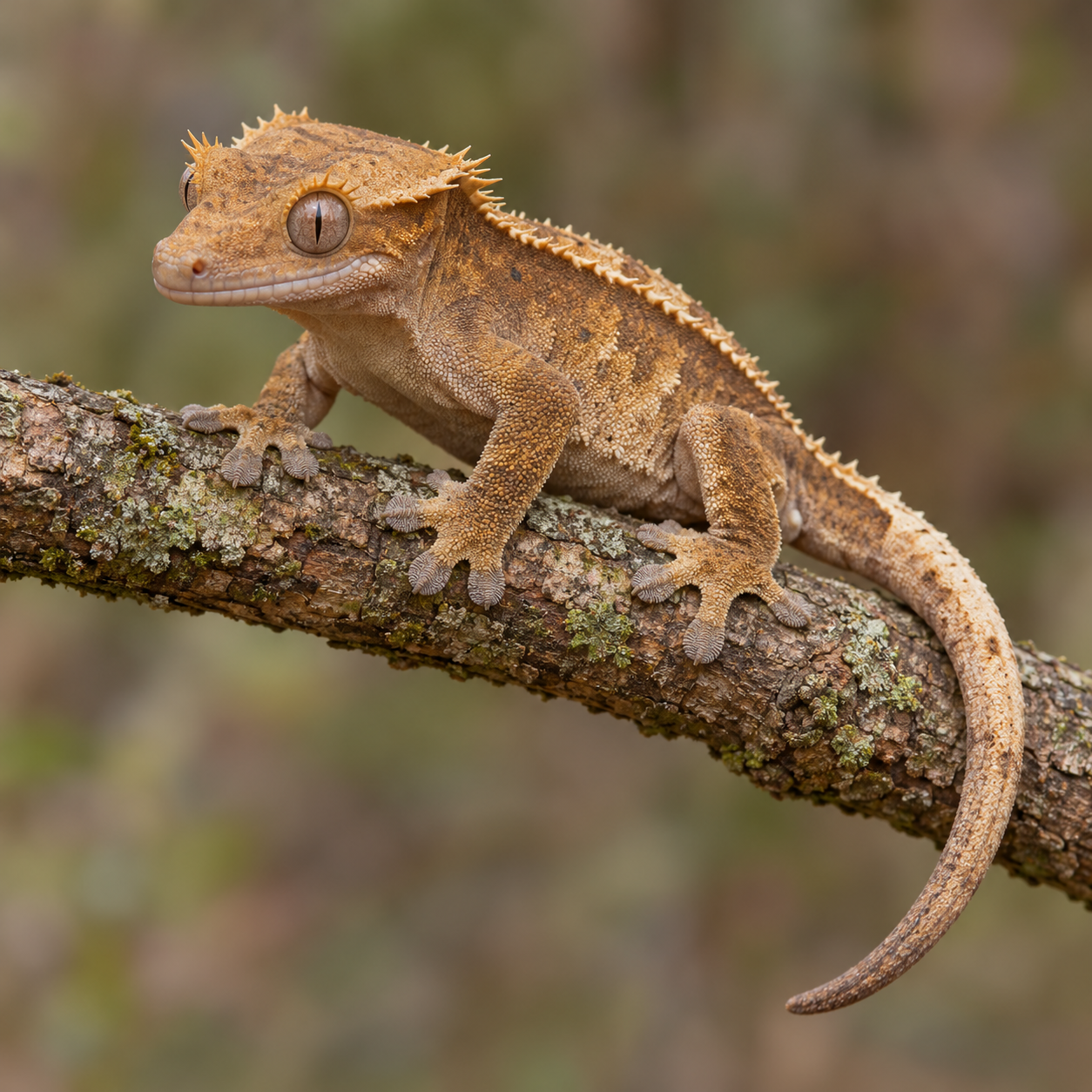
Published ambient humidity: 60–80% RHSource ambient/daytime or average band; local/diurnal variation still required · adult · scope: speciesAS24 · Humidity
Basking UV index: 1–2 UVIAt animal exposure position; provide shade and account for mesh/distance · adult · scope: speciesPigmentation/age exceptions require the full source; not a bulb-percentage value.AS24 · Lighting & UVB
Diet basis: Complete gecko diet plus suitable supplemented insectsCaptive care reported by the cited source · juvenile and adult · scope: speciesAge, body condition and supplement/UV plan affect feeding.AS24 · Food
Drinking access: Drinking droplets from appropriate mistingCaptive care reported by the cited source · adult · scope: speciesAR04 · Humidity / drinking access
Housing policy: Single-animal planning default; review species-specific exceptionsConservative plan consistent with avoiding competition; not a sourced universal prohibition or claim that all sociality is absent · adult · scope: planning inferenceAS24 · Housing / cohabitation
Humidity cycle: Allow a drier interval before misting againHumidity cycles rather than permanently wet conditions · adult · scope: speciesAR04 · Humidity
Floor substrate: Moisture-retentive planted substrate with litterCaptive care reported by the cited source · adult · scope: speciesAS24 · Substrate
Keeper housing recommendation: Routine cohabitation is not endorsed by this keeperPublished keeper judgment; separate housing is the recommended baseline · adult · scope: speciesAR03 · Cohabitation
Source disagreements and review notes
Conflicting enclosure height · resolved for display PDF and overview say 24 in high; detailed chapter specifies 36 in high for animals over 12 g. Display the detailed chapter’s 36 in baseline; retain the discrepancy for review.
General planning guidance and identity notes
Shared profile synthesis; this section does not establish species care values.
Enclosure
Tall dedicated vivarium with broad climbing routes and sheltered resting sites.
Moisture and ventilation
Humidity cycles and ventilation, rather than constant saturation.
Substrate and leaf litter
Drainable soil and litter supporting the enclosure humidity without wetting every perch.
Water
Clean drinking water; clean feeding ledges and remove spoiled diet.
Climate and lighting
Measured heat gradient, shade, lighting and UVB provision according to the species guide.
Plant and moss impact · inferred
Select planting around the animal’s enclosure, light, movement and feeding needs. Delicate moss may need protected patches.
Grouping and cohabitation
Solitary default for planning; breeding groups require additional space and aggression monitoring.
Breeding, molts and escape
Secure eggs, juveniles and cable openings; plan for offspring before breeding.
Identity limits
Name follows the cited keeper/reference usage; the actual purchased stock has not been independently identified.
Numerical care limits
Source-specific numerical facts, when present, retain life stage, location and units; blank topics remain unreviewed.
Qualitative selection synthesis remains separate from the individually cited source facts.
Published ambient humidity: 60–80% RHSource ambient/daytime or average band; local/diurnal variation still required · adult · scope: speciesAS25 · Humidity
Basking UV index: 1–2 UVIAt animal exposure position; provide shade and account for mesh/distance · adult · scope: speciesPigmentation/age exceptions require the full source; not a bulb-percentage value.AS25 · Lighting & UVB
Diet basis: Complete gecko diet plus suitable supplemented insectsCaptive care reported by the cited source · juvenile and adult · scope: speciesAge, body condition and supplement/UV plan affect feeding.AS25 · Food
Drinking access: Drinking droplets from appropriate mistingCaptive care reported by the cited source · adult · scope: speciesAS25 · Humidity / drinking access
Housing policy: Single-animal planning default; review species-specific exceptionsConservative plan consistent with avoiding competition; not a sourced universal prohibition or claim that all sociality is absent · adult · scope: planning inferenceAS25 · Housing / cohabitation
Floor substrate: Moisture-retentive planted substrate with litterCaptive care reported by the cited source · adult · scope: speciesAS25 · Substrate
Keeper housing recommendation: Routine cohabitation is not endorsed by this keeperPublished keeper judgment; separate housing is the recommended baseline · adult · scope: speciesAR05 · Can multiple gargoyle geckos be housed together?
Source disagreements and review notes
Conflicting enclosure height · resolved for display PDF and overview say 24 in high; detailed chapter specifies 36 in high for animals over 12 g. Display the detailed chapter’s 36 in baseline; retain the discrepancy for review.
General planning guidance and identity notes
Shared profile synthesis; this section does not establish species care values.
Enclosure
Tall dedicated vivarium with broad climbing routes and sheltered resting sites.
Moisture and ventilation
Humidity cycles and ventilation, rather than constant saturation.
Substrate and leaf litter
Drainable soil and litter supporting the enclosure humidity without wetting every perch.
Water
Clean drinking water; clean feeding ledges and remove spoiled diet.
Climate and lighting
Measured heat gradient, shade, lighting and UVB provision according to the species guide.
Plant and moss impact · inferred
Select planting around the animal’s enclosure, light, movement and feeding needs. Delicate moss may need protected patches.
Grouping and cohabitation
Solitary default for planning; breeding groups require additional space and aggression monitoring.
Breeding, molts and escape
Secure eggs, juveniles and cable openings; plan for offspring before breeding.
Identity limits
Name follows the cited keeper/reference usage; the actual purchased stock has not been independently identified.
Numerical care limits
Source-specific numerical facts, when present, retain life stage, location and units; blank topics remain unreviewed.
Qualitative selection synthesis remains separate from the individually cited source facts.
Published ambient humidity: 60–80% RHSource ambient/daytime or average band; local/diurnal variation still required · adult · scope: speciesAS26 · Humidity
Basking UV index: 1–2 UVIAt animal exposure position; provide shade and account for mesh/distance · adult · scope: speciesPigmentation/age exceptions require the full source; not a bulb-percentage value.AS26 · Lighting & UVB
Diet basis: Complete gecko diet plus small supplemented insectsCaptive care reported by the cited source · juvenile and adult · scope: speciesAge, body condition and supplement/UV plan affect feeding.AS26 · Food
Drinking access: Drinking droplets from appropriate mistingCaptive care reported by the cited source · adult · scope: speciesAS26 · Humidity / drinking access
Conspecific social arrangement: Small group; separate offspring as neededCaptive care reported by the cited source · adult · scope: speciesAR06 · Housing adults and hatchlings
Reproduction: Parthenogenesis; tiny escaping hatchlings and adult predation are concernsCaptive care reported by the cited source · adult · scope: speciesAR06 · Housing hatchlings
Source disagreements and review notes
Conflicting group capacity · resolved for display PDF says up to four adults in 12 × 12 × 18 in; detailed chapter says two to three. Use the smaller documented group (two to three); do not extrapolate maximum stocking from volume.
General planning guidance and identity notes
Shared profile synthesis; this section does not establish species care values.
Enclosure
Tall dedicated vivarium with broad climbing routes and sheltered resting sites.
Moisture and ventilation
Humidity cycles and ventilation, rather than constant saturation.
Substrate and leaf litter
Drainable soil and litter supporting the enclosure humidity without wetting every perch.
Water
Clean drinking water; clean feeding ledges and remove spoiled diet.
Climate and lighting
Measured heat gradient, shade, lighting and UVB provision according to the species guide.
Plant and moss impact · inferred
Select planting around the animal’s enclosure, light, movement and feeding needs. Delicate moss may need protected patches.
Grouping and cohabitation
Reviewed mourning-gecko guidance supports a small conspecific group with space and monitoring. Hatchlings can be eaten; reproduction and escapes require active management. This is not an endorsement of mixed-species housing.
Breeding, molts and escape
Parthenogenetic cultures can reproduce without males. Seal tiny exit gaps and plan separate hatchling care and population capacity.
Identity limits
Name follows the cited keeper/reference usage; the actual purchased stock has not been independently identified.
Numerical care limits
Source-specific numerical facts, when present, retain life stage, location and units; blank topics remain unreviewed.
Qualitative selection synthesis remains separate from the individually cited source facts.
Published ambient humidity: 40–75% RHSource ambient/daytime or average band; local/diurnal variation still required · adult · scope: speciesAS27 · Humidity
Basking UV index: 3–4 UVIAt animal exposure position; provide shade and account for mesh/distance · adult · scope: speciesPigmentation/age exceptions require the full source; not a bulb-percentage value.AS27 · Lighting & UVB
Diet basis: Appropriate gecko diet and supplemented live insectsCaptive care reported by the cited source · juvenile and adult · scope: speciesAge, body condition and supplement/UV plan affect feeding.AS27 · Food
Drinking access: Drinking droplets from appropriate mistingCaptive care reported by the cited source · adult · scope: speciesAS27 · Humidity / drinking access
Housing policy: Single-animal planning default; review species-specific exceptionsConservative plan consistent with avoiding competition; not a sourced universal prohibition or claim that all sociality is absent · adult · scope: planning inferenceAS27 · Housing / cohabitation
General planning guidance and identity notes
Shared profile synthesis; this section does not establish species care values.
Enclosure
Tall dedicated enclosure with branches, foliage, feeding access and basking opportunities.
Moisture and ventilation
Air exchange and species-appropriate humidity cycling; keep basking/perching choices available.
Substrate and leaf litter
Drainable planted floor; do not substitute a moss carpet for arboreal structure.
Water
Clean drinking provision and misting if specified by species care.
Climate and lighting
Measured basking gradient, visible light and UVB with shade; match the actual species.
Plant and moss impact · inferred
Select planting around the animal’s enclosure, light, movement and feeding needs. Delicate moss may need protected patches.
Grouping and cohabitation
No default multi-male or mixed-species group; evaluate territoriality and size.
Breeding, molts and escape
Eggs and tiny hatchlings may be missed in plants; fine vents and secure doors matter.
Identity limits
Name follows the cited keeper/reference usage; the actual purchased stock has not been independently identified.
Numerical care limits
Source-specific numerical facts, when present, retain life stage, location and units; blank topics remain unreviewed.
Qualitative selection synthesis remains separate from the individually cited source facts.
Published ambient humidity: 60–80% RHSource ambient/daytime or average band; local/diurnal variation still required · adult · scope: speciesAS28 · Humidity
Basking UV index: 3–4 UVIAt animal exposure position; provide shade and account for mesh/distance · adult · scope: speciesPigmentation/age exceptions require the full source; not a bulb-percentage value.AS28 · Lighting & UVB
Diet basis: Appropriate gecko diet and small supplemented live insectsCaptive care reported by the cited source · juvenile and adult · scope: speciesAge, body condition and supplement/UV plan affect feeding.AS28 · Food
Drinking access: Drinking droplets from appropriate mistingCaptive care reported by the cited source · adult · scope: speciesAS28 · Humidity / drinking access
Housing policy: Single-animal planning default; review species-specific exceptionsConservative plan consistent with avoiding competition; not a sourced universal prohibition or claim that all sociality is absent · adult · scope: planning inferenceAS28 · Housing / cohabitation
General planning guidance and identity notes
Shared profile synthesis; this section does not establish species care values.
Enclosure
Tall dedicated enclosure with branches, foliage, feeding access and basking opportunities.
Moisture and ventilation
Air exchange and species-appropriate humidity cycling; keep basking/perching choices available.
Substrate and leaf litter
Drainable planted floor; do not substitute a moss carpet for arboreal structure.
Water
Clean drinking provision and misting if specified by species care.
Climate and lighting
Measured basking gradient, visible light and UVB with shade; match the actual species.
Plant and moss impact · inferred
Select planting around the animal’s enclosure, light, movement and feeding needs. Delicate moss may need protected patches.
Grouping and cohabitation
No default multi-male or mixed-species group; evaluate territoriality and size.
Breeding, molts and escape
Eggs and tiny hatchlings may be missed in plants; fine vents and secure doors matter.
Identity limits
Name follows the cited keeper/reference usage; the actual purchased stock has not been independently identified.
Numerical care limits
Source-specific numerical facts, when present, retain life stage, location and units; blank topics remain unreviewed.
Qualitative selection synthesis remains separate from the individually cited source facts.
Published ambient humidity: 60–70% RHSource ambient/daytime or average band; local/diurnal variation still required · adult · scope: speciesAS29 · Humidity
Diet basis: Varied appropriately sized supplemented live insectsCaptive care reported by the cited source · juvenile and adult · scope: speciesAge, body condition and supplement/UV plan affect feeding.AS29 · Food
Drinking access: Drinking droplets from appropriate mistingCaptive care reported by the cited source · adult · scope: speciesAS29 · Humidity / drinking access
Housing policy: Single-animal planning default; review species-specific exceptionsConservative plan consistent with avoiding competition; not a sourced universal prohibition or claim that all sociality is absent · adult · scope: planning inferenceAS29 · Housing / cohabitation
General planning guidance and identity notes
Shared profile synthesis; this section does not establish species care values.
Enclosure
Tall dedicated enclosure with branches, foliage, feeding access and basking opportunities.
Moisture and ventilation
Air exchange and species-appropriate humidity cycling; keep basking/perching choices available.
Substrate and leaf litter
Drainable planted floor; do not substitute a moss carpet for arboreal structure.
Water
Clean drinking provision and misting if specified by species care.
Climate and lighting
Measured basking gradient, visible light and UVB with shade; match the actual species.
Plant and moss impact · inferred
Select planting around the animal’s enclosure, light, movement and feeding needs. Delicate moss may need protected patches.
Grouping and cohabitation
No default multi-male or mixed-species group; evaluate territoriality and size.
Breeding, molts and escape
Eggs and tiny hatchlings may be missed in plants; fine vents and secure doors matter.
Identity limits
Name follows the cited keeper/reference usage; the actual purchased stock has not been independently identified.
Numerical care limits
Source-specific numerical facts, when present, retain life stage, location and units; blank topics remain unreviewed.
Qualitative selection synthesis remains separate from the individually cited source facts.
Published ambient humidity: 70–80% RHSource ambient/daytime or average band; local/diurnal variation still required · adult · scope: speciesAS30 · Humidity
Basking UV index: 1–2 UVIAt animal exposure position; provide shade and account for mesh/distance · adult · scope: speciesPigmentation/age exceptions require the full source; not a bulb-percentage value.AS30 · Lighting & UVB
Diet basis: Varied appropriately sized supplemented live invertebratesCaptive care reported by the cited source · juvenile and adult · scope: speciesAge, body condition and supplement/UV plan affect feeding.AS30 · Food
Housing policy: Single-animal planning default; review species-specific exceptionsConservative plan consistent with avoiding competition; not a sourced universal prohibition or claim that all sociality is absent · adult · scope: planning inferenceAS30 · Housing / cohabitation
Published ambient humidity: 60–70% RHSource ambient/daytime or average band; local/diurnal variation still required · adult · scope: speciesAS31 · Humidity
Basking UV index: 3–4 UVIAt animal exposure position; provide shade and account for mesh/distance · adult · scope: speciesPigmentation/age exceptions require the full source; not a bulb-percentage value.AS31 · Lighting & UVB
Diet basis: Varied appropriately sized supplemented live invertebratesCaptive care reported by the cited source · juvenile and adult · scope: speciesAge, body condition and supplement/UV plan affect feeding.AS31 · Food
Housing policy: Single-animal planning default; review species-specific exceptionsConservative plan consistent with avoiding competition; not a sourced universal prohibition or claim that all sociality is absent · adult · scope: planning inferenceAS31 · Housing / cohabitation
Burrowing substrate: Deep moisture-retentive burrowable soilCaptive care reported by the cited source · adult · scope: speciesAS31 · Substrate
General planning guidance and identity notes
Shared profile synthesis; this section does not establish species care values.
Enclosure
Dedicated enclosure with usable floor space, burrowing areas and stable hides.
Moisture and ventilation
Moist lower refuges, drainage and ventilation; avoid a wet surface everywhere.
Substrate and leaf litter
Deep structured soil and leaf litter; anchor plants and heavy furnishings.
Water
Clean accessible water appropriate to the species, with easy exits.
Climate and lighting
Measured heat gradient and suitable lighting/UVB; cool retreats remain available.
Plant and moss impact · inferred
Select planting around the animal’s enclosure, light, movement and feeding needs. Delicate moss may need protected patches.
Grouping and cohabitation
Solitary default unless a species-specific conspecific arrangement has been reviewed.
Breeding, molts and escape
Burrowing can conceal animals and eggs; retain inspection access and plan for offspring.
Identity limits
Name follows the reviewed taxonomic authority. Older combinations are retained as aliases; purchased specimens still require reliable identification.
Numerical care limits
Source-specific numerical facts, when present, retain life stage, location and units; blank topics remain unreviewed.
Qualitative selection synthesis remains separate from the individually cited source facts.
Dry-habitat comparison: keep a localized humid refuge without making the whole enclosure a wet mossarium.
Group
Lizards
Role
Dry-habitat comparison
Habitat
Drier terrestrial
Humid moss display
Dry habitat only
Record type
species
Evidence scope
Species / culture facts
Core topics documented; verify full guide Care topics still to verify: No empty core topic; still review full guide, context and source notes..
Reviewed source facts (12)
Published enclosure baseline: 36 × 18 × 18 inL × W × H; one adult unless stated. Source recommendation, not a universal legal minimum. · adult · scope: speciesLarger usable space and appropriate enrichment remain relevant; check source revisions.AR07 · Detailed enclosure chapter
Basking area / surface: 34–36 °CLocal basking site; never the whole-enclosure air target · adult · scope: speciesAS32 · Heating
Cool zone: 21–25 °CCool zone as labelled by the source; distinct from basking surface · adult · scope: speciesAS32 · Heating
Published ambient humidity: 30–40% RHSource ambient/daytime or average band; local/diurnal variation still required · adult · scope: speciesAS32 · Humidity
Basking UV index: 1–2 UVIAt animal exposure position; provide shade and account for mesh/distance · adult · scope: speciesPigmentation/age exceptions require the full source; not a bulb-percentage value.AS32 · Lighting & UVB
Diet basis: Varied appropriately sized supplemented live insectsCaptive care reported by the cited source · juvenile and adult · scope: speciesAge, body condition and supplement/UV plan affect feeding.AS32 · Food
Housing policy: Single-animal planning default; review species-specific exceptionsConservative plan consistent with avoiding competition; not a sourced universal prohibition or claim that all sociality is absent · adult · scope: planning inferenceAS32 · Housing / cohabitation
Substrate context: Naturalistic soil/mineral substrate requires appropriate heat, hydration and animal healthCaptive care reported by the cited source · adult · scope: speciesA substrate recipe alone does not resolve husbandry or ingestion risk.AS32 · Substrate
Keeper housing recommendation: Routine cohabitation is not recommendedPublished keeper recommendation; individual aggression still matters · adult · scope: speciesAR07 · Can leopard geckos be housed together?
Humid retreat: Provide a localized humid hide for sheddingCaptive care reported by the cited source · adult · scope: speciesAR37 · Humidity
Pigment exception: Albino/less-pigmented animals need lower exposureCaptive care reported by the cited source · adult · scope: speciesDo not apply the normally pigmented UVI band automatically.AS32 · Lighting & UVB
General planning guidance and identity notes
Shared profile synthesis; this section does not establish species care values.
Enclosure
Dedicated large terrestrial enclosure with basking area, hides and exercise space.
Moisture and ventilation
Predominantly dry conditions with appropriate local humid refuges; no wet tropical moss carpet.
Substrate and leaf litter
Species-appropriate naturalistic soil/mineral substrate with stable furnishings.
Water
Appropriate clean drinking provision; a dry habitat does not mean no hydration.
Climate and lighting
Measured basking heat, cooler retreats and species-appropriate UVB/lighting.
Plant and moss impact · inferred
Select planting around the animal’s enclosure, light, movement and feeding needs. Delicate moss may need protected patches.
Grouping and cohabitation
Plan solitary housing; do not use a community terrarium.
Breeding, molts and escape
Select cleanup species that can survive the refuges without wetting the whole habitat.
Identity limits
Name follows the cited keeper/reference usage; the actual purchased stock has not been independently identified.
Numerical care limits
Source-specific numerical facts, when present, retain life stage, location and units; blank topics remain unreviewed.
Qualitative selection synthesis remains separate from the individually cited source facts.
A large dry-habitat comparison requiring substantial space and lighting; not a damp mossarium animal.
Group
Lizards
Role
Dry-habitat comparison
Habitat
Drier terrestrial
Humid moss display
Dry habitat only
Record type
species
Evidence scope
Species / culture facts
Partial care evidence Care topics still to verify: substrate; grouping.
Reviewed source facts (10)
Published enclosure baseline: 6 × 2 × 2 ftL × W × H; one adult unless stated. Source recommendation, not a universal legal minimum. · adult · scope: speciesLarger usable space and appropriate enrichment remain relevant; check source revisions.AS33 · Housing
Published ambient humidity: 30–60% RHSource ambient/daytime or average band; local/diurnal variation still required · adult · scope: speciesAS33 · Humidity
Basking UV index: 4–4.5 UVIAt animal exposure position; provide shade and account for mesh/distance · adult · scope: speciesPigmentation/age exceptions require the full source; not a bulb-percentage value.AS33 · Lighting & UVB
Diet basis: Insects and suitable leafy plants; proportions change with ageCaptive care reported by the cited source · juvenile and adult · scope: speciesAge, body condition and supplement/UV plan affect feeding.AS33 · Food
Housing policy: Single-animal planning default; review species-specific exceptionsConservative plan consistent with avoiding competition; not a sourced universal prohibition or claim that all sociality is absent · adult · scope: planning inferenceAS33 · Housing / cohabitation
Basking surface: 42–45 °CLocal basking surface, measured by temperature gun · adult · scope: speciesAR38 · Temperatures
Cool surface: 25–29 °CCool-side surface, not air · adult · scope: speciesAR38 · Temperatures
Air gradient: 22–37 °CGradient across the enclosure, not a constant target · adult · scope: speciesAR38 · Temperatures
Different thermal bands · resolved for display PDF basking surface is 40–46 °C; detailed chapter narrows to 42–45 °C and distinguishes cool surfaces from air. Display the detailed chapter’s contextual bands; no whole-enclosure target inferred.
General planning guidance and identity notes
Shared profile synthesis; this section does not establish species care values.
Enclosure
Dedicated large terrestrial enclosure with basking area, hides and exercise space.
Moisture and ventilation
Predominantly dry conditions with appropriate local humid refuges; no wet tropical moss carpet.
Substrate and leaf litter
Species-appropriate naturalistic soil/mineral substrate with stable furnishings.
Water
Appropriate clean drinking provision; a dry habitat does not mean no hydration.
Climate and lighting
Measured basking heat, cooler retreats and species-appropriate UVB/lighting.
Plant and moss impact · inferred
Select planting around the animal’s enclosure, light, movement and feeding needs. Delicate moss may need protected patches.
Grouping and cohabitation
Plan solitary housing; do not use a community terrarium.
Breeding, molts and escape
Select cleanup species that can survive the refuges without wetting the whole habitat.
Identity limits
Name follows the cited keeper/reference usage; the actual purchased stock has not been independently identified.
Numerical care limits
Source-specific numerical facts, when present, retain life stage, location and units; blank topics remain unreviewed.
Qualitative selection synthesis remains separate from the individually cited source facts.
Plants and moss must tolerate movement and burrowing; retain full access to hides.
Group
Snakes
Role
Display predator
Habitat
Moisture gradient
Humid moss display
Dedicated display
Record type
species
Evidence scope
Species / culture facts
Partial care evidence Care topics still to verify: substrate; light_uvb; grouping.
Reviewed source facts (7)
Published enclosure baseline: 48 × 24 × 24 in; scale with adult lengthL × W × H; one adult unless stated. Source recommendation, not a universal legal minimum. · adult · scope: speciesLarger usable space and appropriate enrichment remain relevant; check source revisions.AS35 · Housing
Basking area / surface: 32–32 °CLocal basking site; never the whole-enclosure air target · adult · scope: speciesAS35 · Heating
Cool zone: 23–24 °CCool zone as labelled by the source; distinct from basking surface · adult · scope: speciesAS35 · Heating
Published ambient humidity: 65–75% RHSource ambient/daytime or average band; local/diurnal variation still required · adult · scope: speciesAS35 · Humidity
Diet basis: Appropriately sized whole animal preyCaptive care reported by the cited source · juvenile and adult · scope: speciesAge, body condition and supplement/UV plan affect feeding.AS35 · Food
Housing policy: Single-animal planning default; review species-specific exceptionsConservative plan consistent with avoiding competition; not a sourced universal prohibition or claim that all sociality is absent · adult · scope: planning inferenceAS35 · Housing / cohabitation
General planning guidance and identity notes
Shared profile synthesis; this section does not establish species care values.
Enclosure
Dedicated secure enclosure supporting full-body movement, hides and appropriate climbing/burrowing.
Moisture and ventilation
Species-specific humidity and local moist hides; a generic tropical fogger is not a care plan.
Substrate and leaf litter
Structured substrate with stable decor; expect burrowing and displacement.
Water
Clean accessible water and regular cleaning; check beneath heavy bowls.
Climate and lighting
Measured thermal gradient and appropriate light/UVB guidance for the species.
Plant and moss impact · inferred
Movement and burrowing can uproot plants; anchor heavy items and preserve inspection access.
Grouping and cohabitation
Solitary default; some snakes eat other snakes.
Breeding, molts and escape
Lock doors and cable gaps; inspect planted interiors without losing access to the animal.
Identity limits
Name follows the cited keeper/reference usage; the actual purchased stock has not been independently identified.
Numerical care limits
Source-specific numerical facts, when present, retain life stage, location and units; blank topics remain unreviewed.
Qualitative selection synthesis remains separate from the individually cited source facts.
Heavy movement can displace fine planting; provide stable hides and measured humidity.
Group
Snakes
Role
Display predator
Habitat
Moisture gradient
Humid moss display
Dedicated display
Record type
species
Evidence scope
Species / culture facts
Partial care evidence Care topics still to verify: substrate; grouping.
Reviewed source facts (10)
Published enclosure baseline: 48 × 24 × 24 in; allow full adult extensionL × W × H; one adult unless stated. Source recommendation, not a universal legal minimum. · adult · scope: speciesLarger usable space and appropriate enrichment remain relevant; check source revisions.AS34 · Housing
Diet basis: Appropriately sized whole animal preyCaptive care reported by the cited source · juvenile and adult · scope: speciesAge, body condition and supplement/UV plan affect feeding.AS34 · Food
Housing policy: Single-animal planning default; review species-specific exceptionsConservative plan consistent with avoiding competition; not a sourced universal prohibition or claim that all sociality is absent · adult · scope: planning inferenceAS34 · Housing / cohabitation
Conflicting humidity guidance · resolved for display PDF gives 45–75% RH; detailed chapter gives 60–80% by day and 80–100% at night. Use separately labelled day/night chapter values; do not blend the ranges.
General planning guidance and identity notes
Shared profile synthesis; this section does not establish species care values.
Enclosure
Dedicated secure enclosure supporting full-body movement, hides and appropriate climbing/burrowing.
Moisture and ventilation
Species-specific humidity and local moist hides; a generic tropical fogger is not a care plan.
Substrate and leaf litter
Structured substrate with stable decor; expect burrowing and displacement.
Water
Clean accessible water and regular cleaning; check beneath heavy bowls.
Climate and lighting
Measured thermal gradient and appropriate light/UVB guidance for the species.
Plant and moss impact · inferred
Movement and burrowing can uproot plants; anchor heavy items and preserve inspection access.
Grouping and cohabitation
Solitary default; some snakes eat other snakes.
Breeding, molts and escape
Lock doors and cable gaps; inspect planted interiors without losing access to the animal.
Identity limits
Name follows the cited keeper/reference usage; the actual purchased stock has not been independently identified.
Numerical care limits
Source-specific numerical facts, when present, retain life stage, location and units; blank topics remain unreviewed.
Qualitative selection synthesis remains separate from the individually cited source facts.
A solitary predator comparison; a species-specific dry/seasonal habitat plan is required.
Group
Snakes
Role
Display predator
Habitat
Moisture gradient
Humid moss display
Dedicated display
Record type
species
Evidence scope
Group guidance / overview
Overview only Care topics still to verify: enclosure; temperature; moisture; substrate; diet; water; light_uvb; grouping.
No individually reviewed source facts yet. This is an overview for further research.
Source disagreements and review notes
Taxonomic scope mismatch · caution Existing care reference covers Lampropeltis broadly, not a verified California kingsnake protocol. Retain as an overview; exclude genus numerical bands from species planning facts.
General planning guidance and identity notes
Shared profile synthesis; this section does not establish species care values.
Enclosure
Dedicated secure enclosure supporting full-body movement, hides and appropriate climbing/burrowing.
Moisture and ventilation
Species-specific humidity and local moist hides; a generic tropical fogger is not a care plan.
Substrate and leaf litter
Structured substrate with stable decor; expect burrowing and displacement.
Water
Clean accessible water and regular cleaning; check beneath heavy bowls.
Climate and lighting
Measured thermal gradient and appropriate light/UVB guidance for the species.
Plant and moss impact · inferred
Movement and burrowing can uproot plants; anchor heavy items and preserve inspection access.
Grouping and cohabitation
Solitary default; some snakes eat other snakes.
Breeding, molts and escape
Lock doors and cable gaps; inspect planted interiors without losing access to the animal.
Identity limits
Name follows the cited keeper/reference usage; the actual purchased stock has not been independently identified.
Numerical care limits
Source-specific numerical facts, when present, retain life stage, location and units; blank topics remain unreviewed.
Qualitative selection synthesis remains separate from the individually cited source facts.
A large dedicated land habitat comparison; trampling, digging and waste production exceed a small moss display.
Group
Turtles
Role
Large-enclosure comparison
Habitat
Moisture gradient
Humid moss display
Large habitat only
Record type
subspecies
Evidence scope
Species / culture facts
Partial care evidence Care topics still to verify: substrate; light_uvb; grouping.
Reviewed source facts (7)
Published enclosure baseline: 6.5 × 3.5 × 2 ftL × W × H; one adult unless stated. Source recommendation, not a universal legal minimum. · adult · scope: speciesLarger usable space and appropriate enrichment remain relevant; check source revisions.AS37 · Housing
Basking area / surface: 29–31 °CLocal basking site; never the whole-enclosure air target · adult · scope: speciesAS37 · Heating
Cool zone: 21–24 °CCool zone as labelled by the source; distinct from basking surface · adult · scope: speciesAS37 · Heating
Published ambient humidity: 60–80% RHSource ambient/daytime or average band; local/diurnal variation still required · adult · scope: speciesAS37 · Humidity
Diet basis: Species-appropriate balanced plant and animal foodsCaptive care reported by the cited source · juvenile and adult · scope: speciesAge, body condition and supplement/UV plan affect feeding.AS37 · Food
Housing policy: Single-animal planning default; review species-specific exceptionsConservative plan consistent with avoiding competition; not a sourced universal prohibition or claim that all sociality is absent · adult · scope: planning inferenceAS37 · Housing / cohabitation
General planning guidance and identity notes
Shared profile synthesis; this section does not establish species care values.
Enclosure
Dedicated substantial floor habitat or secure suitable outdoor pen; a tabletop mossarium is unsuitable.
Moisture and ventilation
Species-appropriate moist retreats, open areas and ventilation.
A land-dominant freshwater paludarium can include moss, but needs maintained water, hides and a crab feeding plan.
Group
Land crabs
Role
Display omnivore
Habitat
Paludarium
Humid moss display
Paludarium only
Record type
species
Evidence scope
Group guidance / overview
Overview only Care topics still to verify: enclosure; temperature; moisture; substrate; diet; water; light_uvb; grouping.
Reviewed source facts (1)
Trade identity: Named Geosesarma hagen listing; complete species care not reviewedCaptive care reported by the cited source · relevant life stages · scope: species listingAS38 · Relevant care / natural-history section
General planning guidance and identity notes
Shared profile synthesis; this section does not establish species care values.
Enclosure
Dedicated land-dominant paludarium with many hides and easy routes between land and freshwater.
Moisture and ventilation
Humid sheltered land plus ventilation; avoid flooding burrows and land substrate.
Substrate and leaf litter
Drainable land soil, litter and stable water-safe hardscape.
Water
Maintained freshwater area and safe exits; confirm the species before adopting a breeding plan.
Climate and lighting
Confirm species climate; water and air both require monitoring.
Plant and moss impact · inferred
Digging and omnivory can change planting and threaten small tankmates; keep land and water accessible.
Grouping and cohabitation
Aggression and predation are possible. A species-specific sex/space plan is required; no default frog/crab mix.
Breeding, molts and escape
Direct-developing young can be tiny and hidden; secure vents and protect molts.
Identity limits
Name follows the cited keeper/reference usage; the actual purchased stock has not been independently identified.
Numerical care limits
Source-specific numerical facts, when present, retain life stage, location and units; blank topics remain unreviewed.
Qualitative selection synthesis remains separate from the individually cited source facts.
Plant-eating display comparison, subject to jurisdiction-specific restrictions; inclusion is not an acquisition recommendation.
Group
Land snails
Role
Display herbivore
Habitat
Humid terrestrial
Humid moss display
Dedicated display
Record type
species
Evidence scope
Group guidance / overview
Overview only Care topics still to verify: enclosure; temperature; moisture; substrate; diet; water; light_uvb; grouping.
Reviewed source facts (1)
Calcium: Calcium source and varied suitable plant foodCaptive care reported by the cited source · relevant life stages · scope: giant land-snail groupAS40 · Relevant care / natural-history section
General planning guidance and identity notes
Shared profile synthesis; this section does not establish species care values.
Enclosure
Dedicated ventilated, secure land enclosure with safe soft furnishings.
Moisture and ventilation
Moist soil and air exchange; avoid heat or waterlogging.
Substrate and leaf litter
Appropriate soil with digging/egg-laying depth; calcium available.
Water
Safe species-appropriate hydration without trapping or drowning hazards.
Climate and lighting
Confirm actual species climate; giant African and temperate garden snails are not interchangeable.
Plant and moss impact · inferred
Live plants, moss and seedlings may be eaten; design as a herbivore display rather than a pristine planted arrangement.
Grouping and cohabitation
Keep identified stock separately from predators and incompatible conditions.
Breeding, molts and escape
Check eggs and population regularly. Confirm local possession/movement rules before acquiring stock; never release.
Identity limits
Often called Achatina fulica in older care material. Confirm the actual species and legal captive provenance.
Numerical care limits
Source-specific numerical facts, when present, retain life stage, location and units; blank topics remain unreviewed.
Qualitative selection synthesis remains separate from the individually cited source facts.
Dry desert display comparison; unsuitable for a continuously moist tropical moss floor.
Group
Beetles
Role
Dry-habitat comparison
Habitat
Drier terrestrial
Humid moss display
Dry habitat only
Record type
species
Evidence scope
Group guidance / overview
Overview only Care topics still to verify: enclosure; temperature; moisture; substrate; diet; water; light_uvb; grouping.
Reviewed source facts (1)
Habitat: Dry, ventilated desert-beetle displayCaptive care reported by the cited source · relevant life stages · scope: desert-beetle groupAS42 · Relevant care / natural-history section
General planning guidance and identity notes
Shared profile synthesis; this section does not establish species care values.
Enclosure
Ventilated dedicated terrestrial enclosure with dry footing and shelter.
Moisture and ventilation
Keep the main environment dry; do not apply humid tropical cleanup-crew care.
Substrate and leaf litter
Species-appropriate sand/soil with safe hides.
Water
Species-appropriate hydration; avoid dangerous deep dishes.
Climate and lighting
Verify species temperatures and safe heat provision.
Plant and moss impact · inferred
Select planting around the animal’s enclosure, light, movement and feeding needs. Delicate moss may need protected patches.
Grouping and cohabitation
Review any conspecific group; do not combine with predators or wet-forest fauna.
Breeding, molts and escape
Adult display survival and successful larval rearing are different husbandry tasks.
Identity limits
Name follows the cited keeper/reference usage; the actual purchased stock has not been independently identified.
Numerical care limits
Source-specific numerical facts, when present, retain life stage, location and units; blank topics remain unreviewed.
Qualitative selection synthesis remains separate from the individually cited source facts.
Keep adult display and larval rearing needs distinct; larvae need a verified food substrate.
Group
Beetles
Role
Display / breeding culture
Habitat
Managed culture
Humid moss display
Culture only
Record type
species
Evidence scope
Group guidance / overview
Overview only Care topics still to verify: enclosure; temperature; moisture; substrate; diet; water; light_uvb; grouping.
Reviewed source facts (1)
Life-stage diet: Larval food substrate differs from adult beetle feedingCaptive care reported by the cited source · relevant life stages · scope: Dynastes groupAS43 · Relevant care / natural-history section
General planning guidance and identity notes
Shared profile synthesis; this section does not establish species care values.
Enclosure
Dedicated adult display and appropriately sized larval rearing substrate.
Moisture and ventilation
Substrate moisture depends on species and stage; keep aerated.
Substrate and leaf litter
Larvae need a validated edible substrate, not plain decorative terrarium soil.
Water
Provide moisture using a species-appropriate method without flooding.
Climate and lighting
Confirm temperature and seasonal development before breeding.
Plant and moss impact · inferred
Select planting around the animal’s enclosure, light, movement and feeding needs. Delicate moss may need protected patches.
Grouping and cohabitation
Eggs, larvae, pupae and adults may need separation; assess cannibalism/competition.
Breeding, molts and escape
Protect pupal chambers and retain stage/date records; do not churn substrate casually.
Identity limits
Name follows the cited keeper/reference usage; the actual purchased stock has not been independently identified.
Numerical care limits
Source-specific numerical facts, when present, retain life stage, location and units; blank topics remain unreviewed.
Qualitative selection synthesis remains separate from the individually cited source facts.
Keep adult display and larval rearing needs distinct; larvae need a verified food substrate.
Group
Beetles
Role
Display / breeding culture
Habitat
Managed culture
Humid moss display
Culture only
Record type
species
Evidence scope
Group guidance / overview
Overview only Care topics still to verify: enclosure; temperature; moisture; substrate; diet; water; light_uvb; grouping.
Reviewed source facts (1)
Life-stage diet: Larval food substrate differs from adult beetle feedingCaptive care reported by the cited source · relevant life stages · scope: Dynastes groupAS43 · Relevant care / natural-history section
General planning guidance and identity notes
Shared profile synthesis; this section does not establish species care values.
Enclosure
Dedicated adult display and appropriately sized larval rearing substrate.
Moisture and ventilation
Substrate moisture depends on species and stage; keep aerated.
Substrate and leaf litter
Larvae need a validated edible substrate, not plain decorative terrarium soil.
Water
Provide moisture using a species-appropriate method without flooding.
Climate and lighting
Confirm temperature and seasonal development before breeding.
Plant and moss impact · inferred
Select planting around the animal’s enclosure, light, movement and feeding needs. Delicate moss may need protected patches.
Grouping and cohabitation
Eggs, larvae, pupae and adults may need separation; assess cannibalism/competition.
Breeding, molts and escape
Protect pupal chambers and retain stage/date records; do not churn substrate casually.
Identity limits
Name follows the cited keeper/reference usage; the actual purchased stock has not been independently identified.
Numerical care limits
Source-specific numerical facts, when present, retain life stage, location and units; blank topics remain unreviewed.
Qualitative selection synthesis remains separate from the individually cited source facts.
Pest-management comparison for an identified target; not a routine detritivore addition.
Group
Beetles
Role
Biological control predator
Habitat
Managed culture
Humid moss display
Targeted control only
Record type
species
Evidence scope
Species / culture facts
Partial care evidence Care topics still to verify: enclosure; temperature; moisture; substrate; diet; water; light_uvb; grouping.
Reviewed source facts (1)
Feeding guild: Predatory biological control agent, not a detritivoreCaptive care reported by the cited source · relevant life stages · scope: speciesAS54 · Relevant care / natural-history section
General planning guidance and identity notes
Shared profile synthesis; this section does not establish species care values.
Enclosure
Use only against an identified target in an appropriate managed substrate.
Moisture and ventilation
Match the biocontrol agent to substrate conditions and target life stage.
Substrate and leaf litter
Growing-media evidence does not prove compatibility with every terrarium soil community.
Water
Keep substrate conditions appropriate to the agent; no aquatic stocking role.
Climate and lighting
Follow the supplier and extension protocol for the actual agent.
Plant and moss impact · inferred
Select planting around the animal’s enclosure, light, movement and feeding needs. Delicate moss may need protected patches.
Grouping and cohabitation
Assess non-target cleanup fauna before introduction; efficacy in a greenhouse is not proof of enclosure-wide compatibility.
Breeding, molts and escape
Do not add routinely to a healthy terrarium; record the pest, treatment and observed outcome.
Identity limits
Name follows the cited keeper/reference usage; the actual purchased stock has not been independently identified.
Numerical care limits
Source-specific numerical facts, when present, retain life stage, location and units; blank topics remain unreviewed.
Qualitative selection synthesis remains separate from the individually cited source facts.
Often sold under a species name despite uncertain or hybrid culture identity; preserve breeder lineage.
Group
Cockroaches
Role
Display / feeder colony
Habitat
Moisture gradient
Humid moss display
Culture only
Record type
genus / trade group
Evidence scope
Group guidance / overview
Overview only Care topics still to verify: enclosure; temperature; moisture; substrate; diet; water; light_uvb; grouping.
Reviewed source facts (1)
Breeding lines: Hissing-roach cultures may hybridize; retain provenanceCaptive care reported by the cited source · relevant life stages · scope: trade groupAS44 · Relevant care / natural-history section
General planning guidance and identity notes
Shared profile synthesis; this section does not establish species care values.
Enclosure
Secure ventilated colony with hides and feeding access; not loose stocking into a room or open planter.
Moisture and ventilation
Provide the gradient appropriate to the species; burrowing and climbing groups differ.
Substrate and leaf litter
Species-specific soil/litter or clean colony furnishings; manage food debris.
Water
Safe hydration appropriate to colony stages.
Climate and lighting
Confirm species heat needs; breeding output is not evidence of display compatibility.
Plant and moss impact · inferred
Select planting around the animal’s enclosure, light, movement and feeding needs. Delicate moss may need protected patches.
Grouping and cohabitation
Maintain separate species/lines; hybridization and competition can compromise colonies.
Breeding, molts and escape
Secure adults and tiny nymphs at every gap; monitor reproduction and allergies during colony maintenance.
Identity limits
Name follows the cited keeper/reference usage; the actual purchased stock has not been independently identified.
Numerical care limits
Source-specific numerical facts, when present, retain life stage, location and units; blank topics remain unreviewed.
Qualitative selection synthesis remains separate from the individually cited source facts.
Burrowing display culture; verify the particular species and maintain a suitable substrate gradient.
Group
Cockroaches
Role
Display / feeder colony
Habitat
Moisture gradient
Humid moss display
Culture only
Record type
genus / trade group
Evidence scope
Group guidance / overview
Overview only Care topics still to verify: enclosure; temperature; moisture; substrate; diet; water; light_uvb; grouping.
Reviewed source facts (1)
Substrate gradient: Therea group uses damp lower substrate and a drier surfaceCaptive care reported by the cited source · relevant life stages · scope: genusAS44 · Relevant care / natural-history section
General planning guidance and identity notes
Shared profile synthesis; this section does not establish species care values.
Enclosure
Secure ventilated colony with hides and feeding access; not loose stocking into a room or open planter.
Moisture and ventilation
Provide the gradient appropriate to the species; burrowing and climbing groups differ.
Substrate and leaf litter
Species-specific soil/litter or clean colony furnishings; manage food debris.
Water
Safe hydration appropriate to colony stages.
Climate and lighting
Confirm species heat needs; breeding output is not evidence of display compatibility.
Plant and moss impact · inferred
Select planting around the animal’s enclosure, light, movement and feeding needs. Delicate moss may need protected patches.
Grouping and cohabitation
Maintain separate species/lines; hybridization and competition can compromise colonies.
Breeding, molts and escape
Secure adults and tiny nymphs at every gap; monitor reproduction and allergies during colony maintenance.
Identity limits
Name follows the cited keeper/reference usage; the actual purchased stock has not been independently identified.
Numerical care limits
Source-specific numerical facts, when present, retain life stage, location and units; blank topics remain unreviewed.
Qualitative selection synthesis remains separate from the individually cited source facts.
A079 Orange-head / related composting roach cultures
Eublaberus spp.
Managed decomposition colony comparison; food processing, heat and population need active management.
Group
Cockroaches
Role
Display / feeder colony
Habitat
Moisture gradient
Humid moss display
Culture only
Record type
genus / trade group
Evidence scope
Group guidance / overview
Overview only Care topics still to verify: enclosure; temperature; moisture; substrate; diet; water; light_uvb; grouping.
Reviewed source facts (1)
Use: Managed high-food-input colony; not a default small-vivarium crewCaptive care reported by the cited source · relevant life stages · scope: genusAS44 · Relevant care / natural-history section
General planning guidance and identity notes
Shared profile synthesis; this section does not establish species care values.
Enclosure
Secure ventilated colony with hides and feeding access; not loose stocking into a room or open planter.
Moisture and ventilation
Provide the gradient appropriate to the species; burrowing and climbing groups differ.
Substrate and leaf litter
Species-specific soil/litter or clean colony furnishings; manage food debris.
Water
Safe hydration appropriate to colony stages.
Climate and lighting
Confirm species heat needs; breeding output is not evidence of display compatibility.
Plant and moss impact · inferred
Select planting around the animal’s enclosure, light, movement and feeding needs. Delicate moss may need protected patches.
Grouping and cohabitation
Maintain separate species/lines; hybridization and competition can compromise colonies.
Breeding, molts and escape
Secure adults and tiny nymphs at every gap; monitor reproduction and allergies during colony maintenance.
Identity limits
Name follows the cited keeper/reference usage; the actual purchased stock has not been independently identified.
Numerical care limits
Source-specific numerical facts, when present, retain life stage, location and units; blank topics remain unreviewed.
Qualitative selection synthesis remains separate from the individually cited source facts.
Research the particular species before keeping; a tall planted display must preserve free hanging space for molts.
Group
Mantises
Role
Display predator
Habitat
Ventilated insect enclosure
Humid moss display
Dedicated display
Record type
species
Evidence scope
Group guidance / overview
Overview only Care topics still to verify: enclosure; temperature; moisture; substrate; diet; water; light_uvb; grouping.
Reviewed source facts (1)
Molting clearance: Unobstructed hanging space and gripping surfacesCaptive care reported by the cited source · relevant life stages · scope: mantis groupAS45 · Relevant care / natural-history section
General planning guidance and identity notes
Shared profile synthesis; this section does not establish species care values.
Enclosure
Dedicated ventilated enclosure with gripping surfaces and unobstructed hanging/molting space.
Moisture and ventilation
Species-appropriate misting and airflow; do not let a wet soil display dictate air conditions.
Substrate and leaf litter
Floor material is secondary to safe perches and molting clearance.
Water
Safe droplets as appropriate to the species; avoid deep dishes.
Climate and lighting
Confirm species-specific climate and light cycle.
Plant and moss impact · inferred
Select planting around the animal’s enclosure, light, movement and feeding needs. Delicate moss may need protected patches.
Grouping and cohabitation
Solitary default because cannibalism is a risk.
Breeding, molts and escape
Plan separately for ootheca incubation and numerous tiny nymphs; never release surplus animals.
Identity limits
Name follows the cited keeper/reference usage; the actual purchased stock has not been independently identified.
Numerical care limits
Source-specific numerical facts, when present, retain life stage, location and units; blank topics remain unreviewed.
Qualitative selection synthesis remains separate from the individually cited source facts.
Research the particular species before keeping; a tall planted display must preserve free hanging space for molts.
Group
Mantises
Role
Display predator
Habitat
Ventilated insect enclosure
Humid moss display
Dedicated display
Record type
species
Evidence scope
Group guidance / overview
Overview only Care topics still to verify: enclosure; temperature; moisture; substrate; diet; water; light_uvb; grouping.
Reviewed source facts (1)
Feeding: Live prey; remove uneaten feeders around moltsCaptive care reported by the cited source · relevant life stages · scope: mantis groupAS45 · Relevant care / natural-history section
General planning guidance and identity notes
Shared profile synthesis; this section does not establish species care values.
Enclosure
Dedicated ventilated enclosure with gripping surfaces and unobstructed hanging/molting space.
Moisture and ventilation
Species-appropriate misting and airflow; do not let a wet soil display dictate air conditions.
Substrate and leaf litter
Floor material is secondary to safe perches and molting clearance.
Water
Safe droplets as appropriate to the species; avoid deep dishes.
Climate and lighting
Confirm species-specific climate and light cycle.
Plant and moss impact · inferred
Select planting around the animal’s enclosure, light, movement and feeding needs. Delicate moss may need protected patches.
Grouping and cohabitation
Solitary default because cannibalism is a risk.
Breeding, molts and escape
Plan separately for ootheca incubation and numerous tiny nymphs; never release surplus animals.
Identity limits
Name follows the cited keeper/reference usage; the actual purchased stock has not been independently identified.
Numerical care limits
Source-specific numerical facts, when present, retain life stage, location and units; blank topics remain unreviewed.
Qualitative selection synthesis remains separate from the individually cited source facts.
Research the particular species before keeping; a tall planted display must preserve free hanging space for molts.
Group
Mantises
Role
Display predator
Habitat
Ventilated insect enclosure
Humid moss display
Dedicated display
Record type
species
Evidence scope
Group guidance / overview
Overview only Care topics still to verify: enclosure; temperature; moisture; substrate; diet; water; light_uvb; grouping.
Reviewed source facts (1)
Molting clearance: Unobstructed hanging space and gripping surfacesCaptive care reported by the cited source · relevant life stages · scope: mantis groupAS45 · Relevant care / natural-history section
General planning guidance and identity notes
Shared profile synthesis; this section does not establish species care values.
Enclosure
Dedicated ventilated enclosure with gripping surfaces and unobstructed hanging/molting space.
Moisture and ventilation
Species-appropriate misting and airflow; do not let a wet soil display dictate air conditions.
Substrate and leaf litter
Floor material is secondary to safe perches and molting clearance.
Water
Safe droplets as appropriate to the species; avoid deep dishes.
Climate and lighting
Confirm species-specific climate and light cycle.
Plant and moss impact · inferred
Select planting around the animal’s enclosure, light, movement and feeding needs. Delicate moss may need protected patches.
Grouping and cohabitation
Solitary default because cannibalism is a risk.
Breeding, molts and escape
Plan separately for ootheca incubation and numerous tiny nymphs; never release surplus animals.
Identity limits
Name follows the cited keeper/reference usage; the actual purchased stock has not been independently identified.
Numerical care limits
Source-specific numerical facts, when present, retain life stage, location and units; blank topics remain unreviewed.
Qualitative selection synthesis remains separate from the individually cited source facts.
Host foliage may be the main visual material. Confirm accepted food plants and legal provenance before stocking.
Group
Stick and leaf insects
Role
Display herbivore
Habitat
Ventilated insect enclosure
Humid moss display
Dedicated display
Record type
species
Evidence scope
Group guidance / overview
Overview only Care topics still to verify: enclosure; temperature; moisture; substrate; diet; water; light_uvb; grouping.
Reviewed source facts (1)
Host food: Accepted fresh pesticide-free host foliageCaptive care reported by the cited source · relevant life stages · scope: named phasmid groupAS46 · Relevant care / natural-history section
General planning guidance and identity notes
Shared profile synthesis; this section does not establish species care values.
Enclosure
Tall secure ventilated enclosure with food stems and free hanging space for molts.
Moisture and ventilation
Species-specific humidity with airflow; do not keep foliage permanently stagnant and wet.
Substrate and leaf litter
Floor can collect eggs and frass; keep it inspectable.
Water
Provide species-appropriate droplets and keep any cut-stem water inaccessible to insects.
Climate and lighting
Confirm the species climate and egg incubation regime.
Plant and moss impact · inferred
Host foliage is consumed. Choose food plants deliberately; decorative moss does not satisfy the diet.
Grouping and cohabitation
Only reviewed conspecific groups; predators and unsuitable host plants are incompatible.
Breeding, molts and escape
Some cultures reproduce without males; collect eggs and prevent escape or release.
Identity limits
Name follows the cited keeper/reference usage; the actual purchased stock has not been independently identified.
Numerical care limits
Source-specific numerical facts, when present, retain life stage, location and units; blank topics remain unreviewed.
Qualitative selection synthesis remains separate from the individually cited source facts.
Host foliage may be the main visual material. Confirm accepted food plants and legal provenance before stocking.
Group
Stick and leaf insects
Role
Display herbivore
Habitat
Ventilated insect enclosure
Humid moss display
Dedicated display
Record type
species
Evidence scope
Group guidance / overview
Overview only Care topics still to verify: enclosure; temperature; moisture; substrate; diet; water; light_uvb; grouping.
Reviewed source facts (1)
Molting space: Tall ventilated enclosure with hanging clearanceCaptive care reported by the cited source · relevant life stages · scope: named phasmid groupAS47 · Relevant care / natural-history section
General planning guidance and identity notes
Shared profile synthesis; this section does not establish species care values.
Enclosure
Tall secure ventilated enclosure with food stems and free hanging space for molts.
Moisture and ventilation
Species-specific humidity with airflow; do not keep foliage permanently stagnant and wet.
Substrate and leaf litter
Floor can collect eggs and frass; keep it inspectable.
Water
Provide species-appropriate droplets and keep any cut-stem water inaccessible to insects.
Climate and lighting
Confirm the species climate and egg incubation regime.
Plant and moss impact · inferred
Host foliage is consumed. Choose food plants deliberately; decorative moss does not satisfy the diet.
Grouping and cohabitation
Only reviewed conspecific groups; predators and unsuitable host plants are incompatible.
Breeding, molts and escape
Some cultures reproduce without males; collect eggs and prevent escape or release.
Identity limits
Name follows the cited keeper/reference usage; the actual purchased stock has not been independently identified.
Numerical care limits
Source-specific numerical facts, when present, retain life stage, location and units; blank topics remain unreviewed.
Qualitative selection synthesis remains separate from the individually cited source facts.
Host foliage may be the main visual material. Confirm accepted food plants and legal provenance before stocking.
Group
Stick and leaf insects
Role
Display herbivore
Habitat
Ventilated insect enclosure
Humid moss display
Dedicated display
Record type
family / trade group
Evidence scope
Group guidance / overview
Overview only Care topics still to verify: enclosure; temperature; moisture; substrate; diet; water; light_uvb; grouping.
Reviewed source facts (1)
Host food: Accepted host leaves; protect insects from cut-stem waterCaptive care reported by the cited source · relevant life stages · scope: leaf-insect groupAS56 · Relevant care / natural-history section
General planning guidance and identity notes
Shared profile synthesis; this section does not establish species care values.
Enclosure
Tall secure ventilated enclosure with food stems and free hanging space for molts.
Moisture and ventilation
Species-specific humidity with airflow; do not keep foliage permanently stagnant and wet.
Substrate and leaf litter
Floor can collect eggs and frass; keep it inspectable.
Water
Provide species-appropriate droplets and keep any cut-stem water inaccessible to insects.
Climate and lighting
Confirm the species climate and egg incubation regime.
Plant and moss impact · inferred
Host foliage is consumed. Choose food plants deliberately; decorative moss does not satisfy the diet.
Grouping and cohabitation
Only reviewed conspecific groups; predators and unsuitable host plants are incompatible.
Breeding, molts and escape
Some cultures reproduce without males; collect eggs and prevent escape or release.
Identity limits
Name follows the cited keeper/reference usage; the actual purchased stock has not been independently identified.
Numerical care limits
Source-specific numerical facts, when present, retain life stage, location and units; blank topics remain unreviewed.
Qualitative selection synthesis remains separate from the individually cited source facts.
Representative terrestrial tarantula for species research; group care does not establish this species’ moisture protocol.
Group
Tarantulas
Role
Display predator
Habitat
Moisture gradient
Humid moss display
Dedicated display
Record type
species
Evidence scope
Species / culture facts
Partial care evidence Care topics still to verify: temperature; moisture; substrate; light_uvb; grouping.
Reviewed source facts (3)
Architecture: Terrestrial enclosure with protected retreat and limited fall riskCaptive care reported by the cited source · adult · scope: speciesAR33 · Housing & substrate
Water: Accessible water dishCaptive care reported by the cited source · adult · scope: speciesAR33 · Housing & substrate
Food: Suitable insect prey; protect premolt and newly molted animalsCaptive care reported by the cited source · adult · scope: speciesAR33 · Feeding schedule
General planning guidance and identity notes
Shared profile synthesis; this section does not establish species care values.
Enclosure
Secure solitary enclosure with a supported hide/burrow and limited fall risk.
Moisture and ventilation
Moisture regime must match the species; a damp refuge is not a license to saturate the enclosure.
Substrate and leaf litter
Deep stable burrowable substrate where needed; secure heavy decor.
Water
Clean accessible water appropriate to the animal’s size.
Climate and lighting
Verify species temperatures; do not infer care from common color names.
Plant and moss impact · inferred
Select planting around the animal’s enclosure, light, movement and feeding needs. Delicate moss may need protected patches.
Grouping and cohabitation
Solitary. No deliberate handling or mixed display.
Breeding, molts and escape
Protected molts can last a long time; feeding refusal alone does not justify digging out the animal.
Identity limits
Name follows the cited keeper/reference usage; the actual purchased stock has not been independently identified.
Numerical care limits
Source-specific numerical facts, when present, retain life stage, location and units; blank topics remain unreviewed.
Qualitative selection synthesis remains separate from the individually cited source facts.
Representative terrestrial tarantula for species research; group care does not establish this species’ moisture protocol.
Group
Tarantulas
Role
Display predator
Habitat
Moisture gradient
Humid moss display
Dedicated display
Record type
species
Evidence scope
Species / culture facts
Partial care evidence Care topics still to verify: enclosure; temperature; moisture; substrate; light_uvb; grouping.
Reviewed source facts (3)
Architecture: Terrestrial enclosure with protected retreat and limited fall riskCaptive care reported by the cited source · adult · scope: trade groupAR34 · Housing & substrate
Water: Accessible water dishCaptive care reported by the cited source · adult · scope: speciesAR34 · Housing & substrate
Food: Suitable insect prey; protect premolt and newly molted animalsCaptive care reported by the cited source · adult · scope: speciesAR34 · Feeding schedule
Source disagreements and review notes
Trade identification uncertainty · caution The linked Brazilian-black care guide discusses both G. pulchra and G. quirogai. Retain the source name with an identification warning; no purchased stock is certified as either species.
General planning guidance and identity notes
Shared profile synthesis; this section does not establish species care values.
Enclosure
Secure solitary enclosure with a supported hide/burrow and limited fall risk.
Moisture and ventilation
Moisture regime must match the species; a damp refuge is not a license to saturate the enclosure.
Substrate and leaf litter
Deep stable burrowable substrate where needed; secure heavy decor.
Water
Clean accessible water appropriate to the animal’s size.
Climate and lighting
Verify species temperatures; do not infer care from common color names.
Plant and moss impact · inferred
Select planting around the animal’s enclosure, light, movement and feeding needs. Delicate moss may need protected patches.
Grouping and cohabitation
Solitary. No deliberate handling or mixed display.
Breeding, molts and escape
Protected molts can last a long time; feeding refusal alone does not justify digging out the animal.
Identity limits
Name follows the cited keeper/reference usage; the actual purchased stock has not been independently identified. Brazilian black trade stock can be confused with G. quirogai; the linked species guide discusses both. Preserve breeder identification and provenance.
Numerical care limits
Source-specific numerical facts, when present, retain life stage, location and units; blank topics remain unreviewed.
Qualitative selection synthesis remains separate from the individually cited source facts.
Representative terrestrial tarantula for species research; group care does not establish this species’ moisture protocol.
Group
Tarantulas
Role
Display predator
Habitat
Drier terrestrial
Humid moss display
Dry habitat only
Record type
species
Evidence scope
Species / culture facts
Partial care evidence Care topics still to verify: temperature; substrate; light_uvb; grouping.
Reviewed source facts (4)
Architecture: Terrestrial enclosure with protected retreat and limited fall riskCaptive care reported by the cited source · adult · scope: speciesAR35 · Housing & substrate
Water: Accessible water dishCaptive care reported by the cited source · adult · scope: speciesAR35 · Housing & substrate
Food: Suitable insect prey; protect premolt and newly molted animalsCaptive care reported by the cited source · adult · scope: speciesAR35 · Feeding schedule
Adult moisture regime: Predominantly dry, ventilated substrateCaptive care reported by the cited source · adult · scope: speciesRetain clean drinking water; do not apply wet tropical-moss care.AR35 · Natural habitat and enclosure setup
General planning guidance and identity notes
Shared profile synthesis; this section does not establish species care values.
Enclosure
Secure solitary enclosure with a supported hide/burrow and limited fall risk.
Moisture and ventilation
Species keeper guidance favors a dry, ventilated adult enclosure with clean drinking water; do not keep the whole enclosure humid and wet.
Substrate and leaf litter
Deep stable burrowable substrate where needed; secure heavy decor.
Water
Clean accessible water appropriate to the animal’s size.
Climate and lighting
Verify species temperatures; do not infer care from common color names.
Plant and moss impact · inferred
Select planting around the animal’s enclosure, light, movement and feeding needs. Delicate moss may need protected patches.
Grouping and cohabitation
Solitary. No deliberate handling or mixed display.
Breeding, molts and escape
Protected molts can last a long time; feeding refusal alone does not justify digging out the animal.
Identity limits
Name follows the cited keeper/reference usage; the actual purchased stock has not been independently identified.
Numerical care limits
Source-specific numerical facts, when present, retain life stage, location and units; blank topics remain unreviewed.
Qualitative selection synthesis remains separate from the individually cited source facts.
Secure solitary display comparison; verify identity and actual species requirements before acquisition.
Group
Scorpions
Role
Display predator
Habitat
Humid terrestrial
Humid moss display
Dedicated display
Record type
species
Evidence scope
Group guidance / overview
Overview only Care topics still to verify: enclosure; temperature; moisture; substrate; diet; water; light_uvb; grouping.
Reviewed source facts (1)
Habitat distinction: Moist, aerated forest substrate; not desert-scorpion careCaptive care reported by the cited source · relevant life stages · scope: Pandinus/Heterometrus groupAS49 · Relevant care / natural-history section
General planning guidance and identity notes
Shared profile synthesis; this section does not establish species care values.
Enclosure
Secure dedicated terrestrial enclosure with hides and deep stable substrate.
Moisture and ventilation
Moist aerated retreats with ventilation; not saturated soil.
Substrate and leaf litter
Burrowable forest-type substrate; anchor heavy objects.
Water
Clean accessible shallow water as appropriate to the species.
Climate and lighting
Confirm species temperature and moisture requirements; forest and desert scorpions differ.
Plant and moss impact · inferred
Select planting around the animal’s enclosure, light, movement and feeding needs. Delicate moss may need protected patches.
Grouping and cohabitation
Solitary planning default; any communal arrangement needs separate evidence and monitoring.
Breeding, molts and escape
Venomous display animals: use a secure maintenance method, verify identity, and avoid handling.
Identity limits
Name follows the cited keeper/reference usage; the actual purchased stock has not been independently identified.
Numerical care limits
Source-specific numerical facts, when present, retain life stage, location and units; blank topics remain unreviewed.
Qualitative selection synthesis remains separate from the individually cited source facts.
Secure solitary display comparison; verify identity and actual species requirements before acquisition.
Group
Scorpions
Role
Display predator
Habitat
Humid terrestrial
Humid moss display
Dedicated display
Record type
genus / trade group
Evidence scope
Group guidance / overview
Overview only Care topics still to verify: enclosure; temperature; moisture; substrate; diet; water; light_uvb; grouping.
Reviewed source facts (1)
Habitat distinction: Moist, aerated forest substrate; not desert-scorpion careCaptive care reported by the cited source · relevant life stages · scope: Pandinus/Heterometrus groupAS49 · Relevant care / natural-history section
General planning guidance and identity notes
Shared profile synthesis; this section does not establish species care values.
Enclosure
Secure dedicated terrestrial enclosure with hides and deep stable substrate.
Moisture and ventilation
Moist aerated retreats with ventilation; not saturated soil.
Substrate and leaf litter
Burrowable forest-type substrate; anchor heavy objects.
Water
Clean accessible shallow water as appropriate to the species.
Climate and lighting
Confirm species temperature and moisture requirements; forest and desert scorpions differ.
Plant and moss impact · inferred
Select planting around the animal’s enclosure, light, movement and feeding needs. Delicate moss may need protected patches.
Grouping and cohabitation
Solitary planning default; any communal arrangement needs separate evidence and monitoring.
Breeding, molts and escape
Venomous display animals: use a secure maintenance method, verify identity, and avoid handling.
Identity limits
Name follows the cited keeper/reference usage; the actual purchased stock has not been independently identified.
Numerical care limits
Source-specific numerical facts, when present, retain life stage, location and units; blank topics remain unreviewed.
Qualitative selection synthesis remains separate from the individually cited source facts.
Advanced dedicated predator display; not a cleanup crew or companion for frogs and geckos.
Group
Centipedes
Role
Display predator
Habitat
Moisture gradient
Humid moss display
Dedicated display
Record type
species
Evidence scope
Species / culture facts
Partial care evidence Care topics still to verify: moisture; substrate; diet; water; light_uvb; grouping.
Reviewed source facts (2)
Containment: Secure escape-proof lid and burrowable substrateCaptive care reported by the cited source · relevant life stages · scope: speciesAS50 · Relevant care / natural-history section
Keeper activity temperature: 24–26 °CReported activity range; lower tolerated conditions are not treated as optimum · adult · scope: speciesAS50 · Page 2 → Temperature
General planning guidance and identity notes
Shared profile synthesis; this section does not establish species care values.
Enclosure
Escape-resistant dedicated enclosure with secure lid and substrate for sheltering.
Moisture and ventilation
Damp refuge and a less-wet zone with ventilation; confirm the species.
Substrate and leaf litter
Burrowable substrate and safe hides.
Water
Species-appropriate hydration and a maintained moisture gradient.
Climate and lighting
Confirm species climate before acquisition.
Plant and moss impact · inferred
Select planting around the animal’s enclosure, light, movement and feeding needs. Delicate moss may need protected patches.
Grouping and cohabitation
Solitary default; predation makes a community terrarium unsuitable.
Breeding, molts and escape
Fast, venomous and able to exploit narrow gaps; requires an experienced keeper and secure maintenance plan.
Identity limits
Name follows the cited keeper/reference usage; the actual purchased stock has not been independently identified.
Numerical care limits
Source-specific numerical facts, when present, retain life stage, location and units; blank topics remain unreviewed.
Qualitative selection synthesis remains separate from the individually cited source facts.
Allow full extension and safe molting from vertical surfaces; do not confuse with a true scorpion.
Group
Tailless whip spiders
Role
Display predator
Habitat
Humid terrestrial
Humid moss display
Dedicated display
Record type
species
Evidence scope
Species / culture facts
Partial care evidence Care topics still to verify: moisture; substrate; diet; water; light_uvb; grouping.
Reviewed source facts (2)
Molting architecture: Vertical gripping surface and free space beneath itCaptive care reported by the cited source · relevant life stages · scope: speciesAS51 · Relevant care / natural-history section
Keeper culture temperature: 20–26 °CKeeper recommendation, not an experimental tolerance envelope · adult · scope: speciesAS51 · Temperature
General planning guidance and identity notes
Shared profile synthesis; this section does not establish species care values.
Enclosure
Dedicated enclosure with broad vertical gripping surfaces and clearance beneath molting sites.
Moisture and ventilation
Humid refuge with ventilation; maintain usable bark surfaces.
Substrate and leaf litter
Moist soil below stable cork/bark structures; do not remove molting clearance with planting.
Water
Safe hydration as described by the species keeper guide.
Climate and lighting
Use the verified culture’s climate; avoid direct sun and overheated boxes.
Plant and moss impact · inferred
Select planting around the animal’s enclosure, light, movement and feeding needs. Delicate moss may need protected patches.
Grouping and cohabitation
Solitary default in this reference; observed social behavior is not a universal communal-housing guarantee.
Breeding, molts and escape
Fragile sensory legs and molts need space and protection; avoid handling.
Identity limits
Name follows the cited keeper/reference usage; the actual purchased stock has not been independently identified.
Numerical care limits
Source-specific numerical facts, when present, retain life stage, location and units; blank topics remain unreviewed.
Qualitative selection synthesis remains separate from the individually cited source facts.
Targeted pest-control comparison; assess possible effects on small soil fauna before using.
Group
Predatory mites
Role
Biological control predator
Habitat
Managed culture
Humid moss display
Targeted control only
Record type
species
Evidence scope
Species / culture facts
Partial care evidence Care topics still to verify: enclosure; temperature; moisture; substrate; diet; water; light_uvb; grouping.
Reviewed source facts (1)
Feeding guild: Predatory soil mite used against pest stagesCaptive care reported by the cited source · relevant life stages · scope: speciesAS54 · Relevant care / natural-history section
General planning guidance and identity notes
Shared profile synthesis; this section does not establish species care values.
Enclosure
Use only against an identified target in an appropriate managed substrate.
Moisture and ventilation
Match the biocontrol agent to substrate conditions and target life stage.
Substrate and leaf litter
Growing-media evidence does not prove compatibility with every terrarium soil community.
Water
Keep substrate conditions appropriate to the agent; no aquatic stocking role.
Climate and lighting
Follow the supplier and extension protocol for the actual agent.
Plant and moss impact · inferred
Minimal physical plant disturbance; effects on non-target soil fauna need assessment.
Grouping and cohabitation
Assess non-target cleanup fauna before introduction; efficacy in a greenhouse is not proof of enclosure-wide compatibility.
Breeding, molts and escape
Do not add routinely to a healthy terrarium; record the pest, treatment and observed outcome.
Identity limits
Often sold using the older label Hypoaspis miles; do not assume every product under that name has the same identification.
Numerical care limits
Source-specific numerical facts, when present, retain life stage, location and units; blank topics remain unreviewed.
Qualitative selection synthesis remains separate from the individually cited source facts.
Prolific cultures need food-substrate renewal and population control; do not assume a small display will remain lightly stocked.
Group
Millipedes
Role
Display detritivore
Habitat
Humid terrestrial
Humid moss display
Dedicated display
Record type
species
Evidence scope
Species / culture facts
Partial care evidence Care topics still to verify: enclosure; temperature; moisture; substrate; diet; water; light_uvb; grouping.
Reviewed source facts (2)
Food substrate: Decomposed hardwood and leaves; protect underground moltsCaptive care reported by the cited source · juvenile and adult · scope: round-bodied millipede groupGroup guidance; does not establish a species-specific depth or climate.AS05 · Substrate and molting sections
Culture population: Prolific reproduction; food substrate must be renewedKeeper observation · colony · scope: speciesAS59 · A. monilicornis breeding report
General planning guidance and identity notes
Shared profile synthesis; this section does not establish species care values.
Enclosure
Dedicated floor-oriented enclosure with enough deep edible substrate for burrowing and protected molts.
Moisture and ventilation
Moist, aerated lower substrate with ventilation; avoid waterlogging and complete drying.
Substrate and leaf litter
Well-decayed hardwood and suitable decomposed leaves are food. Plain coir is not a complete food substrate.
Water
Moist substrate; any water provision must avoid a trapping hazard.
Climate and lighting
Confirm species-specific temperature. Do not heat a small sealed container.
Plant and moss impact · inferred
Burrowing and feeding can disturb fine moss, seedlings and roots. The food substrate must remain available.
Grouping and cohabitation
No automatic mixed-species housing. As a precaution, do not add isopods around vulnerable molts without a reviewed plan.
Breeding, molts and escape
Molts and eggs can be underground; leave them undisturbed and replenish food substrate carefully.
Identity limits
Name follows the cited keeper/reference usage; the actual purchased stock has not been independently identified.
Numerical care limits
Source-specific numerical facts, when present, retain life stage, location and units; blank topics remain unreviewed.
Qualitative selection synthesis remains separate from the individually cited source facts.
An edible-substrate display candidate; secure tiny juveniles and keep the culture distinct from similar red millipedes.
Group
Millipedes
Role
Display detritivore
Habitat
Humid terrestrial
Humid moss display
Dedicated display
Record type
species
Evidence scope
Group guidance / overview
Overview only Care topics still to verify: enclosure; temperature; moisture; substrate; diet; water; light_uvb; grouping.
Reviewed source facts (1)
Food substrate: Decomposed hardwood and leaves; protect underground moltsCaptive care reported by the cited source · juvenile and adult · scope: round-bodied millipede groupGroup guidance; does not establish a species-specific depth or climate.AS05 · Substrate and molting sections
General planning guidance and identity notes
Shared profile synthesis; this section does not establish species care values.
Enclosure
Dedicated floor-oriented enclosure with enough deep edible substrate for burrowing and protected molts.
Moisture and ventilation
Moist, aerated lower substrate with ventilation; avoid waterlogging and complete drying.
Substrate and leaf litter
Well-decayed hardwood and suitable decomposed leaves are food. Plain coir is not a complete food substrate.
Water
Moist substrate; any water provision must avoid a trapping hazard.
Climate and lighting
Confirm species-specific temperature. Do not heat a small sealed container.
Plant and moss impact · inferred
Burrowing and feeding can disturb fine moss, seedlings and roots. The food substrate must remain available.
Grouping and cohabitation
No automatic mixed-species housing. As a precaution, do not add isopods around vulnerable molts without a reviewed plan.
Breeding, molts and escape
Molts and eggs can be underground; leave them undisturbed and replenish food substrate carefully.
Identity limits
Name follows the cited keeper/reference usage; the actual purchased stock has not been independently identified.
Numerical care limits
Source-specific numerical facts, when present, retain life stage, location and units; blank topics remain unreviewed.
Qualitative selection synthesis remains separate from the individually cited source facts.
Dry-region comparison: a moist burrowing refuge still matters. Confirm the particular culture’s seasonal moisture plan.
Group
Millipedes
Role
Display detritivore
Habitat
Humid terrestrial
Humid moss display
Dedicated display
Record type
species
Evidence scope
Group guidance / overview
Overview only Care topics still to verify: enclosure; temperature; moisture; substrate; diet; water; light_uvb; grouping.
Reviewed source facts (2)
Food substrate: Decomposed hardwood and leaves; protect underground moltsCaptive care reported by the cited source · juvenile and adult · scope: round-bodied millipede groupGroup guidance; does not establish a species-specific depth or climate.AS05 · Substrate and molting sections
Dry-region caution: Dry-region origin does not remove the need for a moist burrowing refugeCaptive care reported by the cited source · adult · scope: genusSeasonal and locality requirements remain to be resolved for the actual stock.AS61 · Orthoporus keeper accounts
General planning guidance and identity notes
Shared profile synthesis; this section does not establish species care values.
Enclosure
Dedicated floor-oriented enclosure with enough deep edible substrate for burrowing and protected molts.
Moisture and ventilation
Moist, aerated lower substrate with ventilation; avoid waterlogging and complete drying.
Substrate and leaf litter
Well-decayed hardwood and suitable decomposed leaves are food. Plain coir is not a complete food substrate.
Water
Moist substrate; any water provision must avoid a trapping hazard.
Climate and lighting
Confirm species-specific temperature. Do not heat a small sealed container.
Plant and moss impact · inferred
Burrowing and feeding can disturb fine moss, seedlings and roots. The food substrate must remain available.
Grouping and cohabitation
No automatic mixed-species housing. As a precaution, do not add isopods around vulnerable molts without a reviewed plan.
Breeding, molts and escape
Molts and eggs can be underground; leave them undisturbed and replenish food substrate carefully.
Identity limits
Name follows the cited keeper/reference usage; the actual purchased stock has not been independently identified.
Numerical care limits
Source-specific numerical facts, when present, retain life stage, location and units; blank topics remain unreviewed.
Qualitative selection synthesis remains separate from the individually cited source facts.
Small live prey production for froglets and other appropriately sized insectivores.
Group
Feeder insects
Role
Feeder culture
Habitat
Managed culture
Humid moss display
Culture only
Record type
species
Evidence scope
Species / culture facts
Partial care evidence Care topics still to verify: enclosure; temperature; moisture; substrate; water; light_uvb; grouping.
Reviewed source facts (1)
Culture food: Dedicated moist fly medium and climbing surfaceSource-reported care or culture guidance · colony life stages · scope: species cultureAR13 · Species / ecology / care section
General planning guidance and identity notes
Shared profile synthesis; this section does not establish species care values.
Enclosure
Separate secure ventilated insect colony with accessible feeding and cleaning areas.
Moisture and ventilation
Use the actual feeder species’ humidity and ventilation requirements.
Substrate and leaf litter
Clean colony furnishings and species-specific breeding/egg-laying substrate.
Water
Safe hydration without drowning insects or fouling the culture.
Climate and lighting
Confirm species temperature and breeding needs before culturing.
Plant and moss impact · inferred
Design planting around the actual animal; identification references do not establish plant compatibility.
Grouping and cohabitation
Maintain separately. Offer counted prey and remove uneaten insects that can injure resting or molting animals.
Breeding, molts and escape
Secure tiny hatchlings, manage surplus and never release feeder insects.
Identity limits
Name follows the cited keeper/reference usage; the actual purchased stock has not been independently identified.
Numerical care limits
Source-specific numerical facts, when present, retain life stage, location and units; blank topics remain unreviewed.
Qualitative selection synthesis remains separate from the individually cited source facts.
A larger fruit-fly feeder culture; keep its production schedule distinct from D. melanogaster.
Group
Feeder insects
Role
Feeder culture
Habitat
Managed culture
Humid moss display
Culture only
Record type
species
Evidence scope
Species / culture facts
Partial care evidence Care topics still to verify: enclosure; temperature; moisture; substrate; diet; water; light_uvb; grouping.
Reviewed source facts (1)
Production planning: Start overlapping cultures; production timing differs from smaller fruit fliesSource-reported care or culture guidance · colony life stages · scope: species cultureAR13 · Species / ecology / care section
General planning guidance and identity notes
Shared profile synthesis; this section does not establish species care values.
Enclosure
Separate secure ventilated insect colony with accessible feeding and cleaning areas.
Moisture and ventilation
Use the actual feeder species’ humidity and ventilation requirements.
Substrate and leaf litter
Clean colony furnishings and species-specific breeding/egg-laying substrate.
Water
Safe hydration without drowning insects or fouling the culture.
Climate and lighting
Confirm species temperature and breeding needs before culturing.
Plant and moss impact · inferred
Design planting around the actual animal; identification references do not establish plant compatibility.
Grouping and cohabitation
Maintain separately. Offer counted prey and remove uneaten insects that can injure resting or molting animals.
Breeding, molts and escape
Secure tiny hatchlings, manage surplus and never release feeder insects.
Identity limits
Name follows the cited keeper/reference usage; the actual purchased stock has not been independently identified.
Numerical care limits
Source-specific numerical facts, when present, retain life stage, location and units; blank topics remain unreviewed.
Qualitative selection synthesis remains separate from the individually cited source facts.
Separate dry-legume culture; the larvae develop in seeds, rather than cleaning terrarium soil.
Group
Feeder insects
Role
Feeder culture
Habitat
Managed culture
Humid moss display
Culture only
Record type
species
Evidence scope
Species / culture facts
Partial care evidence Care topics still to verify: enclosure; temperature; moisture; substrate; light_uvb; grouping.
Reviewed source facts (3)
Larval food: Larvae develop inside suitable dry legume seedsSource-reported care or culture guidance · larval · scope: speciesAR14 · Species / ecology / care section
Adult water: Sedentary adults in this culture do not need added food or waterSource-reported care or culture guidance · adult · scope: speciesAR14 · Species / ecology / care section
Dispersal morph: Crowding/heat can favor flying dispersal forms; do not assume all adults remain flightlessSource-reported care or culture guidance · adult · scope: speciesAR14 · Species / ecology / care section
General planning guidance and identity notes
Shared profile synthesis; this section does not establish species care values.
Enclosure
Separate secure ventilated insect colony with accessible feeding and cleaning areas.
Moisture and ventilation
Use the actual feeder species’ humidity and ventilation requirements.
Substrate and leaf litter
Clean colony furnishings and species-specific breeding/egg-laying substrate.
Water
Safe hydration without drowning insects or fouling the culture.
Climate and lighting
Confirm species temperature and breeding needs before culturing.
Plant and moss impact · inferred
Design planting around the actual animal; identification references do not establish plant compatibility.
Grouping and cohabitation
Maintain separately. Offer counted prey and remove uneaten insects that can injure resting or molting animals.
Breeding, molts and escape
Secure tiny hatchlings, manage surplus and never release feeder insects.
Identity limits
Name follows the cited keeper/reference usage; the actual purchased stock has not been independently identified.
Numerical care limits
Source-specific numerical facts, when present, retain life stage, location and units; blank topics remain unreviewed.
Qualitative selection synthesis remains separate from the individually cited source facts.
Separate beetle feeder culture. Larvae, pupae and adults are different stages; feeding suitability depends on the predator.
Group
Feeder insects
Role
Feeder culture
Habitat
Managed culture
Humid moss display
Culture only
Record type
species
Evidence scope
Species / culture facts
Partial care evidence Care topics still to verify: enclosure; temperature; moisture; diet; water; light_uvb; grouping.
Reviewed source facts (1)
Culture medium: Edible cereal-based bedding and a separate safe moisture sourceSource-reported care or culture guidance · colony life stages · scope: species cultureAR28 · Species / ecology / care section
General planning guidance and identity notes
Shared profile synthesis; this section does not establish species care values.
Enclosure
Separate secure ventilated insect colony with accessible feeding and cleaning areas.
Moisture and ventilation
Use the actual feeder species’ humidity and ventilation requirements.
Substrate and leaf litter
Clean colony furnishings and species-specific breeding/egg-laying substrate.
Water
Safe hydration without drowning insects or fouling the culture.
Climate and lighting
Confirm species temperature and breeding needs before culturing.
Plant and moss impact · inferred
Design planting around the actual animal; identification references do not establish plant compatibility.
Grouping and cohabitation
Maintain separately. Offer counted prey and remove uneaten insects that can injure resting or molting animals.
Breeding, molts and escape
Secure tiny hatchlings, manage surplus and never release feeder insects.
Identity limits
Name follows the cited keeper/reference usage; the actual purchased stock has not been independently identified.
Numerical care limits
Source-specific numerical facts, when present, retain life stage, location and units; blank topics remain unreviewed.
Qualitative selection synthesis remains separate from the individually cited source facts.
Keep trade labels with provenance; a feeder colony does not establish suitability as a loose cleanup crew.
Group
Feeder insects
Role
Feeder culture
Habitat
Managed culture
Humid moss display
Culture only
Record type
genus / trade group
Evidence scope
Group guidance / overview
Overview only Care topics still to verify: enclosure; temperature; moisture; substrate; diet; water; light_uvb; grouping.
Reviewed source facts (1)
Food and hydration: Edible feeder bedding plus suitable moisture sourceSource-reported care or culture guidance · adult · scope: trade groupAR29 · Species / ecology / care section
General planning guidance and identity notes
Shared profile synthesis; this section does not establish species care values.
Enclosure
Separate secure ventilated insect colony with accessible feeding and cleaning areas.
Moisture and ventilation
Use the actual feeder species’ humidity and ventilation requirements.
Substrate and leaf litter
Clean colony furnishings and species-specific breeding/egg-laying substrate.
Water
Safe hydration without drowning insects or fouling the culture.
Climate and lighting
Confirm species temperature and breeding needs before culturing.
Plant and moss impact · inferred
Design planting around the actual animal; identification references do not establish plant compatibility.
Grouping and cohabitation
Maintain separately. Offer counted prey and remove uneaten insects that can injure resting or molting animals.
Breeding, molts and escape
Secure tiny hatchlings, manage surplus and never release feeder insects.
Identity limits
Name follows the cited keeper/reference usage; the actual purchased stock has not been independently identified.
Numerical care limits
Source-specific numerical facts, when present, retain life stage, location and units; blank topics remain unreviewed.
Qualitative selection synthesis remains separate from the individually cited source facts.
Arboreal display with cross ventilation and protected web retreats; cannot use terrestrial tarantula housing unchanged.
Group
Tarantulas
Role
Display predator
Habitat
Ventilated arboreal
Humid moss display
Dedicated display
Record type
species
Evidence scope
Species / culture facts
Partial care evidence Care topics still to verify: temperature; substrate; light_uvb; grouping.
Reviewed source facts (4)
Architecture: Vertical cork and webbing anchors with strong cross ventilationCaptive care reported by the cited source · adult · scope: speciesAR10 · Natural habitat & enclosure
Airflow: Avoid persistently wet stagnant airCaptive care reported by the cited source · adult · scope: speciesAR10 · Ventilation discussion
Water: Accessible shallow water dishCaptive care reported by the cited source · adult · scope: speciesAR10 · Housing & substrate
Food: Suitable live insects; adjust prey to spider size and protect moltsCaptive care reported by the cited source · adult · scope: speciesAR10 · Feeding schedule
General planning guidance and identity notes
Shared profile synthesis; this section does not establish species care values.
Enclosure
Secure tall enclosure with vertical cork and webbing anchors; prioritize cross ventilation and protected elevated retreats.
Moisture and ventilation
Avoid stagnant wet air. Use the species keeper guide; a high humidity reading cannot compensate for poor air exchange.
Substrate and leaf litter
Deep stable burrowable substrate where needed; secure heavy decor.
Water
Clean accessible water appropriate to the animal’s size.
Climate and lighting
Verify species temperatures; do not infer care from common color names.
Plant and moss impact · inferred
Design planting around the actual animal; identification references do not establish plant compatibility.
Grouping and cohabitation
Solitary. No deliberate handling or mixed display.
Breeding, molts and escape
Protected molts can last a long time; feeding refusal alone does not justify digging out the animal.
Identity limits
Name follows the cited keeper/reference usage; the actual purchased stock has not been independently identified.
Numerical care limits
Source-specific numerical facts, when present, retain life stage, location and units; blank topics remain unreviewed.
Qualitative selection synthesis remains separate from the individually cited source facts.
Maintain an accurately labelled arboreal culture and avoid stagnant, over-wet housing.
Group
Tarantulas
Role
Display predator
Habitat
Ventilated arboreal
Humid moss display
Dedicated display
Record type
species
Evidence scope
Species / culture facts
Partial care evidence Care topics still to verify: temperature; substrate; light_uvb; grouping.
Reviewed source facts (4)
Architecture: Vertical cork and webbing anchors with strong cross ventilationCaptive care reported by the cited source · adult · scope: speciesAR11 · Natural habitat & enclosure
Airflow: Avoid persistently wet stagnant airCaptive care reported by the cited source · adult · scope: speciesAR11 · Ventilation discussion
Water: Accessible shallow water dishCaptive care reported by the cited source · adult · scope: speciesAR11 · Housing & substrate
Food: Suitable live insects; adjust prey to spider size and protect moltsCaptive care reported by the cited source · adult · scope: speciesAR11 · Feeding schedule
General planning guidance and identity notes
Shared profile synthesis; this section does not establish species care values.
Enclosure
Secure tall enclosure with vertical cork and webbing anchors; prioritize cross ventilation and protected elevated retreats.
Moisture and ventilation
Avoid stagnant wet air. Use the species keeper guide; a high humidity reading cannot compensate for poor air exchange.
Substrate and leaf litter
Deep stable burrowable substrate where needed; secure heavy decor.
Water
Clean accessible water appropriate to the animal’s size.
Climate and lighting
Verify species temperatures; do not infer care from common color names.
Plant and moss impact · inferred
Design planting around the actual animal; identification references do not establish plant compatibility.
Grouping and cohabitation
Solitary. No deliberate handling or mixed display.
Breeding, molts and escape
Protected molts can last a long time; feeding refusal alone does not justify digging out the animal.
Identity limits
Name follows the cited keeper/reference usage; the actual purchased stock has not been independently identified.
Numerical care limits
Source-specific numerical facts, when present, retain life stage, location and units; blank topics remain unreviewed.
Qualitative selection synthesis remains separate from the individually cited source facts.
Dedicated enclosure with maintained water and land access; do not substitute a wet moss floor for the water section.
Group
Fire-bellied toads
Role
Display animal
Habitat
Paludarium
Humid moss display
Paludarium only
Record type
species
Evidence scope
Species / culture facts
Partial care evidence Care topics still to verify: enclosure; temperature; moisture; substrate; light_uvb; grouping.
Reviewed source facts (2)
Habitat: Both usable land and maintained clean water with easy exitsSource-reported care or culture guidance · adult · scope: speciesAR15 · Species / ecology / care section
Food: Appropriately sized supplemented live invertebratesSource-reported care or culture guidance · adult · scope: speciesAR15 · Species / ecology / care section
General planning guidance and identity notes
Shared profile synthesis; this section does not establish species care values.
Enclosure
Dedicated paludarium with clean water, submerged/emerged perches and secure climbing cover.
Moisture and ventilation
Humid air with ventilation; the water section requires its own maintenance.
Substrate and leaf litter
Secure water-safe furnishings and accessible resting sites; soil must not foul the water.
Water
Maintain water quality and accessible exits; plan larval care separately.
Climate and lighting
Follow the Bombina species care guide and retain seasonal/light requirements; do not use a tropical frog recipe.
Plant and moss impact · inferred
Design planting around the actual animal; identification references do not establish plant compatibility.
Grouping and cohabitation
Only a reviewed conspecific plan; do not combine with dart frogs or crabs by default.
Breeding, molts and escape
Inspect climbing surfaces and escape routes; breeding needs separate monitoring.
Identity limits
Name follows the cited keeper/reference usage; the actual purchased stock has not been independently identified.
Numerical care limits
Source-specific numerical facts, when present, retain life stage, location and units; blank topics remain unreviewed.
Qualitative selection synthesis remains separate from the individually cited source facts.
A dedicated, strongly ventilated vertical habitat; hydration, visual cover, basking and UVB need individual planning.
Group
Lizards
Role
Display animal
Habitat
Ventilated arboreal
Humid moss display
Dedicated display
Record type
species
Evidence scope
Species / culture facts
Partial care evidence Care topics still to verify: temperature; moisture; substrate; water; light_uvb; grouping.
Reviewed source facts (2)
Published enclosure baseline: 24 × 24 × 48 in, strongly ventilatedSource-reported care or culture guidance · adult · scope: speciesAR18 · Species / ecology / care section
Diet: Varied gut-loaded, appropriately supplemented insectsSource-reported care or culture guidance · adult · scope: speciesAR18 · Species / ecology / care section
General planning guidance and identity notes
Shared profile synthesis; this section does not establish species care values.
Enclosure
Tall dedicated enclosure with branches, foliage, feeding access and basking opportunities.
Moisture and ventilation
Strong ventilation with deliberate hydration and humidity cycles; dense planting must preserve airflow.
Substrate and leaf litter
Drainable planted floor; do not substitute a moss carpet for arboreal structure.
Water
Plan reliable drinking opportunities and drainage; humidity alone is not hydration.
Climate and lighting
Measured basking gradient, visible light and UVB with shade; match the actual species.
Plant and moss impact · inferred
Design planting around the actual animal; identification references do not establish plant compatibility.
Grouping and cohabitation
No default multi-male or mixed-species group; evaluate territoriality and size.
Breeding, molts and escape
Eggs and tiny hatchlings may be missed in plants; fine vents and secure doors matter.
Identity limits
Name follows the cited keeper/reference usage; the actual purchased stock has not been independently identified.
Numerical care limits
Source-specific numerical facts, when present, retain life stage, location and units; blank topics remain unreviewed.
Qualitative selection synthesis remains separate from the individually cited source facts.
Also find as: Chelonoidis carbonaria; Geochelone carbonaria
A large floor habitat comparison with robust planting, moisture refuges and its own diet.
Group
Tortoises
Role
Large-enclosure comparison
Habitat
Humid terrestrial
Humid moss display
Large habitat only
Record type
species
Evidence scope
Species / culture facts
Partial care evidence Care topics still to verify: temperature; substrate; diet; water; light_uvb; grouping.
Reviewed source facts (2)
Adult scale: At least 32–72 square feet in the source, scaled to adult sizeSource-reported care or culture guidance · adult · scope: speciesAR19 · Species / ecology / care section
Indoor humidity: 70–90% RHCaptive care reported by the cited source · adult · scope: speciesAR19 · Humidity
Source disagreements and review notes
Name variation · caution Care PDF uses Chelonoidis carbonaria; this record retains the widely used carbonarius spelling pending specialist taxonomy review. Keep both spellings searchable; no accepted-name certification.
General planning guidance and identity notes
Shared profile synthesis; this section does not establish species care values.
Enclosure
Dedicated substantial floor habitat or secure suitable outdoor pen; a tabletop mossarium is unsuitable.
Moisture and ventilation
Species-appropriate moist retreats, open areas and ventilation.
A large drier herbivore habitat with deep digging substrate; not a damp mossarium candidate.
Group
Tortoises
Role
Large-enclosure comparison
Habitat
Drier terrestrial
Humid moss display
Large habitat only
Record type
species
Evidence scope
Species / culture facts
Partial care evidence Care topics still to verify: temperature; moisture; substrate; water; light_uvb; grouping.
Reviewed source facts (2)
Adult scale: 8 × 4 × 2.5 ft in shopping list; 32 sq ft of floorSource-reported care or culture guidance · adult · scope: speciesAR20 · Species / ecology / care section
Food: Suitable fibrous leafy plants; no animal-food dietSource-reported care or culture guidance · adult · scope: speciesAR20 · Species / ecology / care section
Source disagreements and review notes
Typographical unit conflict · resolved for display PDF prose prints 4 inches wide while shopping list, metric dimensions and floor area indicate 4 feet. Display feet as supported by the other measurements; retain the typo for audit.
General planning guidance and identity notes
Shared profile synthesis; this section does not establish species care values.
Enclosure
Dedicated substantial floor habitat or secure suitable outdoor pen; a tabletop mossarium is unsuitable.
Moisture and ventilation
Drier ventilated main habitat with suitable humid retreats; life stage affects hydration needs.
Cooler forest-floor gecko research; do not apply these requirements to every Goniurosaurus species.
Group
Lizards
Role
Display animal
Habitat
Humid terrestrial
Humid moss display
Dedicated display
Record type
species
Evidence scope
Group guidance / overview
Overview only Care topics still to verify: enclosure; temperature; moisture; substrate; diet; water; light_uvb; grouping.
Reviewed source facts (1)
Source scope: The linked sheet covers Chinese cave geckos broadlySource-reported care or culture guidance · adult · scope: genusAR27 · Species / ecology / care section
General planning guidance and identity notes
Shared profile synthesis; this section does not establish species care values.
Enclosure
Dedicated enclosure with usable floor space, burrowing areas and stable hides.
Moisture and ventilation
Moist lower refuges, drainage and ventilation; avoid a wet surface everywhere.
Substrate and leaf litter
Deep structured soil and leaf litter; anchor plants and heavy furnishings.
Water
Clean accessible water appropriate to the species, with easy exits.
Climate and lighting
Measured heat gradient and suitable lighting/UVB; cool retreats remain available.
Plant and moss impact · inferred
Design planting around the actual animal; identification references do not establish plant compatibility.
Grouping and cohabitation
Solitary default unless a species-specific conspecific arrangement has been reviewed.
Breeding, molts and escape
Burrowing can conceal animals and eggs; retain inspection access and plan for offspring.
Identity limits
Name follows the cited keeper/reference usage; the actual purchased stock has not been independently identified.
Numerical care limits
Source-specific numerical facts, when present, retain life stage, location and units; blank topics remain unreviewed.
Qualitative selection synthesis remains separate from the individually cited source facts.
Food web: Predators of small arthropods; not moss-eating decomposersIdentification/ecology only · adult · scope: orderAR21 · Species / ecology / care section
General planning guidance and identity notes
Shared profile synthesis; this section does not establish species care values.
Enclosure
No captive enclosure protocol established for this broad group.
Moisture and ventilation
Resolve species identity before making environmental changes.
Substrate and leaf litter
Found in or around soil, litter or organic material; actual ecology depends on species.
Water
No captive hydration protocol established here.
Climate and lighting
Not established at this taxonomic scope.
Plant and moss impact · inferred
Design planting around the actual animal; identification references do not establish plant compatibility.
Grouping and cohabitation
Presence in a vivarium does not establish compatibility; identify before managing.
Breeding, molts and escape
Record where it was found and photograph it. This entry does not recommend collecting, culturing or releasing it.
Identity limits
Name follows the cited keeper/reference usage; the actual purchased stock has not been independently identified.
Numerical care limits
Source-specific numerical facts, when present, retain life stage, location and units; blank topics remain unreviewed.
Qualitative selection synthesis remains separate from the individually cited source facts.
Recognition reference for small moisture-associated insects; do not apply household pesticide advice inside a vivarium.
Group
Booklice and barklice
Role
Identification / ecology reference
Habitat
Species dependent
Humid moss display
Identification only
Record type
order subset / identification group
Evidence scope
Identification / ecology
Identification only Care topics still to verify: enclosure; temperature; moisture; substrate; diet; water; light_uvb; grouping.
Reviewed source facts (1)
Ecology: Small insects associated with moisture, fungi and organic materialIdentification/ecology only · adult · scope: order subsetAR23 · Species / ecology / care section
General planning guidance and identity notes
Shared profile synthesis; this section does not establish species care values.
Enclosure
No captive enclosure protocol established for this broad group.
Moisture and ventilation
Resolve species identity before making environmental changes.
Substrate and leaf litter
Found in or around soil, litter or organic material; actual ecology depends on species.
Water
No captive hydration protocol established here.
Climate and lighting
Not established at this taxonomic scope.
Plant and moss impact · inferred
Design planting around the actual animal; identification references do not establish plant compatibility.
Grouping and cohabitation
Presence in a vivarium does not establish compatibility; identify before managing.
Breeding, molts and escape
Record where it was found and photograph it. This entry does not recommend collecting, culturing or releasing it.
Identity limits
Name follows the cited keeper/reference usage; the actual purchased stock has not been independently identified.
Numerical care limits
Source-specific numerical facts, when present, retain life stage, location and units; blank topics remain unreviewed.
Qualitative selection synthesis remains separate from the individually cited source facts.
Terrestrial crustacean identification group. Aquarium amphipod care is not a substitute for landhopper ecology.
Group
Terrestrial amphipods
Role
Identification / ecology reference
Habitat
Species dependent
Humid moss display
Identification only
Record type
family subset / identification group
Evidence scope
Identification / ecology
Identification only Care topics still to verify: enclosure; temperature; moisture; substrate; diet; water; light_uvb; grouping.
Reviewed source facts (1)
Ecology: Terrestrial litter-feeding crustaceans; not aquarium shrimpIdentification/ecology only · adult · scope: family subsetAR24 · Species / ecology / care section
General planning guidance and identity notes
Shared profile synthesis; this section does not establish species care values.
Enclosure
No captive enclosure protocol established for this broad group.
Moisture and ventilation
Resolve species identity before making environmental changes.
Substrate and leaf litter
Found in or around soil, litter or organic material; actual ecology depends on species.
Water
No captive hydration protocol established here.
Climate and lighting
Not established at this taxonomic scope.
Plant and moss impact · inferred
Design planting around the actual animal; identification references do not establish plant compatibility.
Grouping and cohabitation
Presence in a vivarium does not establish compatibility; identify before managing.
Breeding, molts and escape
Record where it was found and photograph it. This entry does not recommend collecting, culturing or releasing it.
Identity limits
Name follows the cited keeper/reference usage; the actual purchased stock has not been independently identified.
Numerical care limits
Source-specific numerical facts, when present, retain life stage, location and units; blank topics remain unreviewed.
Qualitative selection synthesis remains separate from the individually cited source facts.
Identification and herbivory reference. It can eat display plants; wild-collected stock is not assumed safe or appropriate.
Group
Land snails
Role
Display herbivore
Habitat
Humid terrestrial
Humid moss display
Identification only
Record type
species
Evidence scope
Identification / ecology
Identification only Care topics still to verify: enclosure; temperature; moisture; substrate; water; light_uvb; grouping.
Reviewed source facts (1)
Plant impact: Feeds on living plant material; can damage seedlings and tender leavesIdentification/ecology only · adult · scope: speciesAR25 · Species / ecology / care section
General planning guidance and identity notes
Shared profile synthesis; this section does not establish species care values.
Enclosure
Dedicated ventilated, secure land enclosure with safe soft furnishings.
Moisture and ventilation
Moist soil and air exchange; avoid heat or waterlogging.
Substrate and leaf litter
Appropriate soil with digging/egg-laying depth; calcium available.
Water
Safe species-appropriate hydration without trapping or drowning hazards.
Climate and lighting
Confirm actual species climate; giant African and temperate garden snails are not interchangeable.
Plant and moss impact · inferred
Design planting around the actual animal; identification references do not establish plant compatibility.
Grouping and cohabitation
Keep identified stock separately from predators and incompatible conditions.
Breeding, molts and escape
Check eggs and population regularly. Confirm local possession/movement rules before acquiring stock; never release.
Identity limits
Name follows the cited keeper/reference usage; the actual purchased stock has not been independently identified.
Numerical care limits
Source-specific numerical facts, when present, retain life stage, location and units; blank topics remain unreviewed.
Qualitative selection synthesis remains separate from the individually cited source facts.
No entries match. Try fewer words or reset the filters.
Coverage and remaining gaps
277 individually cited facts and 99 references. Entries are added for distinct ecological, identification or care needs when evidence supports them. There is no target record count. “Species/culture facts” can mean only one reviewed topic; use each entry’s missing-care checklist before planning.
Representative coverage; species completeness is not claimed
Group
Entries
With species/culture facts
Remaining gap
Ants
1
1
Representative coverage only; see entry-level missing care topics. Additional species are added when reviewed evidence supports a distinct use.
Beetles
4
1
Representative coverage only; see entry-level missing care topics. Additional species are added when reviewed evidence supports a distinct use.
Booklice and barklice
1
0
Representative coverage only; see entry-level missing care topics. Additional species are added when reviewed evidence supports a distinct use.
Centipedes
1
1
Representative coverage only; see entry-level missing care topics. Additional species are added when reviewed evidence supports a distinct use.
Cockroaches
4
0
Representative coverage only; see entry-level missing care topics. Additional species are added when reviewed evidence supports a distinct use.
Dart frogs
12
6
Common floor and thumbnail groups represented; several species still lack reviewed full protocols and locality-specific care.
Earthworms
2
2
Representative coverage only; see entry-level missing care topics. Additional species are added when reviewed evidence supports a distinct use.
Feeder insects
6
4
Small flies, seed beetles, crickets and beetle larvae represented; feeder nutrition, gut loading and additional prey taxa need deeper review.
Fire-bellied toads
1
1
Representative coverage only; see entry-level missing care topics. Additional species are added when reviewed evidence supports a distinct use.
Harvestmen
1
0
Representative coverage only; see entry-level missing care topics. Additional species are added when reviewed evidence supports a distinct use.
Horned frogs
1
0
Representative coverage only; see entry-level missing care topics. Additional species are added when reviewed evidence supports a distinct use.
Isopods
21
21
Culture gradients documented for many entries; independent species climate/space guidance is still incomplete.
Jumping spiders
1
0
Representative coverage only; see entry-level missing care topics. Additional species are added when reviewed evidence supports a distinct use.
Land crabs
2
1
Representative coverage only; see entry-level missing care topics. Additional species are added when reviewed evidence supports a distinct use.
Land snails
2
0
Plant-feeding examples represented; temperate pet-snail housing and additional lawful captive taxa need dedicated care review.
Lizards
13
11
Arboreal, forest-floor and dry examples represented; tiny gecko lineages and locality/sex differences remain incomplete.
Mantellas
2
1
Representative coverage only; see entry-level missing care topics. Additional species are added when reviewed evidence supports a distinct use.
Mantises
3
0
Representative coverage only; see entry-level missing care topics. Additional species are added when reviewed evidence supports a distinct use.
Millipedes
8
4
Round-bodied examples represented; flat-backed and pill millipedes need specialist review before adding care entries.
Mossy frogs
1
1
Representative coverage only; see entry-level missing care topics. Additional species are added when reviewed evidence supports a distinct use.
Newts
1
1
Representative coverage only; see entry-level missing care topics. Additional species are added when reviewed evidence supports a distinct use.
Predatory mites
1
1
Representative coverage only; see entry-level missing care topics. Additional species are added when reviewed evidence supports a distinct use.
Pseudoscorpions
1
0
Representative coverage only; see entry-level missing care topics. Additional species are added when reviewed evidence supports a distinct use.
Salamanders
2
0
Representative coverage only; see entry-level missing care topics. Additional species are added when reviewed evidence supports a distinct use.
Scorpions
3
1
Representative coverage only; see entry-level missing care topics. Additional species are added when reviewed evidence supports a distinct use.
Snakes
3
2
Representative coverage only; see entry-level missing care topics. Additional species are added when reviewed evidence supports a distinct use.
Springtails
5
5
Named culture media reviewed; drier-habitat taxa and independent climate trials remain gaps.
Stick and leaf insects
3
0
Representative coverage only; see entry-level missing care topics. Additional species are added when reviewed evidence supports a distinct use.
Tailless whip spiders
1
1
Representative coverage only; see entry-level missing care topics. Additional species are added when reviewed evidence supports a distinct use.
Tarantulas
5
5
Terrestrial and arboreal architectures represented; fossorial species and specimen-identification issues remain incomplete.
Terrestrial amphipods
1
0
Representative coverage only; see entry-level missing care topics. Additional species are added when reviewed evidence supports a distinct use.
Tomato frogs
1
1
Representative coverage only; see entry-level missing care topics. Additional species are added when reviewed evidence supports a distinct use.
Tortoises
2
2
Humid and dry large-habitat examples represented; age/sex-specific care and current taxonomy need corroboration.
Tree frogs
2
2
Representative coverage only; see entry-level missing care topics. Additional species are added when reviewed evidence supports a distinct use.
Turtles
1
1
Representative coverage only; see entry-level missing care topics. Additional species are added when reviewed evidence supports a distinct use.
Vinegaroons
1
0
Representative coverage only; see entry-level missing care topics. Additional species are added when reviewed evidence supports a distinct use.
Current availability, conservation status and local possession or movement rules have not been comprehensively audited. Coverage policy and research backlog.
Use captive-bred, accurately labelled stock with recorded provenance where available. Quarantine new arrivals appropriately, keep feeder and backup cultures separately, and never release animals, eggs, substrate or water into nature. Read the animal guide.