M001 Java moss
Taxiphyllum barbieri
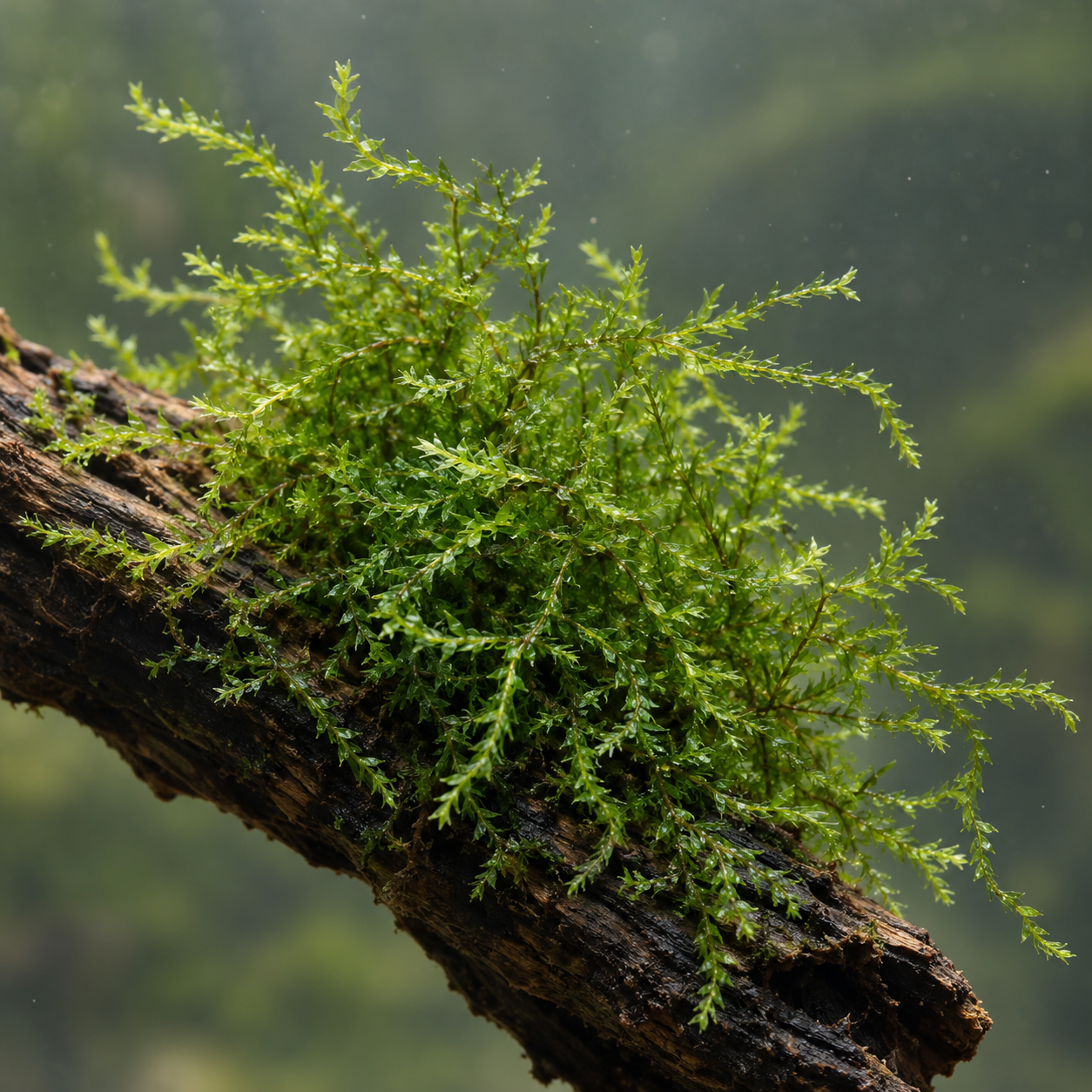 AI illustration · Intended subject: Taxiphyllum barbieri. Not verified for species identification.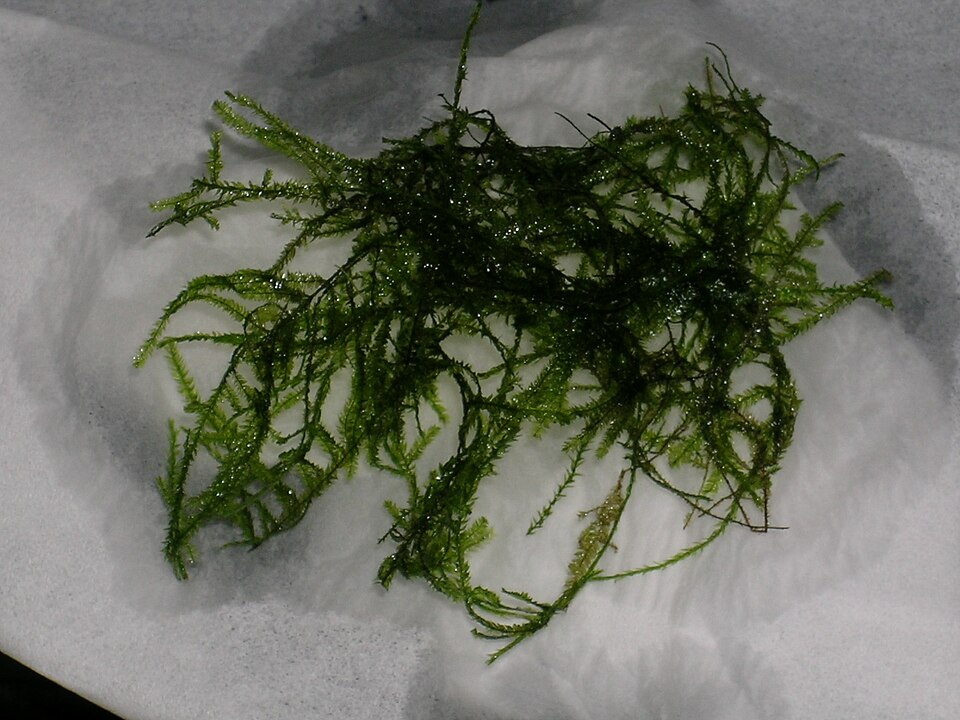
Photo could not load. Follow the source link below to view it.
Source-labelled species photo; identification not independently verified
No machine-readable author provided. S.Tanaka~commonswiki assumed (based on copyright claims). · Public domain · Photo source
Saved locally for offline viewing.- Group
- Moss
- Record type
- species
- Water category
- Aquarium-capable amphibious moss
- Submerged evidence
- Documented aquarium culture
- Emerged evidence
- Documented
- Suitability
- Established aquarium option
- Published temperature tolerance
- 12–34 °C
- Published optimum
- 20–30 °C
- Published pH
- 5–8
- Published KH
- 0–21 °dKH
- Difficulty
- very easy
- Growth rate
- medium
- Origin / distribution
- Vietnam according to source
Habitat and identification
Moist terrestrial and waterside habitats; widely grown submerged in aquaria.
Irregularly branching, readily attaching shoots; becomes lankier under weak light.
Identification and evidence limits
Vesicularia dubyana is a distinct species, not a safe replacement name for this moss. Microscopy may be needed.
Species name used by source; global accepted-name audit not performed
Aliases: Bogor moss (historical common name); Vesicularia dubyana (misapplied trade identification)
Mossarium application · inferred guidance
Use a thin layer on wood or stone. For emerged culture keep the support moist and acclimate a small portion first.
Care profile: Tropical amphibious hardscape moss.
Published cultivation catalog values; tolerance is not a target or experimentally verified boundary
Trade name documented; current stock and local availability not checked
Sources: S001 Flowgrow: Taxiphyllum barbieri
M002 Taiwan moss
Taxiphyllum alternans
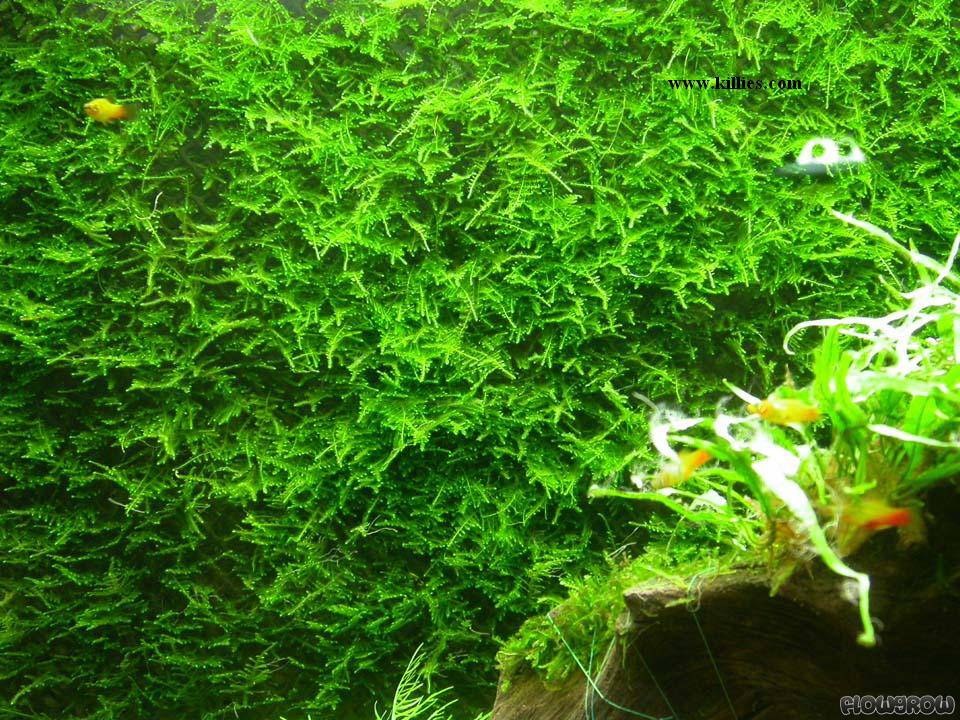
Photo could not load. Follow the source link below to view it.
Source-labelled species photo; identification not independently verified
© Loh Kwek Leong (2004), www.killies.com · Copyright retained; external reference · Photo source
External photo · internet connection required.- Group
- Moss
- Record type
- species
- Water category
- Aquarium-capable amphibious moss
- Submerged evidence
- Documented aquarium culture
- Emerged evidence
- Documented
- Suitability
- Established aquarium option
- Published temperature tolerance
- 12–30 °C
- Published optimum
- Not established
- Published pH
- 5–8
- Published KH
- 0–14 °dKH
- Difficulty
- very easy
- Growth rate
- slow
- Origin / distribution
- Southeastern USA and eastern Asia
Habitat and identification
Soil, roots, swamp wood and rocks beside rivulets and waterfalls.
Fine, regularly branched fronds under adequate light.
Identification and evidence limits
Taiwan in the trade name does not establish native origin. Source optimum exceeds its tolerance maximum; optimum fields deliberately left blank.
Species name used by source; global accepted-name audit not performed
Mossarium application · inferred guidance
Use a thin layer on wood or stone. For emerged culture keep the support moist and acclimate a small portion first.
Care profile: Tropical amphibious hardscape moss.
Published cultivation catalog values; tolerance is not a target or experimentally verified boundary
Trade name documented; current stock and local availability not checked
Sources: S002 Flowgrow: Taxiphyllum alternans
M003 Khao Sok moss
Taxiphyllum taxirameum
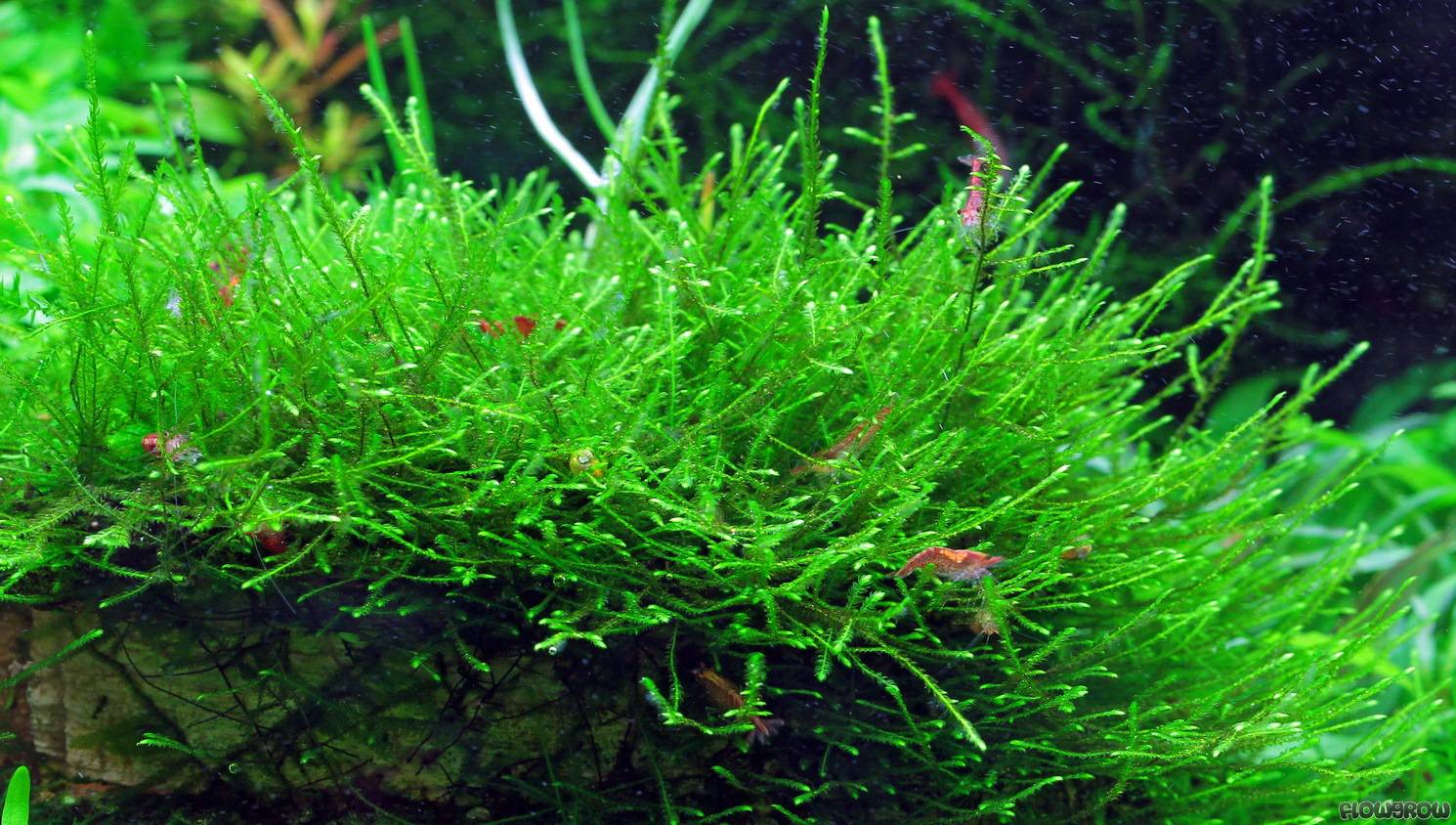
Photo could not load. Follow the source link below to view it.
Source-labelled species photo; identification not independently verified
© Tobias Coring (2011) · Copyright retained; external reference · Photo source
External photo · internet connection required.- Group
- Moss
- Record type
- species
- Water category
- Aquarium-capable amphibious moss
- Submerged evidence
- Documented aquarium culture
- Emerged evidence
- Documented
- Suitability
- Established aquarium option
- Published temperature tolerance
- 12–30 °C
- Published optimum
- Not established
- Published pH
- 5–8
- Published KH
- 0–14 °dKH
- Difficulty
- very easy
- Growth rate
- medium
- Origin / distribution
- Widespread; aquarium population from Khao Sok, Thailand
Habitat and identification
Generally shaded soil and rock; aquarium population collected partly submerged in a Thai rivulet.
Java-like moderately branched shoots, attaching readily.
Identification and evidence limits
Aquarium performance of the Khao Sok culture does not prove every terrestrial population is equally aquatic. Source optimum and tolerance conflict; optimum omitted.
Species name used by source; global accepted-name audit not performed
Mossarium application · inferred guidance
Use a thin layer on wood or stone. For emerged culture keep the support moist and acclimate a small portion first.
Care profile: Tropical amphibious hardscape moss.
Published cultivation catalog values; tolerance is not a target or experimentally verified boundary
Trade name documented; current stock and local availability not checked
Sources: S003 Flowgrow: Taxiphyllum taxirameum
M004 Flame moss
Taxiphyllum sp. “Flame”
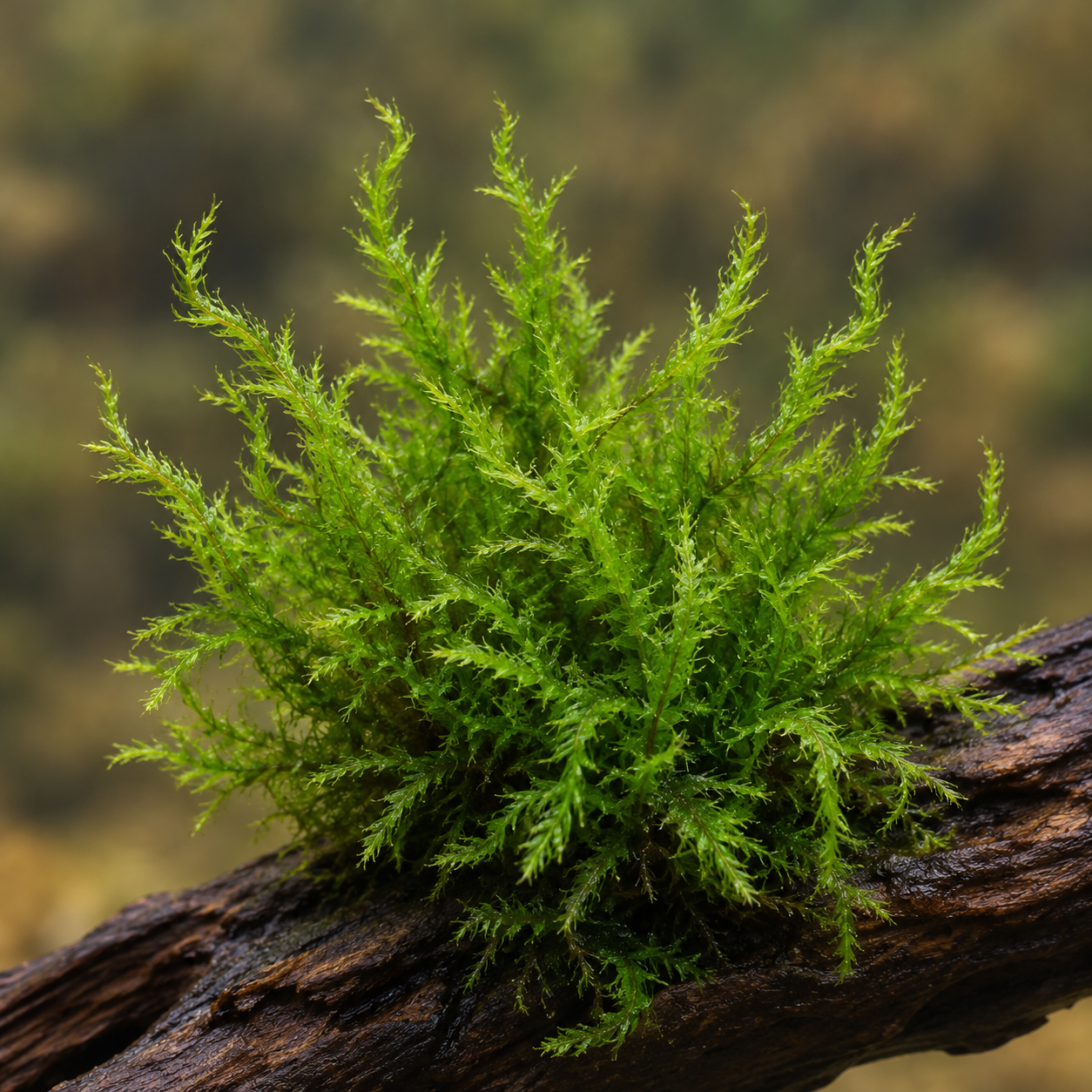 AI illustration · Intended subject: Taxiphyllum sp. “Flame”. Not verified for species identification.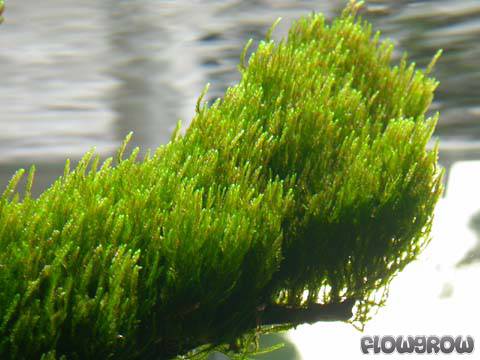
Photo could not load. Follow the source link below to view it.
Representative of source-labelled trade culture; species identity unresolved
© Loh Kwek Leong (2006), www.killies.com · Copyright retained; external reference · Photo source
External photo · internet connection required.- Group
- Moss
- Record type
- unresolved trade form
- Water category
- Aquarium-capable amphibious moss
- Submerged evidence
- Documented aquarium culture
- Emerged evidence
- Documented
- Suitability
- Established aquarium option
- Published temperature tolerance
- 12–30 °C
- Published optimum
- Not established
- Published pH
- 5–8
- Published KH
- 0–14 °dKH
- Difficulty
- medium
- Growth rate
- slow
- Origin / distribution
- Asian origin suggested, not established
Habitat and identification
Natural habitat not established for the traded culture.
Submerged shoots rise in loose twisting spirals.
Identification and evidence limits
Unidentified species. Not a separately verified botanical species. Source optimum extends past tolerance maximum and is omitted.
Species unresolved
Mossarium application · inferred guidance
Mount on a low rock or horizontal twig with room above for upright growth.
Care profile: Tropical amphibious hardscape moss.
Published cultivation catalog values; tolerance is not a target or experimentally verified boundary
Trade name documented; current stock and local availability not checked
Sources: S004 Flowgrow: Taxiphyllum sp. “Flame”
M005 Spiky / Peacock moss
Taxiphyllum sp. “Spiky”
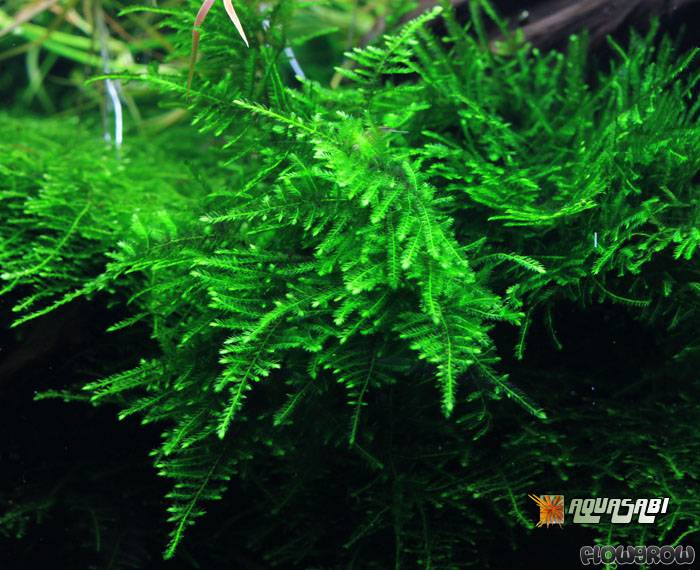
Photo could not load. Follow the source link below to view it.
Representative of source-labelled trade culture; species identity unresolved
© Tobias Coring (2010) · Copyright retained; external reference · Photo source
External photo · internet connection required.- Group
- Moss
- Record type
- unresolved trade form
- Water category
- Aquarium-capable amphibious moss
- Submerged evidence
- Documented aquarium culture
- Emerged evidence
- Documented
- Suitability
- Established aquarium option
- Published temperature tolerance
- 12–34 °C
- Published optimum
- 20–28 °C
- Published pH
- 5–8
- Published KH
- 0–14 °dKH
- Difficulty
- easy
- Growth rate
- medium
- Origin / distribution
- Not compiled
Habitat and identification
Natural habitat not established for the trade form.
Broad feather-like branching shoots.
Identification and evidence limits
Flowgrow treats Peacock as the same trade entity as Spiky; do not count it as an extra species.
Species unresolved; Peacock equivalence is source interpretation
Aliases: Peacock moss (trade alias treated as equivalent by source)
Mossarium application · inferred guidance
Use a thin layer on wood or stone. For emerged culture keep the support moist and acclimate a small portion first.
Care profile: Tropical amphibious hardscape moss.
Published cultivation catalog values; tolerance is not a target or experimentally verified boundary
Trade name documented; current stock and local availability not checked
Sources: S005 Flowgrow: Taxiphyllum sp. “Spiky”
M006 Singapore moss
Vesicularia dubyana
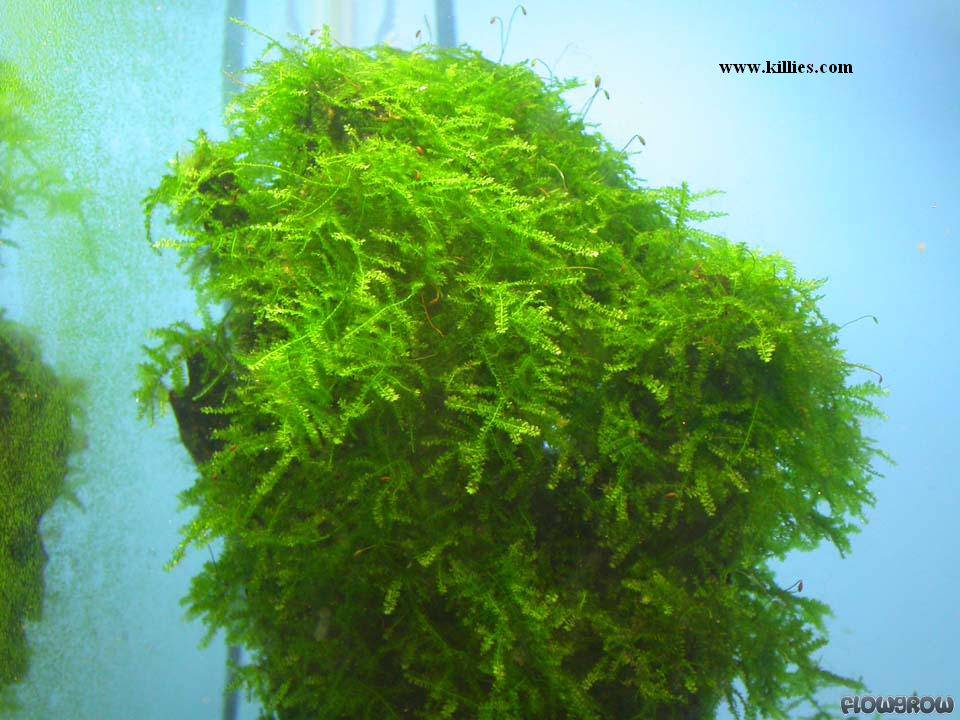
Photo could not load. Follow the source link below to view it.
Source-labelled species culture photo; identification not independently verified
Loh Kwek Leong (2004) · Copyright retained; external reference · Photo source
External photo · internet connection required.- Group
- Moss
- Record type
- species
- Water category
- Aquarium-capable amphibious moss
- Submerged evidence
- Documented aquarium culture
- Emerged evidence
- Documented
- Suitability
- Established aquarium option
- Published temperature tolerance
- Not established
- Published optimum
- Not established
- Published pH
- Not established
- Published KH
- Not established
- Difficulty
- easy
- Growth rate
- slow
- Origin / distribution
- South and Southeast Asia
Habitat and identification
Moist to wet tropical Asian sites; both emerged and submerged growth documented.
Creeping or horizontal, irregularly branched fronds; may produce capsules underwater.
Identification and evidence limits
Historical Java moss and present-day Java moss names overlap. Distinguish from Taxiphyllum barbieri.
Species name used by source; global accepted-name audit not performed
Aliases: Java moss (ambiguous historical common name)
Mossarium application · inferred guidance
Use a thin layer on wood or stone. For emerged culture keep the support moist and acclimate a small portion first.
Care profile: Tropical amphibious hardscape moss.
Not established from reviewed sources
Trade name documented; current stock and local availability not checked
Sources: S006 Flowgrow: Vesicularia dubyana
M007 Weeping moss
Vesicularia ferriei
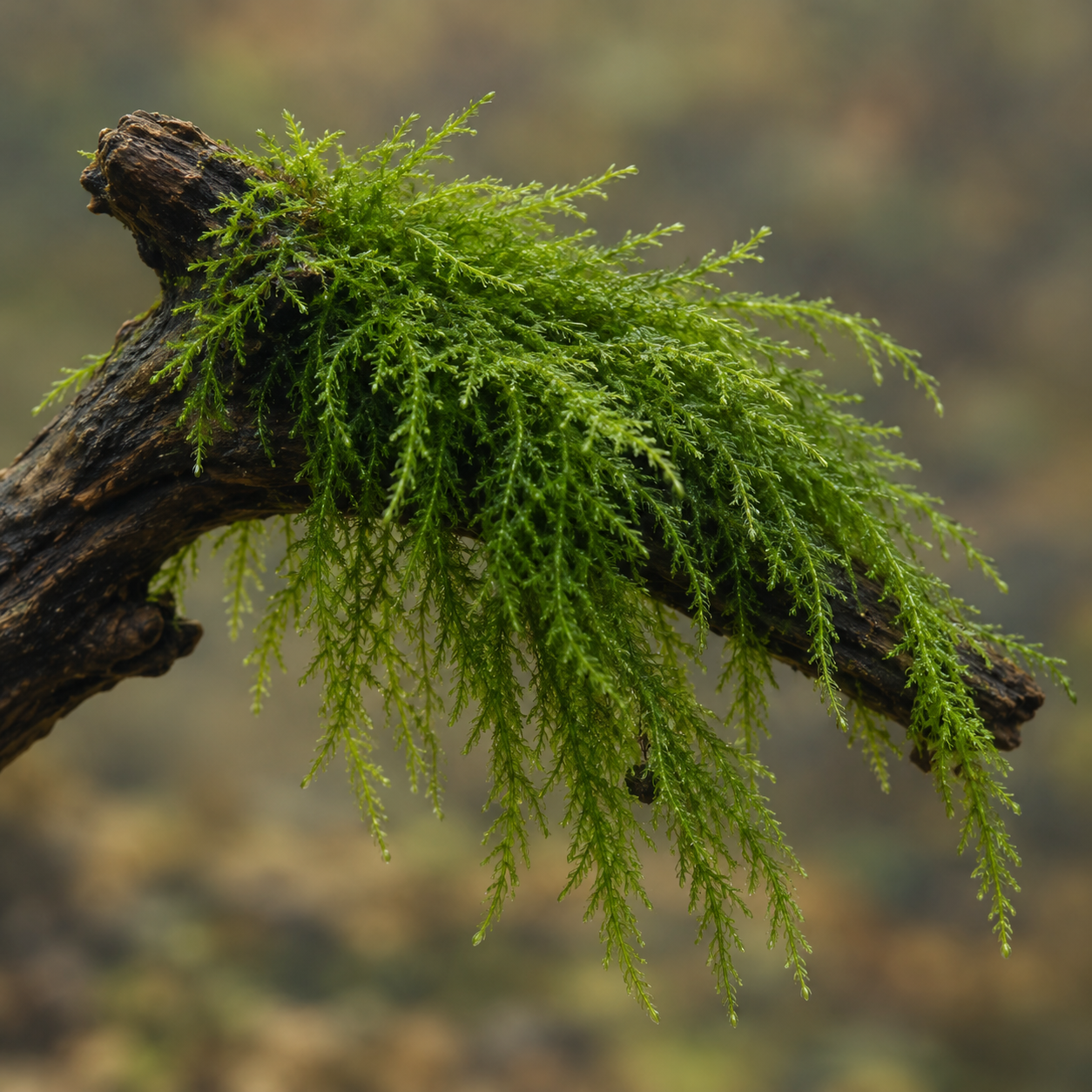 AI illustration · Intended subject: Vesicularia ferriei. Not verified for species identification.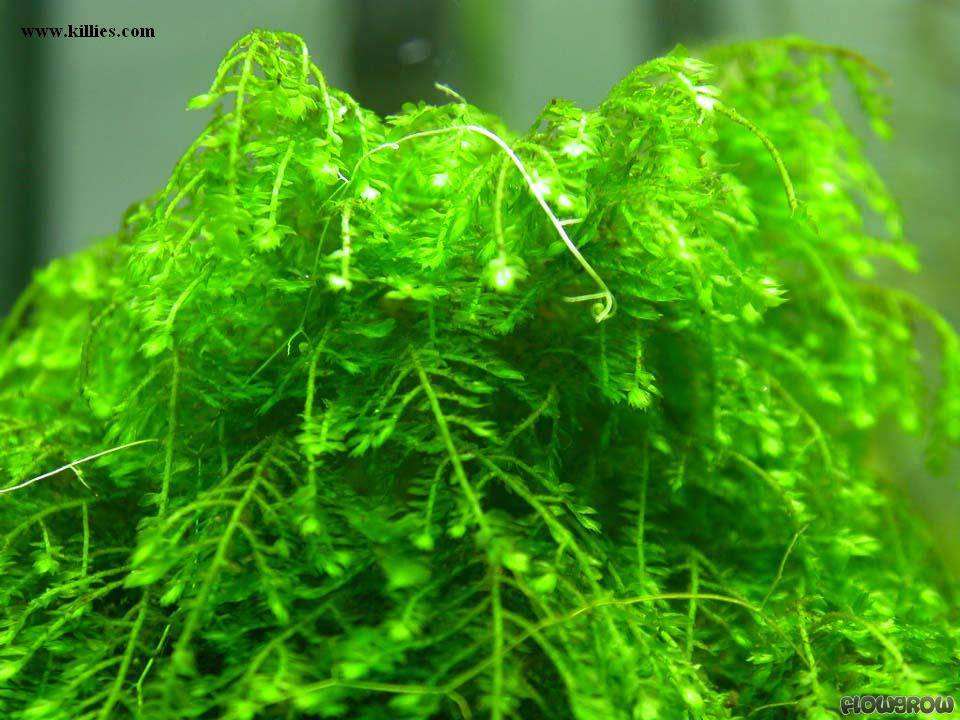
Photo could not load. Follow the source link below to view it.
Source-labelled species photo; identification not independently verified
© Loh Kwek Leong (2004), www.killies.com · Copyright retained; external reference · Photo source
External photo · internet connection required.- Group
- Moss
- Record type
- species
- Water category
- Aquarium-capable amphibious moss
- Submerged evidence
- Documented aquarium culture
- Emerged evidence
- Documented
- Suitability
- Established aquarium option
- Published temperature tolerance
- 15–30 °C
- Published optimum
- Not established
- Published pH
- 5–7
- Published KH
- 0–14 °dKH
- Difficulty
- medium
- Growth rate
- slow
- Origin / distribution
- East Asia
Habitat and identification
Wet rock, riverbanks and wet soil beside rivulets.
Strongly drooping fronds in submerged culture.
Identification and evidence limits
Other mosses are sold as Weeping. Very low light may weaken the drooping form.
Species name used by source; global accepted-name audit not performed
Mossarium application · inferred guidance
Attach to elevated branches or ledges so new shoots can hang below the support.
Care profile: Tropical amphibious hardscape moss.
Published cultivation catalog values; tolerance is not a target or experimentally verified boundary
Trade name documented; current stock and local availability not checked
Sources: S007 Flowgrow: Vesicularia ferriei
M008 Christmas moss
Vesicularia montagnei
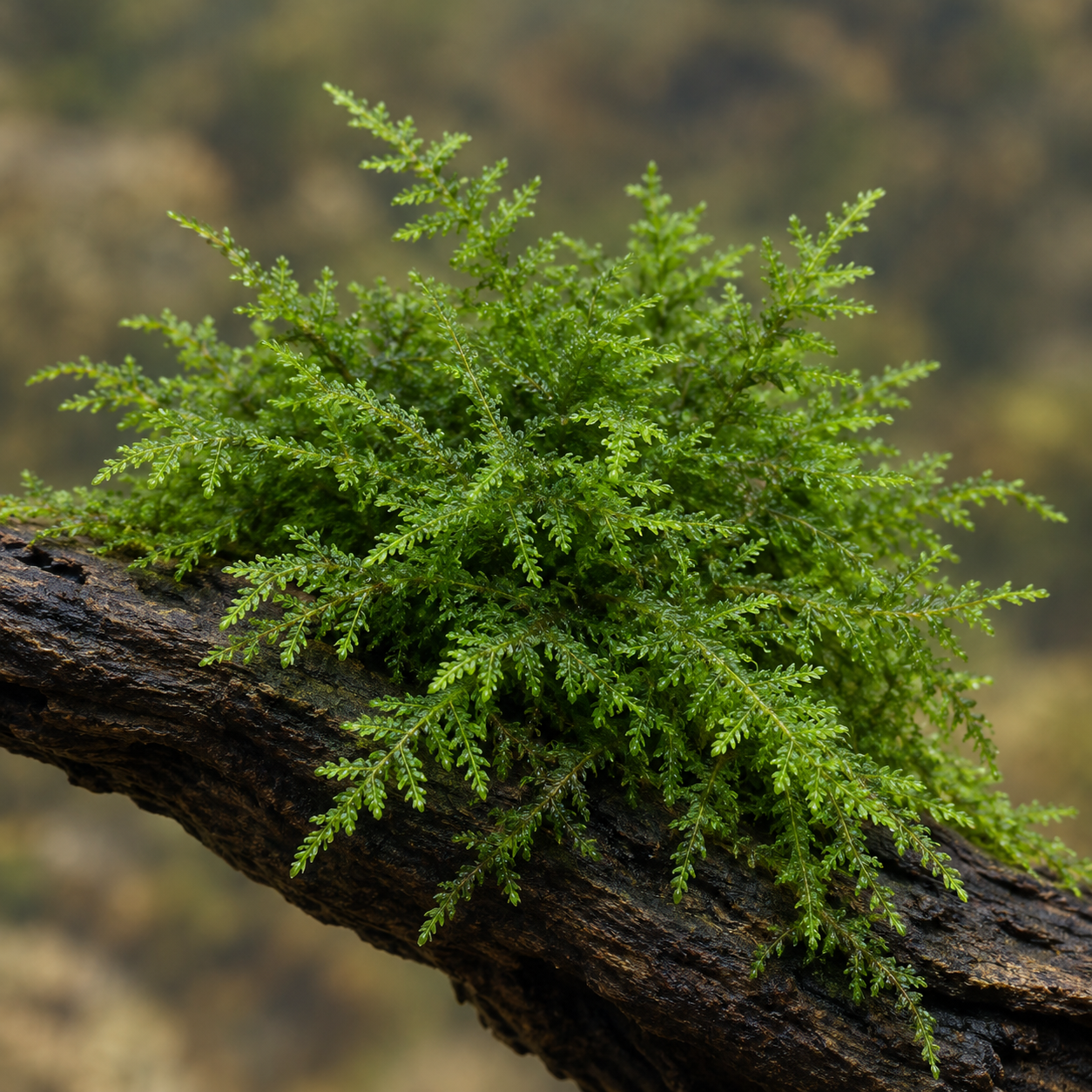 AI illustration · Intended subject: Vesicularia montagnei. Not verified for species identification.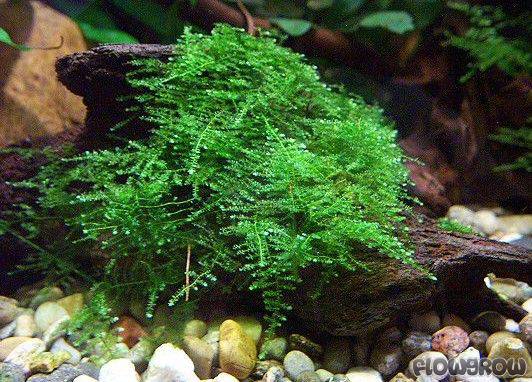
Photo could not load. Follow the source link below to view it.
Source-labelled Christmas moss with Riccia; mixed planting
© Oliver Knott (2005) www.oliver-knott.de · Copyright retained; external reference · Photo source
External photo · internet connection required.- Group
- Moss
- Record type
- species
- Water category
- Aquarium-capable amphibious moss
- Submerged evidence
- Documented aquarium culture
- Emerged evidence
- Documented
- Suitability
- Established aquarium option
- Published temperature tolerance
- Not established
- Published optimum
- Not established
- Published pH
- Not established
- Published KH
- Not established
- Difficulty
- medium (catalog label; descriptive text says relatively easy)
- Growth rate
- slow
- Origin / distribution
- Asian tropics
Habitat and identification
Mostly emerged on shaded moist banks and forest ground in the Asian tropics.
Flattened triangular fronds, increasingly regular under stronger light.
Identification and evidence limits
Christmas moss may cover several traded species. Source describes confirmed V. montagnei as relatively undemanding despite a medium difficulty label.
Species name used by source; global accepted-name audit not performed
Mossarium application · inferred guidance
Good candidate for humid banks, wood and moss walls; retain space for triangular fronds to spread.
Care profile: Tropical amphibious hardscape moss.
Not established from reviewed sources
Trade name documented; current stock and local availability not checked
Sources: S008 Flowgrow: Vesicularia montagnei
M009 Erect moss
Vesicularia reticulata
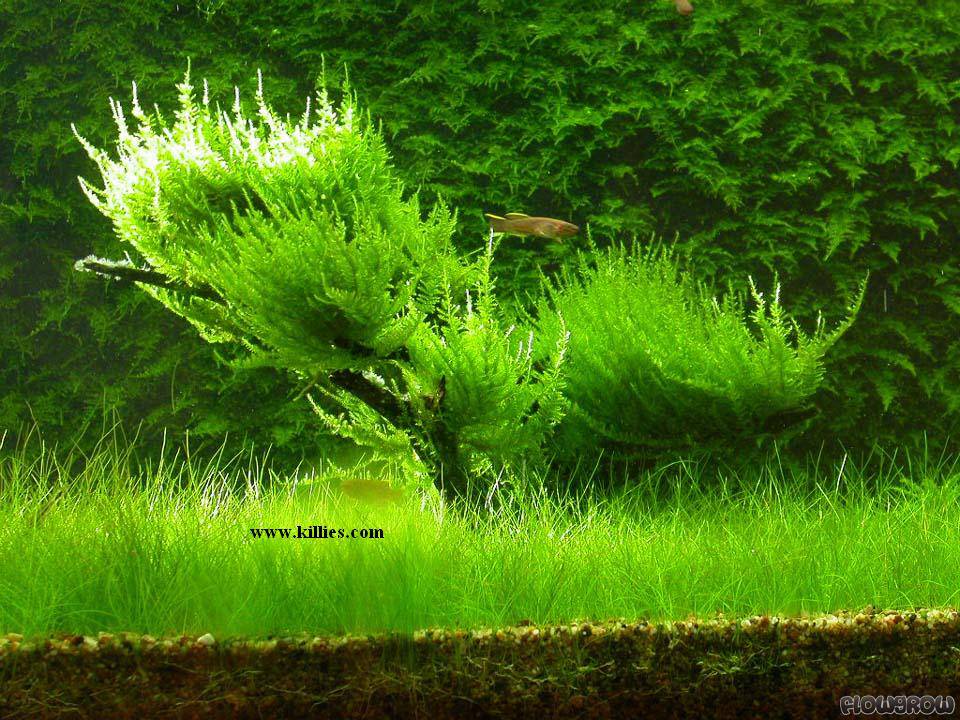
Photo could not load. Follow the source link below to view it.
Source-labelled species photo; identification not independently verified
© Loh Kwek Leong (2004), www.killies.com · Copyright retained; external reference · Photo source
External photo · internet connection required.- Group
- Moss
- Record type
- species
- Water category
- Aquarium-capable amphibious moss
- Submerged evidence
- Documented aquarium culture
- Emerged evidence
- Documented
- Suitability
- Established aquarium option
- Published temperature tolerance
- 15–30 °C
- Published optimum
- Not established
- Published pH
- 5–7
- Published KH
- 0–14 °dKH
- Difficulty
- medium
- Growth rate
- slow
- Origin / distribution
- South, Southeast and East Asia
Habitat and identification
Moist terrestrial habitats in the Asian tropics.
Upright submerged shoots, creeping emerged shoots.
Identification and evidence limits
Erect moss can also refer to a Taxiphyllum. The name alone does not confirm species.
Species name used by source; global accepted-name audit not performed
Mossarium application · inferred guidance
Use upright growth on low hardscape underwater; expect a different creeping habit above water.
Care profile: Tropical amphibious hardscape moss.
Published cultivation catalog values; tolerance is not a target or experimentally verified boundary
Trade name documented; current stock and local availability not checked
Sources: S009 Flowgrow: Vesicularia reticulata
M010 Anchor moss
Vesicularia sp. “Anchor”
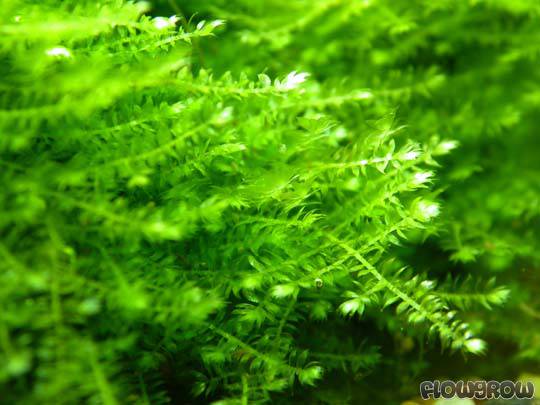
Photo could not load. Follow the source link below to view it.
Representative of source-labelled trade culture; species identity unresolved
© Loh Kwek Leong (2006), www.killies.com · Copyright retained; external reference · Photo source
External photo · internet connection required.- Group
- Moss
- Record type
- unresolved trade form
- Water category
- Aquarium-capable amphibious moss
- Submerged evidence
- Documented aquarium culture
- Emerged evidence
- Documented
- Suitability
- Established aquarium option
- Published temperature tolerance
- 15–30 °C
- Published optimum
- Not established
- Published pH
- 5–7
- Published KH
- 0–14 °dKH
- Difficulty
- medium
- Growth rate
- slow
- Origin / distribution
- Not compiled
Habitat and identification
Natural habitat of the traded form not established.
Compact, pale-green cushions with broad, almost right-angle branching.
Identification and evidence limits
Identity unresolved; relationship to Mini Christmas is not established.
Species unresolved; trade name not a taxonomic rank
Mossarium application · inferred guidance
Use a thin layer on wood or stone. For emerged culture keep the support moist and acclimate a small portion first.
Care profile: Tropical amphibious hardscape moss.
Published cultivation catalog values; tolerance is not a target or experimentally verified boundary
Trade name documented; current stock and local availability not checked
Sources: S010 Flowgrow: Vesicularia sp. “Anchor”
M011 Creeping moss
Vesicularia sp. “Creeping”

Photo could not load. Follow the source link below to view it.
Representative of supplier-labelled Creeping moss; unresolved trade identity
AQUAMOOS; individual photographer not credited · Copyright retained; external reference · Photo source
External photo · internet connection required.- Group
- Moss
- Record type
- unresolved trade form
- Water category
- Aquarium-capable amphibious moss
- Submerged evidence
- Documented aquarium culture
- Emerged evidence
- Documented
- Suitability
- Established aquarium option
- Published temperature tolerance
- 15–30 °C
- Published optimum
- Not established
- Published pH
- 5–7
- Published KH
- 0–14 °dKH
- Difficulty
- easy
- Growth rate
- Not established
- Origin / distribution
- Not compiled
Habitat and identification
Natural habitat of the traded form not established.
Creeping shoots; trade material may resemble Singapore or Christmas moss.
Identification and evidence limits
Several different mosses may be sold under this name.
Species unresolved; trade name not a taxonomic rank
Mossarium application · inferred guidance
Use a thin layer on wood or stone. For emerged culture keep the support moist and acclimate a small portion first.
Care profile: Tropical amphibious hardscape moss.
Published cultivation catalog values; tolerance is not a target or experimentally verified boundary
Trade name documented; current stock and local availability not checked
Sources: S011 Flowgrow: Vesicularia sp. “Creeping”
M012 Mini Christmas moss
Vesicularia sp. “Mini Christmas”
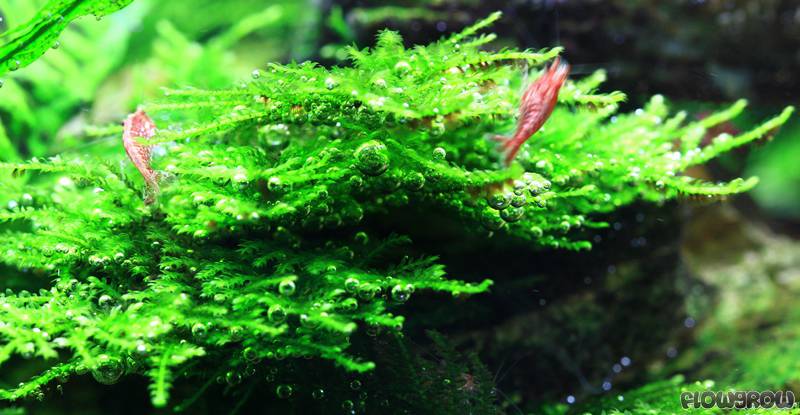
Photo could not load. Follow the source link below to view it.
Representative of source-labelled trade culture; species identity unresolved
© Tobias Coring (2011) · Copyright retained; external reference · Photo source
External photo · internet connection required.- Group
- Moss
- Record type
- unresolved trade form
- Water category
- Aquarium-capable amphibious moss
- Submerged evidence
- Documented aquarium culture
- Emerged evidence
- Documented
- Suitability
- Established aquarium option
- Published temperature tolerance
- 15–30 °C
- Published optimum
- Not established
- Published pH
- 5–7
- Published KH
- 0–14 °dKH
- Difficulty
- medium
- Growth rate
- slow
- Origin / distribution
- Not compiled
Habitat and identification
Natural habitat of the traded form not established.
Small triangular, horizontal to drooping fronds.
Identification and evidence limits
May overlap with Anchor or China moss. Mini Taiwan is a trade alias here, not proof of Taxiphyllum alternans.
Species unresolved; trade name not a taxonomic rank
Mossarium application · inferred guidance
Use a thin layer on wood or stone. For emerged culture keep the support moist and acclimate a small portion first.
Care profile: Tropical amphibious hardscape moss.
Published cultivation catalog values; tolerance is not a target or experimentally verified boundary
Trade name documented; current stock and local availability not checked
Sources: S012 Flowgrow: Vesicularia sp. “Mini Christmas”
M013 Triangle moss
Vesicularia sp. “Triangle”
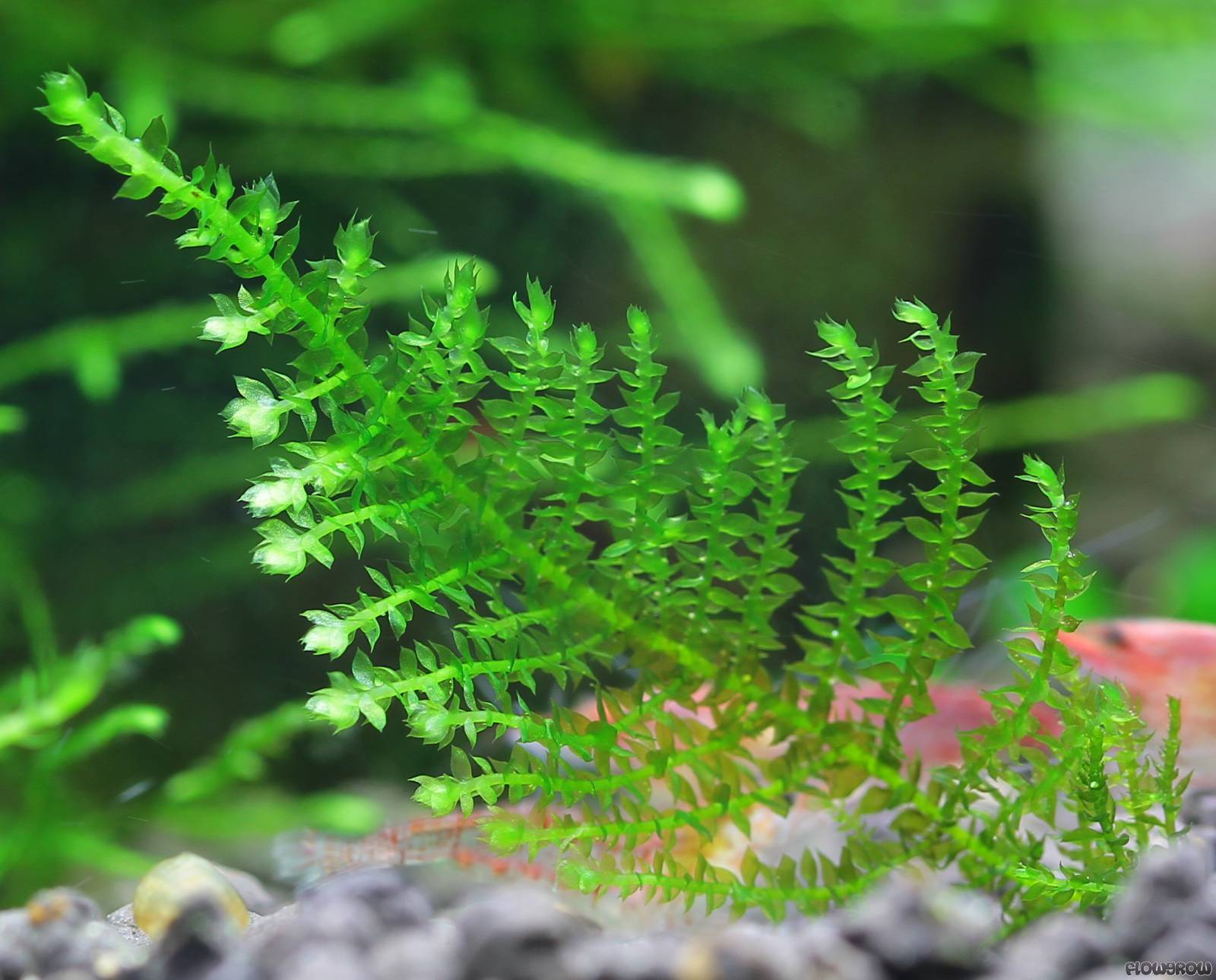
Photo could not load. Follow the source link below to view it.
Representative of source-labelled trade culture; species identity unresolved
© Tobias Coring (2011) · Copyright retained; external reference · Photo source
External photo · internet connection required.- Group
- Moss
- Record type
- unresolved trade form
- Water category
- Aquarium-capable amphibious moss
- Submerged evidence
- Documented aquarium culture
- Emerged evidence
- Documented
- Suitability
- Established aquarium option
- Published temperature tolerance
- 15–30 °C
- Published optimum
- Not established
- Published pH
- 5–7
- Published KH
- 0–14 °dKH
- Difficulty
- easy
- Growth rate
- Not established
- Origin / distribution
- Not compiled
Habitat and identification
Natural habitat of the traded form not established.
Regular triangular branching with tips angled upward.
Identification and evidence limits
Not the true Cratoneuron filicinum, despite mislabelling in trade.
Species unresolved; trade name not a taxonomic rank
Mossarium application · inferred guidance
Use a thin layer on wood or stone. For emerged culture keep the support moist and acclimate a small portion first.
Care profile: Tropical amphibious hardscape moss.
Published cultivation catalog values; tolerance is not a target or experimentally verified boundary
Trade name documented; current stock and local availability not checked
Sources: S013 Flowgrow: Vesicularia sp. “Triangle”
M014 Phoenix moss
Fissidens fontanus
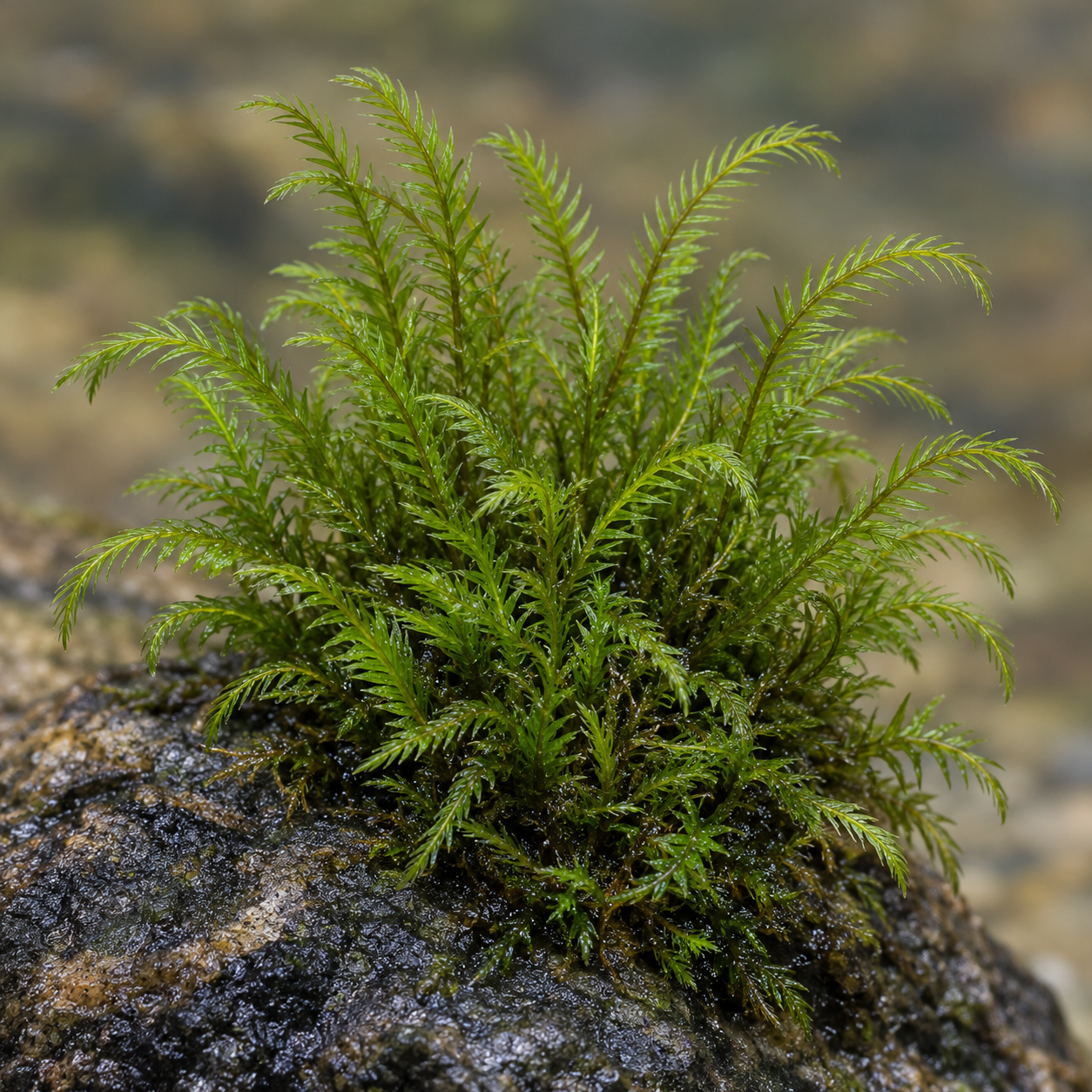 AI illustration · Intended subject: Fissidens fontanus. Not verified for species identification.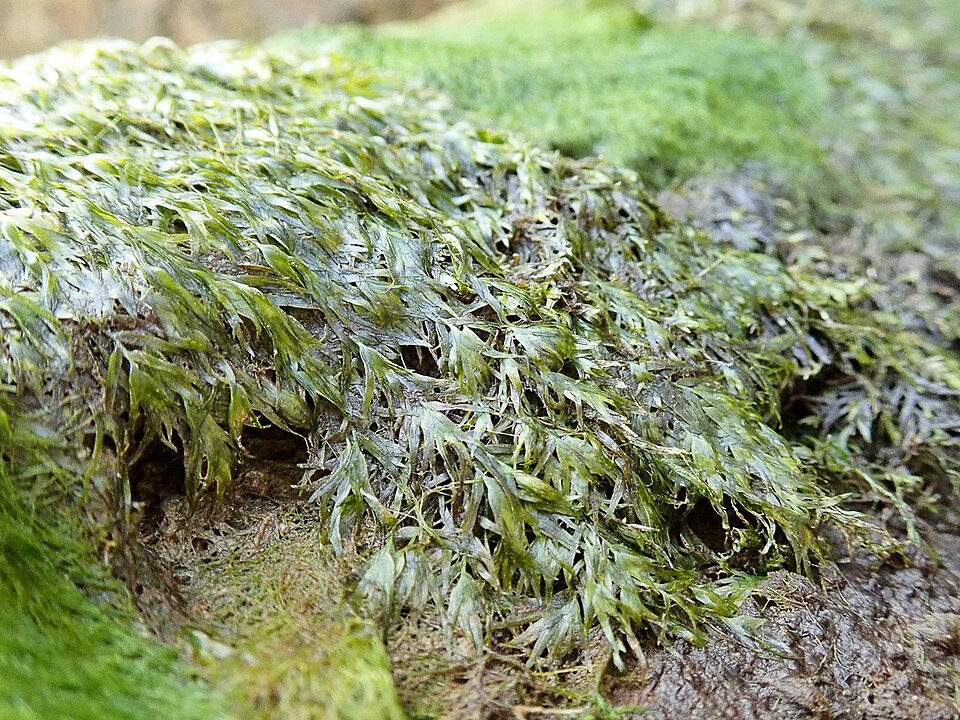
Photo could not load. Follow the source link below to view it.
Source-labelled species photo; identification not independently verified
Njmeyer03 · CC BY-SA 4.0 · Photo source
Saved locally for offline viewing.- Group
- Moss
- Record type
- species
- Water category
- Naturally aquatic moss
- Submerged evidence
- Documented aquarium culture
- Emerged evidence
- Not established; dries rapidly in air
- Suitability
- Established aquarium option
- Published temperature tolerance
- 4–26 °C
- Published optimum
- 18–25 °C
- Published pH
- 5–7.5
- Published KH
- 0–14 °dKH
- Difficulty
- difficult in table; prose calls it relatively undemanding
- Growth rate
- medium
- Origin / distribution
- North and Central America, North Africa and warmer Europe
Habitat and identification
Submerged in rivers and lakes, including shaded and relatively deep sites.
Fine two-ranked leaves create soft feather-like tufts attached to hardscape.
Identification and evidence limits
Source has conflicting difficulty and temperature statements. Numeric fields retain its table, not the broader prose range. Emerged culture is unconfirmed and drying is rapid.
Species name used by source; global accepted-name audit not performed
Aliases: Octodiceras fontanum (botanical synonym reported by source); Fissidens nobilis (misapplied trade identification)
Mossarium application · inferred guidance
Use on submerged twigs or flat stones. Avoid an emerged dry-start trial on the only available portion.
Care profile: Cool-water submerged moss.
Published cultivation catalog values; tolerance is not a target or experimentally verified boundary
Trade name documented; current stock and local availability not checked
Sources: S014 Flowgrow: Fissidens fontanus
M015 Nobilis / Japan Fissidens
Fissidens nobilis
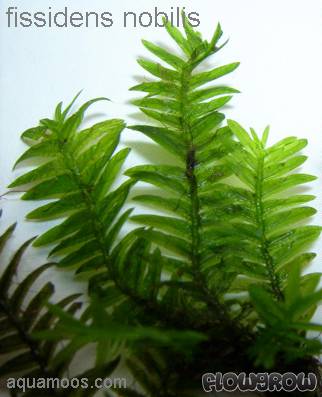
Photo could not load. Follow the source link below to view it.
Source-labelled species culture photo; identification not independently verified
René Körner (MasterChief) (2008) · Copyright retained; external reference · Photo source
External photo · internet connection required.- Group
- Moss
- Record type
- species
- Water category
- Aquarium-capable amphibious moss
- Submerged evidence
- Documented aquarium culture
- Emerged evidence
- Documented
- Suitability
- Established aquarium option
- Published temperature tolerance
- 18–26 °C
- Published optimum
- Not established
- Published pH
- 5–7
- Published KH
- 0–10 °dKH
- Difficulty
- difficult
- Growth rate
- very slow
- Origin / distribution
- Tropical and subtropical Asia and Pacific islands
Habitat and identification
Habitat details not compiled in the reviewed catalog entry.
More robust than Phoenix moss; a slow hardscape accent.
Identification and evidence limits
The actual species differs from small Phoenix-like moss sold under this name. Verify cultivated stock.
Species name used by source; global accepted-name audit not performed
Mossarium application · inferred guidance
Use a small, labelled tuft in a stable compartment; protect it from faster-growing mosses and algae.
Care profile: Tropical amphibious hardscape moss.
Published cultivation catalog values; tolerance is not a target or experimentally verified boundary
Trade name documented; current stock and local availability not checked
Sources: S015 Flowgrow: Fissidens nobilis
M016 Doormat moss
Fissidens splachnobryoides

Photo could not load. Follow the source link below to view it.
Source-labelled aquarium Doormat moss; disputed species assignment not independently verified
Vasteq on Flickr; album describes photographs from a Polish pet store · Copyright retained; external reference · Photo source
External photo · internet connection required.- Group
- Moss
- Record type
- species
- Water category
- Aquarium-capable amphibious moss
- Submerged evidence
- Documented aquarium culture
- Emerged evidence
- Documented
- Suitability
- Established aquarium option
- Published temperature tolerance
- 18–30 °C
- Published optimum
- 22–28 °C
- Published pH
- Not established
- Published KH
- Not established
- Difficulty
- medium
- Growth rate
- slow
- Origin / distribution
- Widespread tropical material; exact culture provenance should be checked
Habitat and identification
Moist soil, including flowerpots in tropical Asia; submerged cultivation reported.
Small short shoots forming low mats.
Identification and evidence limits
Some authors place this name under F. maceratus or F. flaccidus. Other unrelated mosses are sold under it. No accepted-name resolution asserted.
Taxonomic treatment disputed in source
Mossarium application · inferred guidance
Trial a low foreground patch on a small removable support; verify that the plant really is a Fissidens.
Care profile: Tropical amphibious hardscape moss.
Published cultivation catalog values; tolerance is not a target or experimentally verified boundary
Trade name documented; current stock and local availability not checked
Sources: S016 Flowgrow: Fissidens splachnobryoides
M017 Willow / greater water-moss
Fontinalis antipyretica
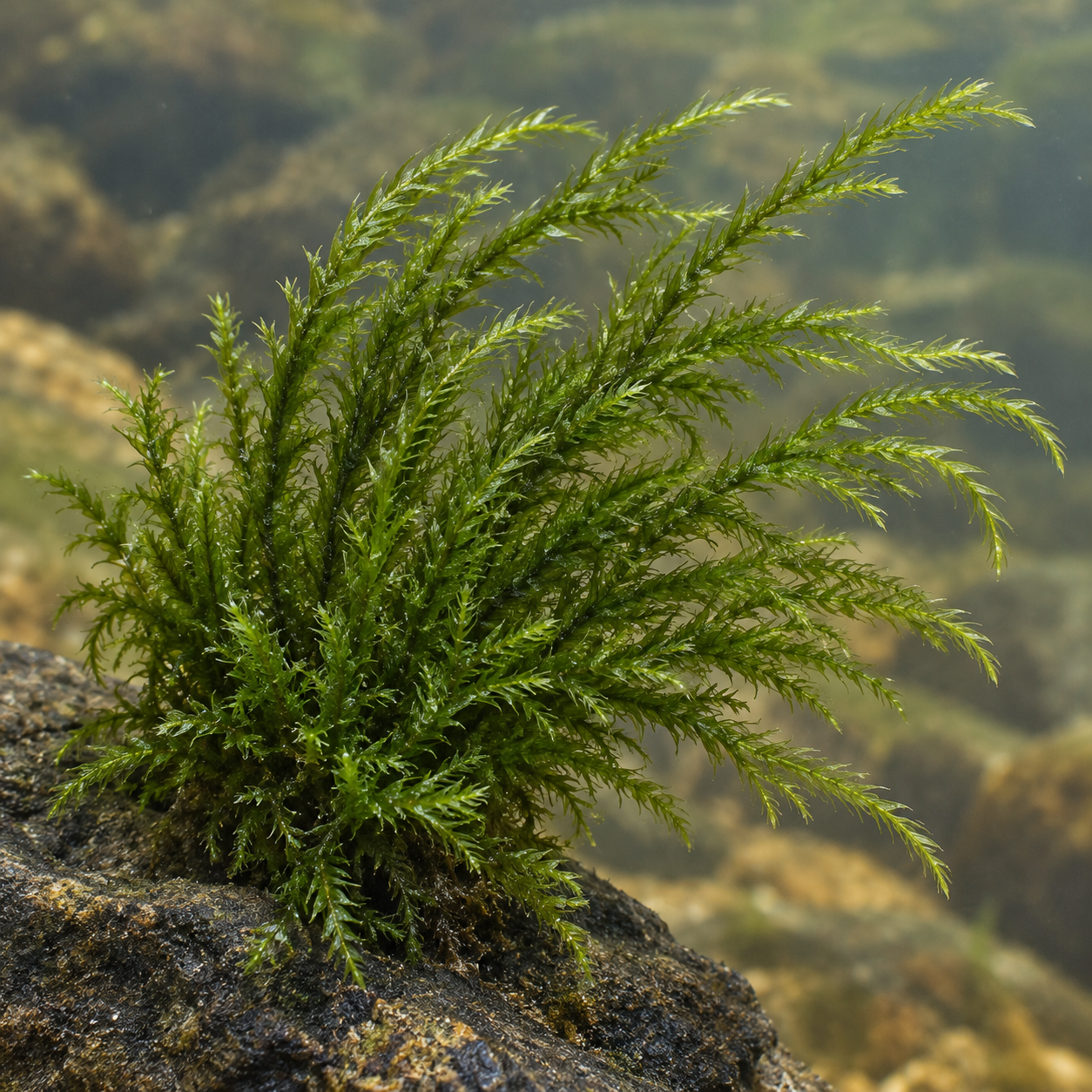 AI illustration · Intended subject: Fontinalis antipyretica. Not verified for species identification.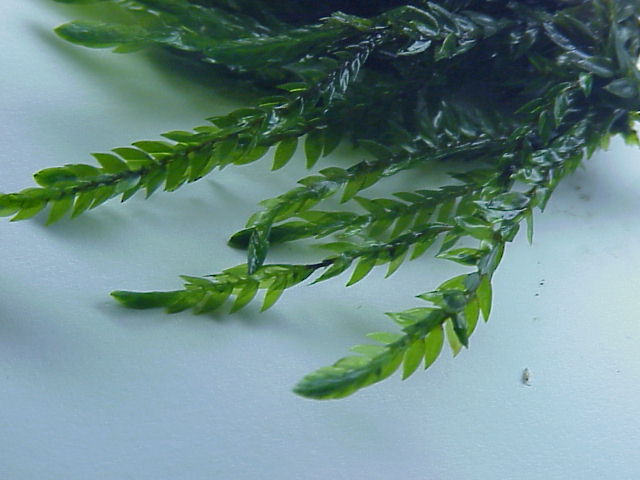
Photo could not load. Follow the source link below to view it.
Source-labelled species photo; identification not independently verified
Kurt Stüber · CC BY-SA 3.0 · Photo source
Saved locally for offline viewing.- Group
- Moss
- Record type
- species
- Water category
- Naturally aquatic moss
- Submerged evidence
- Documented aquarium culture
- Emerged evidence
- Temporary exposure documented; sustained emerged culture unconfirmed
- Suitability
- Established aquarium option
- Published temperature tolerance
- 4–26 °C
- Published optimum
- 10–22 °C
- Published pH
- 5–7.5
- Published KH
- 0–15 °dKH
- Difficulty
- medium
- Growth rate
- medium
- Origin / distribution
- Northern Hemisphere
Habitat and identification
Attached to rock, roots or wood in still and running freshwater; temporary exposure can occur.
Long stems, often three-sided, with strongly keeled leaves lacking a midrib.
Identification and evidence limits
Highly variable. Tolerance of temporary exposure does not establish sustained emerged mossarium culture.
Species name used by source; global accepted-name audit not performed
Mossarium application · inferred guidance
Choose a cool submerged chamber with space for long stems; do not assume tropical warmth is ideal.
Care profile: Cool-water submerged moss.
Published cultivation catalog values; tolerance is not a target or experimentally verified boundary
Trade name documented; current stock and local availability not checked
Sources: S017 Flowgrow: Fontinalis antipyretica, S018 British Bryological Society: Fontinalis antipyretica
M018 Fine water-moss
Fontinalis hypnoides
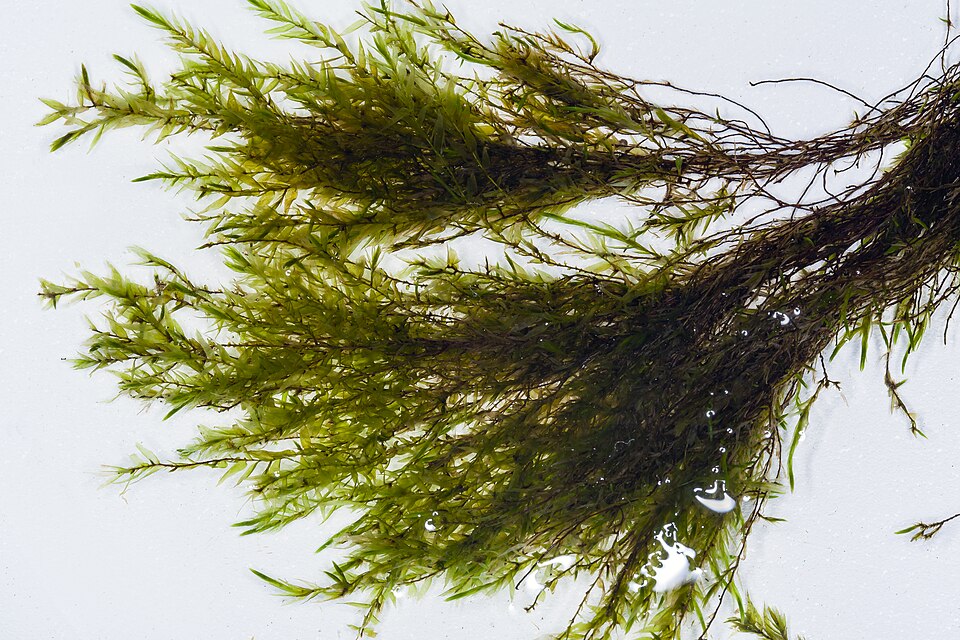
Photo could not load. Follow the source link below to view it.
Source-labelled species photo; identification not independently verified
John Game · CC BY 2.0 · Photo source
Saved locally for offline viewing.- Group
- Moss
- Record type
- species
- Water category
- Naturally aquatic moss
- Submerged evidence
- Documented aquarium culture
- Emerged evidence
- Not supported; source describes submerged-only growth
- Suitability
- Established aquarium option
- Published temperature tolerance
- 4–26 °C
- Published optimum
- 10–22 °C
- Published pH
- 5–7
- Published KH
- 0–14 °dKH
- Difficulty
- medium
- Growth rate
- slow
- Origin / distribution
- Northern Hemisphere
Habitat and identification
Submerged, mainly in still or slow-moving waters.
Soft fine shoots; leaves lack the strong keel of F. antipyretica.
Identification and evidence limits
Source describes submerged-only growth even though its emerged-culture field says unknown.
Species name used by source; global accepted-name audit not performed
Mossarium application · inferred guidance
Keep submerged in a cool compartment. Obtain reliably identified cultivated material.
Care profile: Cool-water submerged moss.
Published cultivation catalog values; tolerance is not a target or experimentally verified boundary
Trade name documented; current stock and local availability not checked
Sources: S019 Flowgrow: Fontinalis hypnoides
M019 Streamside feather-moss
Leptodictyum riparium
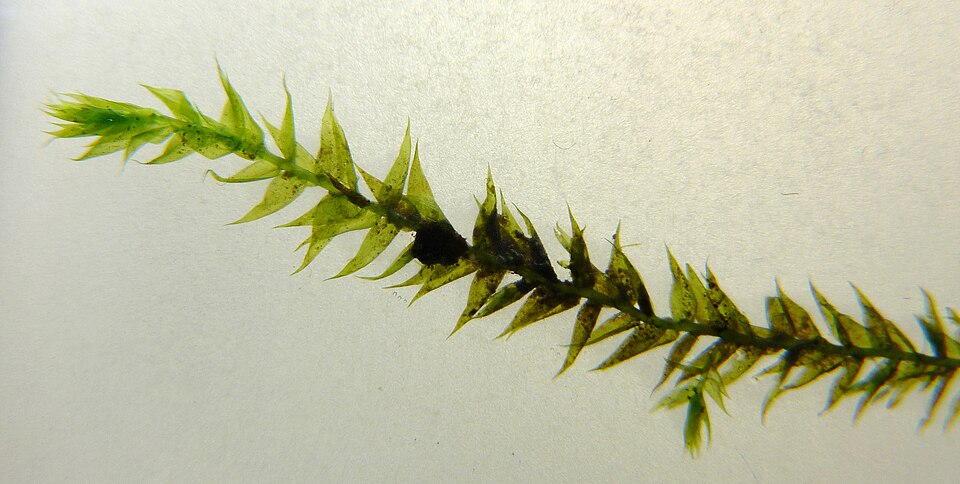
Photo could not load. Follow the source link below to view it.
Source-labelled species photo; identification not independently verified
Show_ryu · CC BY-SA 3.0 · Photo source
Saved locally for offline viewing.- Group
- Moss
- Record type
- species
- Water category
- Naturally aquatic / amphibious moss
- Submerged evidence
- Documented aquarium culture
- Emerged evidence
- Documented
- Suitability
- Established aquarium option
- Published temperature tolerance
- 4–26 °C
- Published optimum
- 10–22 °C
- Published pH
- 5–8
- Published KH
- 2–21 °dKH
- Difficulty
- very easy
- Growth rate
- medium
- Origin / distribution
- Very widespread
Habitat and identification
Nutrient-rich margins and shallows of still or slowly flowing waters; emerged on wet hard surfaces.
Flattish leafy shoots with a midrib extending past mid-leaf; submerged strands can become long.
Identification and evidence limits
Stringy moss is often assigned here in trade, but Flowgrow interprets much of it as Drepanocladus aduncus.
Species name used by source; global accepted-name audit not performed
Aliases: Amblystegium riparium (botanical synonym reported by source); Stringy moss (ambiguous trade identification)
Mossarium application · inferred guidance
Suitable for a cool waterline display or submerged tangles; plan for strands that may not attach firmly.
Care profile: Cool-water submerged moss.
Published cultivation catalog values; tolerance is not a target or experimentally verified boundary
Trade name documented; current stock and local availability not checked
Sources: S020 Flowgrow: Leptodictyum riparium
M020 Kneiff’s hook-moss / Stringy moss
Drepanocladus aduncus
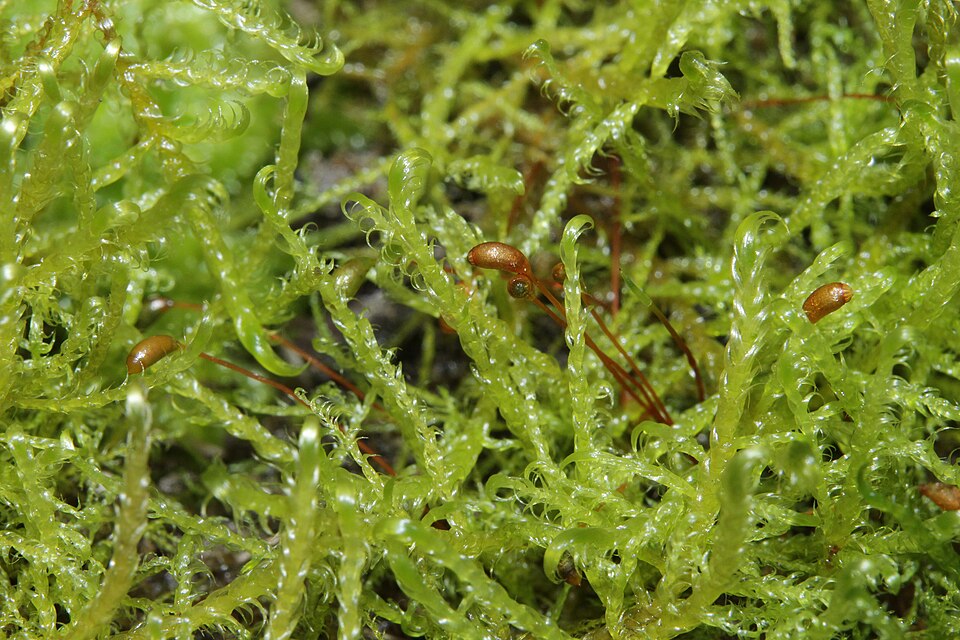
Photo could not load. Follow the source link below to view it.
Source-labelled species growth photo; identification not independently verified
HermannSchachner · CC0 · Photo source
Saved locally for offline viewing.- Group
- Moss
- Record type
- species
- Water category
- Naturally aquatic / amphibious moss
- Submerged evidence
- Documented aquarium culture
- Emerged evidence
- Documented
- Suitability
- Established aquarium option
- Published temperature tolerance
- Not established
- Published optimum
- Not established
- Published pH
- Not established
- Published KH
- Not established
- Difficulty
- very easy
- Growth rate
- medium
- Origin / distribution
- Very widespread
Habitat and identification
Wetlands, lake and pond margins; often semi-emerged in shallow water.
Upright underwater shoots with curved leaves; may form a surface mat.
Identification and evidence limits
Flowgrow links Stringy moss to this species. Traded Aduncus moss may instead resemble Leptodictyum. Does not reliably self-attach.
Species name used by source; global accepted-name audit not performed
Aliases: Stringy moss (trade interpretation used by Flowgrow); Amblystegium aduncum (botanical synonym reported by source)
Mossarium application · inferred guidance
Hold shoots mechanically on rock or in a shallow removable tray; allow room for waterline growth.
Care profile: Cool-water submerged moss.
Not established from reviewed sources
Trade name documented; current stock and local availability not checked
Sources: S021 Flowgrow: Drepanocladus aduncus
M021 Queen moss
Hydropogonella gymnostoma
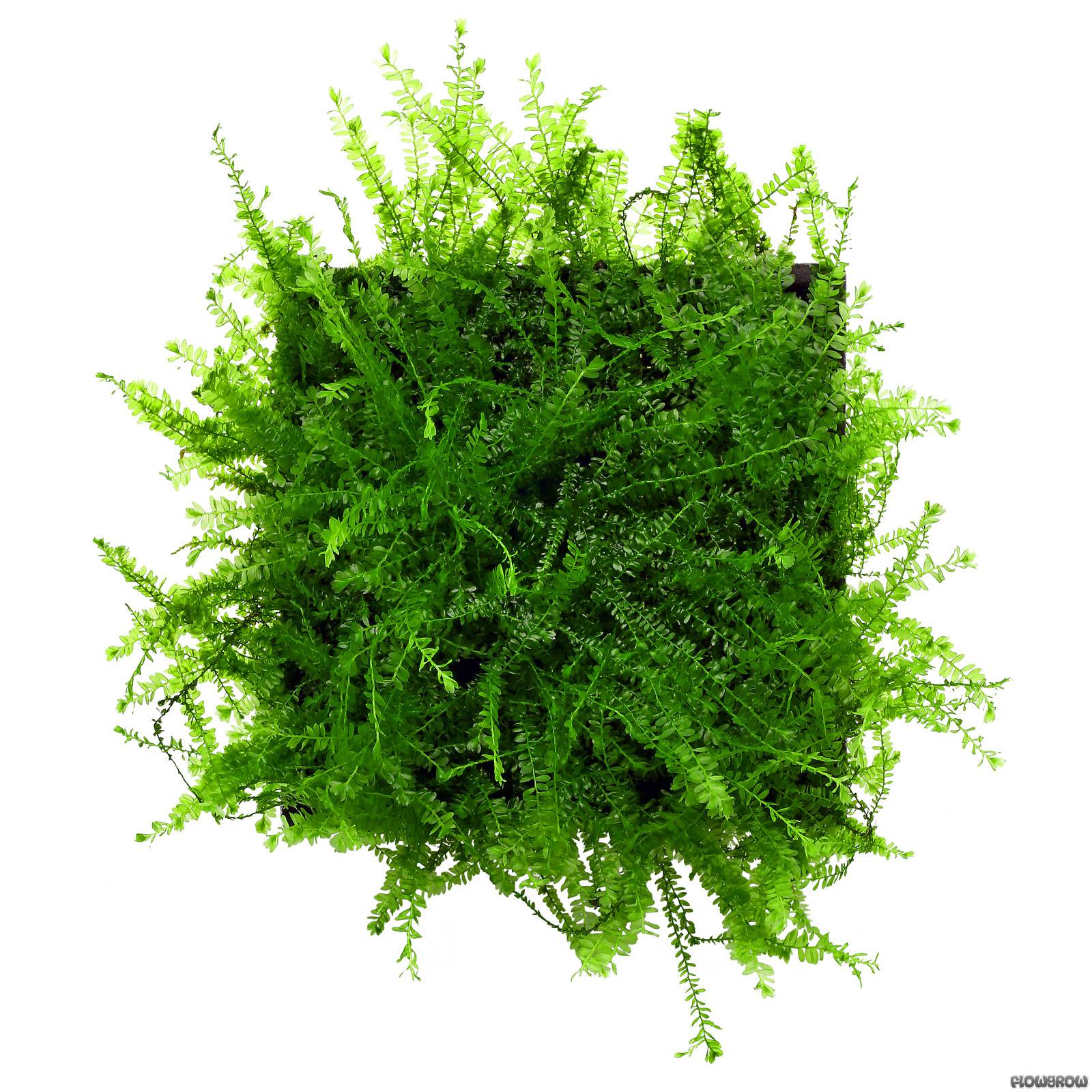
Photo could not load. Follow the source link below to view it.
Source-labelled species photo; identification not independently verified
© Sven Alexander Jensen (2016) · Copyright retained; external reference · Photo source
External photo · internet connection required.- Group
- Moss
- Record type
- species
- Water category
- Aquatic aquarium moss
- Submerged evidence
- Documented aquarium culture
- Emerged evidence
- Not established
- Suitability
- Established aquarium option
- Published temperature tolerance
- Not established
- Published optimum
- Not established
- Published pH
- Not established
- Published KH
- Not established
- Difficulty
- Not established
- Growth rate
- medium
- Origin / distribution
- Not compiled
Habitat and identification
Aquatic moss in cultivation; detailed natural habitat not compiled.
Soft decorative aquarium moss.
Identification and evidence limits
A primary publication identifies Queen moss as this species. Numeric culture limits are not established here; emerged suitability remains uncertain.
Species name used by source; global accepted-name audit not performed
Aliases: Amblystegiaceae sp. Manaus (former trade identification)
Mossarium application · inferred guidance
Use a submerged trial rather than risking all stock in an emerged mossarium; temperature requirements need culture-specific confirmation.
Care profile: Submerged aquarium moss with unquantified thermal limits.
Not established from reviewed sources
Trade name documented; current stock and local availability not checked
Sources: S022 Akiyama 2013: identification of Queen moss, S023 Flowgrow: Hydropogonella gymnostoma
M022 Nano / creeping feather-moss
Amblystegium serpens
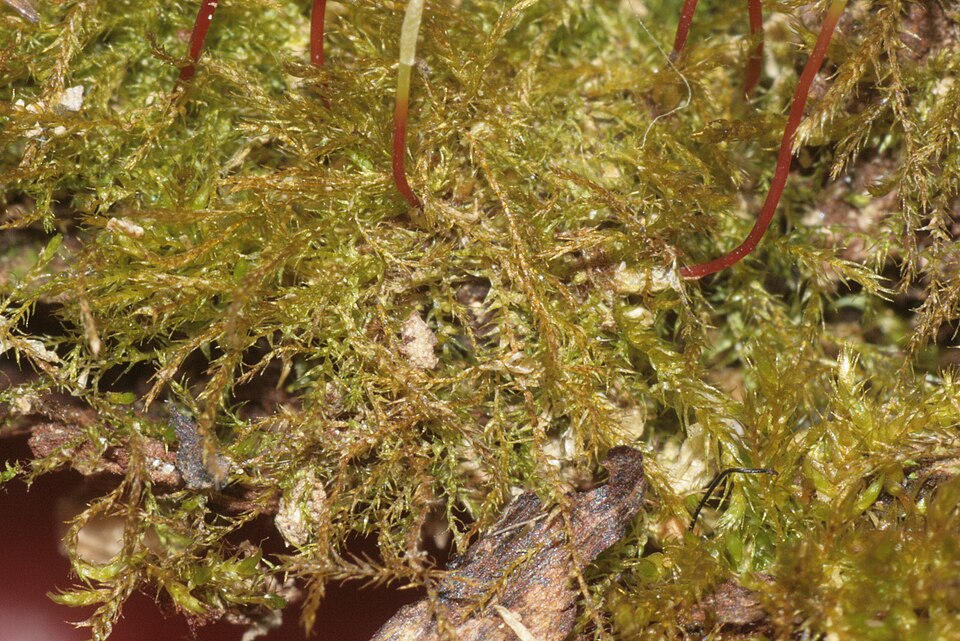
Photo could not load. Follow the source link below to view it.
Source-labelled species photo; identification not independently verified
HermannSchachner · CC0 · Photo source
Saved locally for offline viewing.- Group
- Moss
- Record type
- species
- Water category
- Terrestrial moss with documented submerged culture
- Submerged evidence
- Documented aquarium culture
- Emerged evidence
- Documented
- Suitability
- Established aquarium option
- Published temperature tolerance
- 4–26 °C
- Published optimum
- Not established
- Published pH
- 5–7
- Published KH
- 0–21 °dKH
- Difficulty
- easy
- Growth rate
- slow
- Origin / distribution
- Very widespread
Habitat and identification
Terrestrial soil, bark, dead wood and rock, often nutrient-rich; not naturally aquatic according to source.
Small creeping emerged lawns; delicate upright shoots underwater.
Identification and evidence limits
Included for documented submerged cultivation, not as a naturally aquatic species.
Species name used by source; global accepted-name audit not performed
Mossarium application · inferred guidance
Useful for a humid emerged surface or a separately tested submerged patch.
Care profile: Tropical amphibious hardscape moss.
Published cultivation catalog values; tolerance is not a target or experimentally verified boundary
Trade name documented; current stock and local availability not checked
Sources: S024 Flowgrow: Amblystegium serpens
M023 Alpine water-moss
Fontinalis squamosa
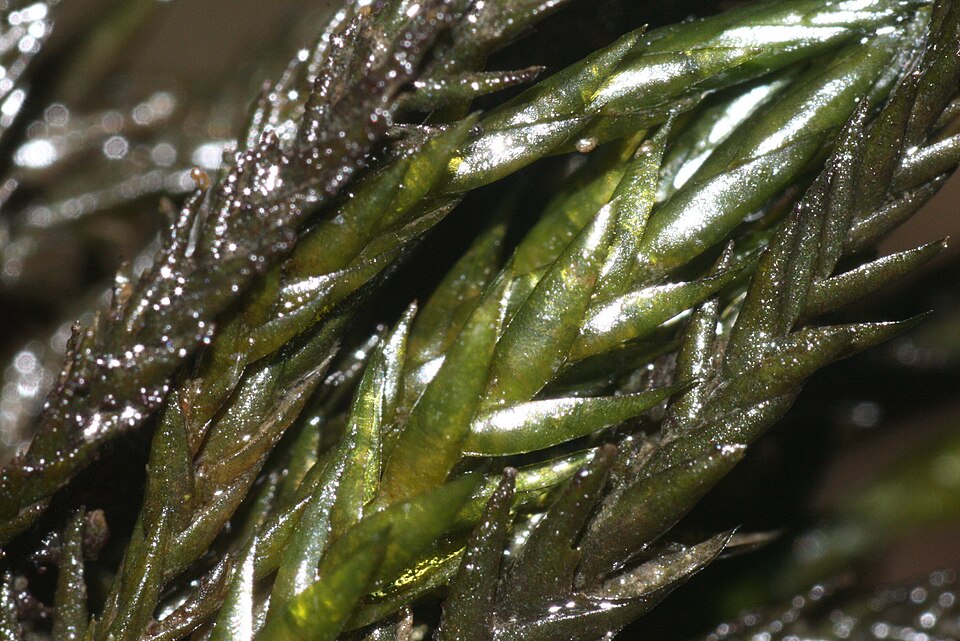
Photo could not load. Follow the source link below to view it.
Source-labelled species photo; identification not independently verified
HermannSchachner · CC0 · Photo source
Saved locally for offline viewing.- Group
- Moss
- Record type
- species
- Water category
- Naturally aquatic moss
- Submerged evidence
- Natural submerged occurrence documented
- Emerged evidence
- Culture not established
- Suitability
- Specialist habitat-based trial; long-term mossarium culture unverified
- Published temperature tolerance
- Not established
- Published optimum
- Not established
- Published pH
- Not established
- Published KH
- Not established
- Difficulty
- Not established
- Growth rate
- Not established
- Origin / distribution
- Not compiled
Habitat and identification
Fast acidic streams and rivers, attached to rock or roots; tolerates very nutrient-poor sites.
Slender cylindrical shoots with rounded, overlapping rather than keeled leaves.
Identification and evidence limits
Different from slender forms of F. antipyretica. No numeric cultivation recipe reviewed.
Species name used by source; global accepted-name audit not performed
Mossarium application · inferred guidance
Trial in cool moving acidic water with low nutrient loading.
Care profile: Specialist stream or waterfall trial.
Not established from reviewed sources
Cultivated supply not checked; no wild-collection recommendation
Sources: S025 British Bryological Society: Fontinalis squamosa
M024 Long-beaked water feather-moss
Platyhypnidium riparioides
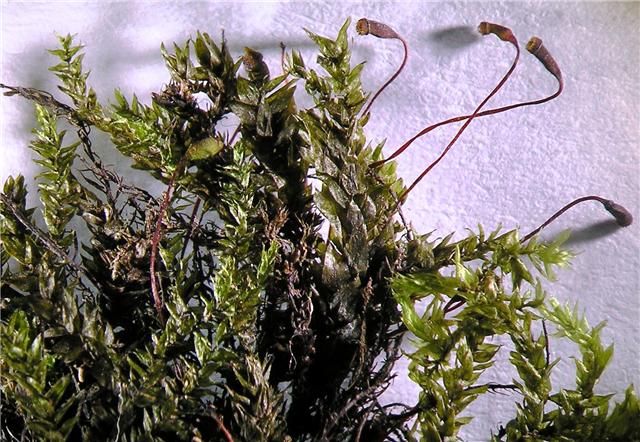
Photo could not load. Follow the source link below to view it.
Source-labelled species photo; identification not independently verified
Fozy81 · Public domain · Photo source
Saved locally for offline viewing.- Group
- Moss
- Record type
- species
- Water category
- Naturally aquatic / amphibious moss
- Submerged evidence
- Seasonal or partial submersion documented
- Emerged evidence
- Culture not established
- Suitability
- Specialist habitat-based trial; long-term mossarium culture unverified
- Published temperature tolerance
- Not established
- Published optimum
- Not established
- Published pH
- Not established
- Published KH
- Not established
- Difficulty
- Not established
- Growth rate
- Not established
- Origin / distribution
- Not compiled
Habitat and identification
Rock, roots and wood in streams; submerged or partly submerged for at least part of the year.
Variable elongated shoots, broad toothed leaves and a long single midrib.
Identification and evidence limits
Rhynchostegium riparioides is an alternative name used in the guide. Avoid assuming tolerance of very acidic stream water.
Species name used by source; global accepted-name audit not performed
Aliases: Rhynchostegium riparioides (alternative botanical name in source)
Mossarium application · inferred guidance
Use a flowing rock-to-water transition; retain an emerged portion during the trial.
Care profile: Specialist stream or waterfall trial.
Not established from reviewed sources
Cultivated supply not checked; no wild-collection recommendation
Sources: S026 British Bryological Society: Platyhypnidium riparioides
M025 Smaller lattice-moss
Cinclidotus fontinaloides
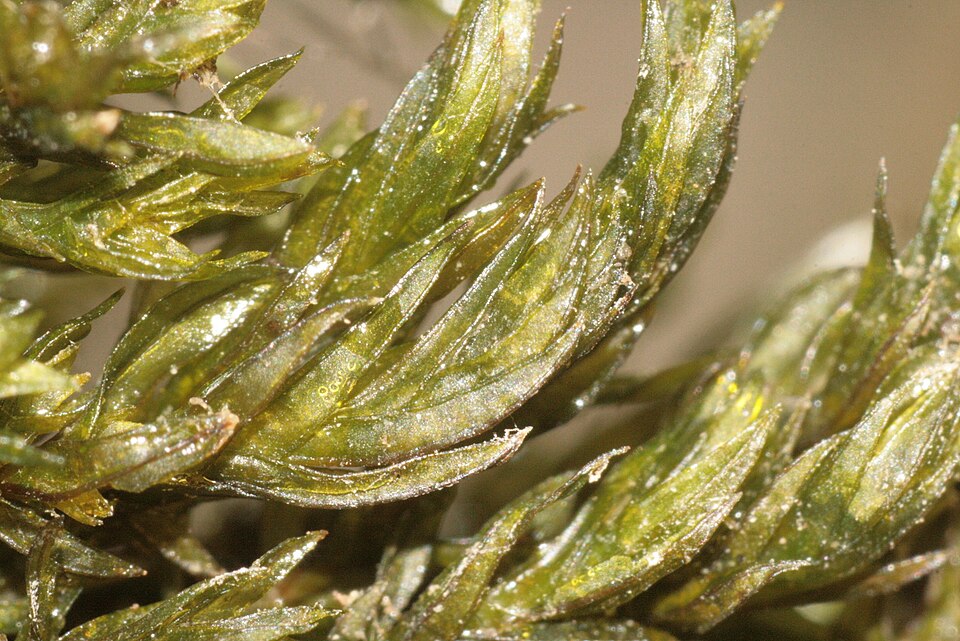
Photo could not load. Follow the source link below to view it.
Source-labelled species photo; identification not independently verified
HermannSchachner · CC0 · Photo source
Saved locally for offline viewing.- Group
- Moss
- Record type
- species
- Water category
- Intermittently flooded riparian moss
- Submerged evidence
- Temporary flooding; prolonged submersion unsuitable per guide
- Emerged evidence
- Natural wet emerged habitat documented
- Suitability
- Specialist habitat-based trial; long-term mossarium culture unverified
- Published temperature tolerance
- Not established
- Published optimum
- Not established
- Published pH
- Not established
- Published KH
- Not established
- Difficulty
- Not established
- Growth rate
- Not established
- Origin / distribution
- Not compiled
Habitat and identification
Frequently flooded rocks, roots and masonry beside rivers and lakes; avoids markedly acidic water.
Robust trailing shoots with conspicuously thickened leaf borders.
Identification and evidence limits
Guide explicitly says it does not tolerate the prolonged submersion typical of Fontinalis.
Species name used by source; global accepted-name audit not performed
Mossarium application · inferred guidance
Use a wet emerged bank with occasional splashing, not a permanently underwater carpet.
Care profile: Wet margin / intermittently flooded moss.
Not established from reviewed sources
Cultivated supply not checked; no wild-collection recommendation
Sources: S027 British Bryological Society: Cinclidotus fontinaloides
M026 Larger lattice-moss
Cinclidotus riparius
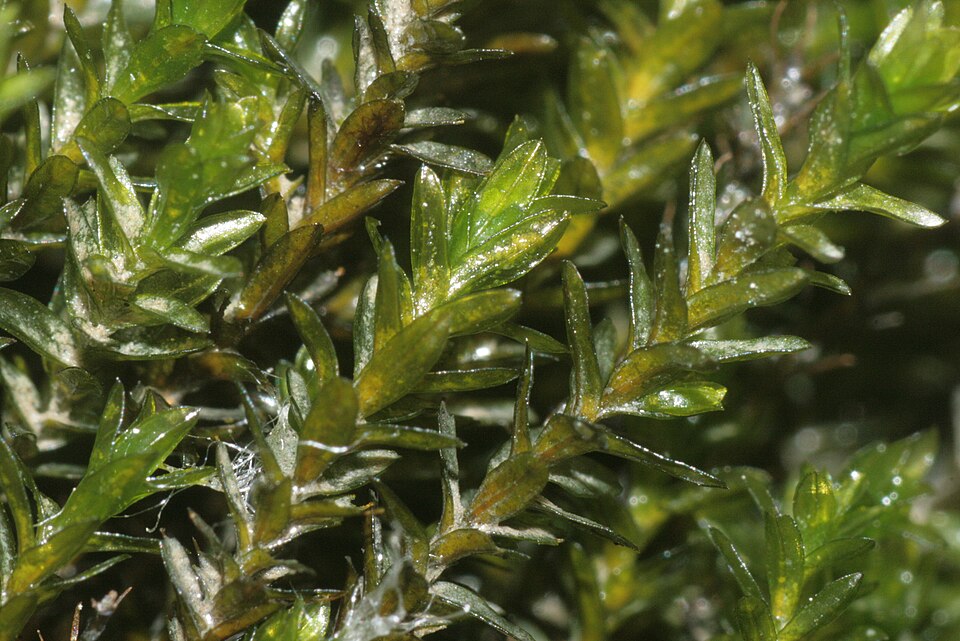
Photo could not load. Follow the source link below to view it.
Source-labelled species photo; identification not independently verified
HermannSchachner · CC0 · Photo source
Saved locally for offline viewing.- Group
- Moss
- Record type
- species
- Water category
- Riparian moss; immersion duration unresolved
- Submerged evidence
- Flood-zone occurrence; permanent culture not established
- Emerged evidence
- Natural wet emerged habitat documented
- Suitability
- Specialist habitat-based trial; long-term mossarium culture unverified
- Published temperature tolerance
- Not established
- Published optimum
- Not established
- Published pH
- Not established
- Published KH
- Not established
- Difficulty
- Not established
- Growth rate
- Not established
- Origin / distribution
- Not compiled
Habitat and identification
Lower river flood-zone than C. fontinaloides, according to the comparison in that species account.
Dark shoots; more symmetrical leaves, less twisted when dry than C. fontinaloides.
Identification and evidence limits
Evidence is a comparison account, not a complete species treatment. Leaf-section microscopy needed for reliable distinction.
Species name used by source; global accepted-name audit not performed
Mossarium application · inferred guidance
Treat as an experimental wet-margin subject until species-specific immersion needs are verified.
Care profile: Wet margin / intermittently flooded moss.
Not established from reviewed sources
Cultivated supply not checked; no wild-collection recommendation
Sources: S027 British Bryological Society: Cinclidotus fontinaloides
M027 Claw brook-moss
Hygrohypnum ochraceum
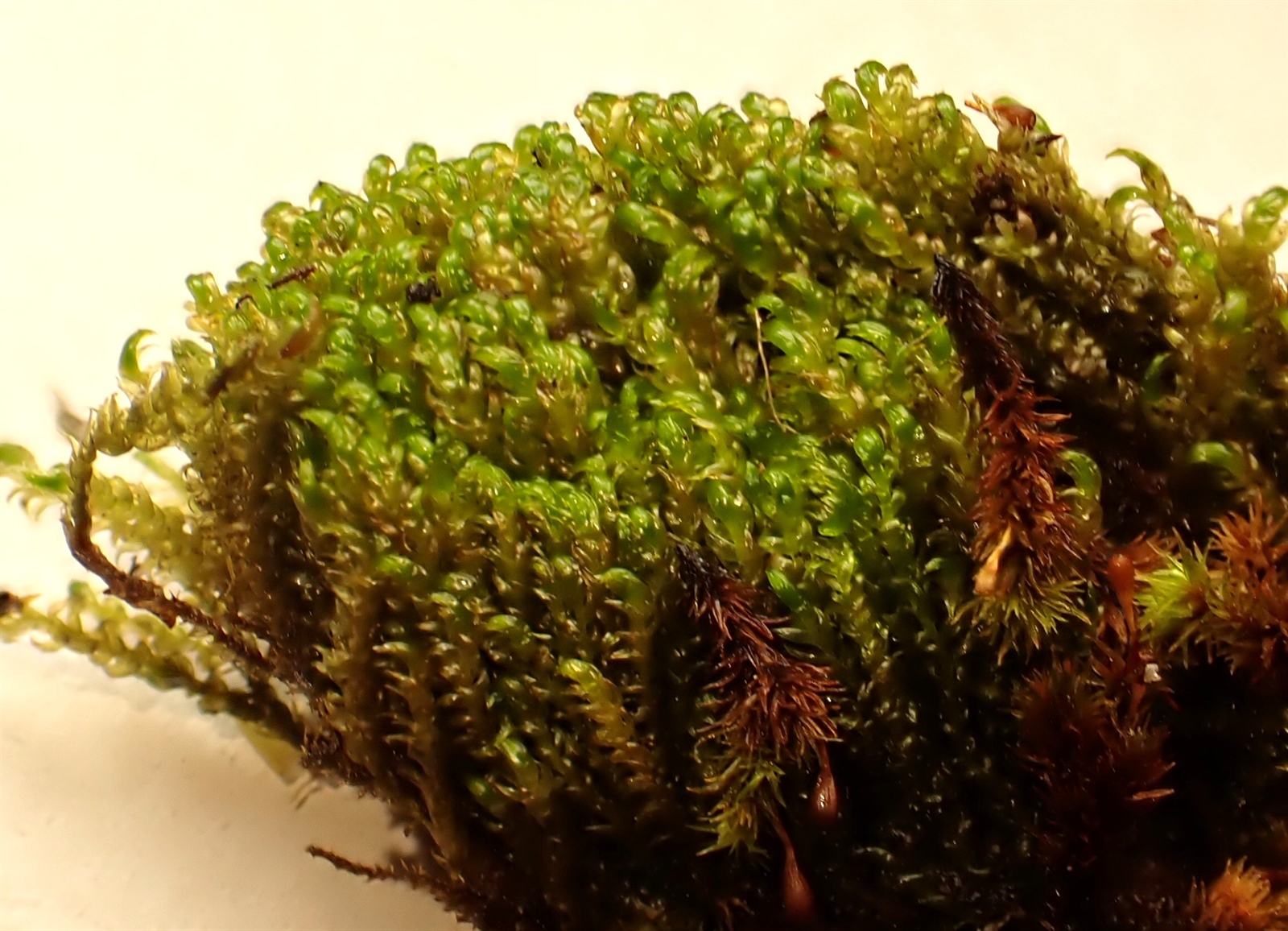
Photo could not load. Follow the source link below to view it.
Source-labelled species observation; identification not independently verified
Perry Gunnar Larsen · CC BY 4.0 · Photo source
Saved locally for offline viewing.- Group
- Moss
- Record type
- species
- Water category
- Stream moss
- Submerged evidence
- In and beside running water documented
- Emerged evidence
- Culture not established
- Suitability
- Specialist habitat-based trial; long-term mossarium culture unverified
- Published temperature tolerance
- Not established
- Published optimum
- Not established
- Published pH
- Not established
- Published KH
- Not established
- Difficulty
- Not established
- Growth rate
- Not established
- Origin / distribution
- Not compiled
Habitat and identification
Rapid hill streams, waterfall rock and occasional seepages, usually on acidic substrates.
Soft green or brown patches with curved concave leaves and conspicuous pale alar cells.
Identification and evidence limits
Does not occur on calcareous rock in the guide’s region. Can be confused with H. luridum.
Species name used by source; global accepted-name audit not performed
Mossarium application · inferred guidance
Trial in a cool circulating soft-water stream section on noncalcareous stone.
Care profile: Specialist stream or waterfall trial.
Not established from reviewed sources
Cultivated supply not checked; no wild-collection recommendation
Sources: S028 British Bryological Society: Hygrohypnum ochraceum
M028 Western brook-moss
Hygrohypnum eugyrium
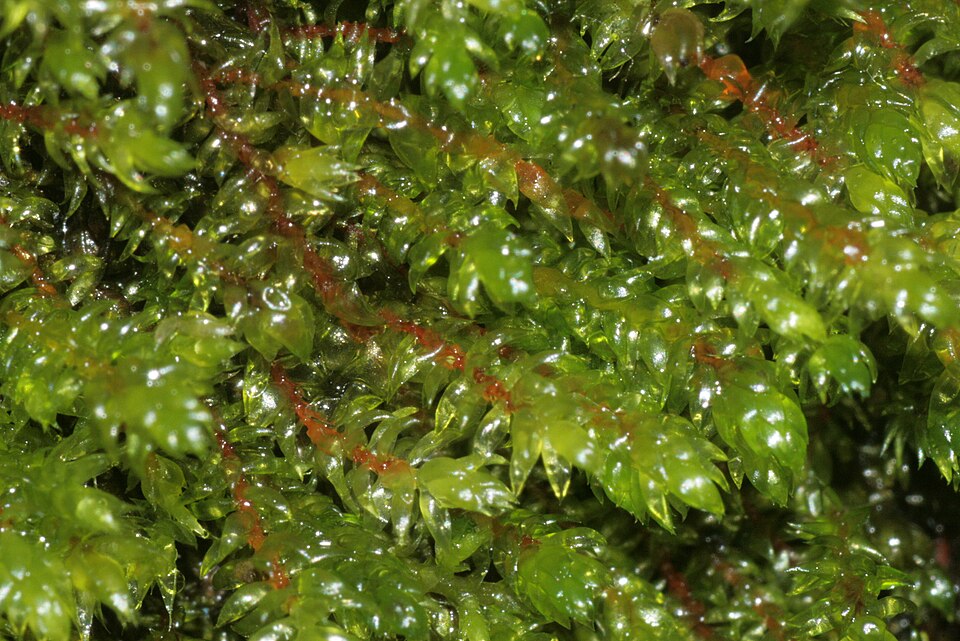
Photo could not load. Follow the source link below to view it.
Source-labelled species photo; identification not independently verified
HermannSchachner · CC0 · Photo source
Saved locally for offline viewing.- Group
- Moss
- Record type
- species
- Water category
- Stream moss
- Submerged evidence
- Natural stream occurrence; culture unverified
- Emerged evidence
- Culture not established
- Suitability
- Specialist habitat-based trial; long-term mossarium culture unverified
- Published temperature tolerance
- Not established
- Published optimum
- Not established
- Published pH
- Not established
- Published KH
- Not established
- Difficulty
- Not established
- Growth rate
- Not established
- Origin / distribution
- Not compiled
Habitat and identification
Rock and stones in fast streams, often in wooded ravines with slightly base-rich rock.
Compact green-brown patches; orange cells at leaf-base corners.
Identification and evidence limits
Not interchangeable with the acid-substrate H. ochraceum. Taxonomic name follows the field guide.
Species name used by source; global accepted-name audit not performed
Mossarium application · inferred guidance
Use a cool shaded stream-rock trial with modest mineral influence.
Care profile: Specialist stream or waterfall trial.
Not established from reviewed sources
Cultivated supply not checked; no wild-collection recommendation
Sources: S029 British Bryological Society: Hygrohypnum eugyrium
M029 Fern-leaved hook-moss
Cratoneuron filicinum
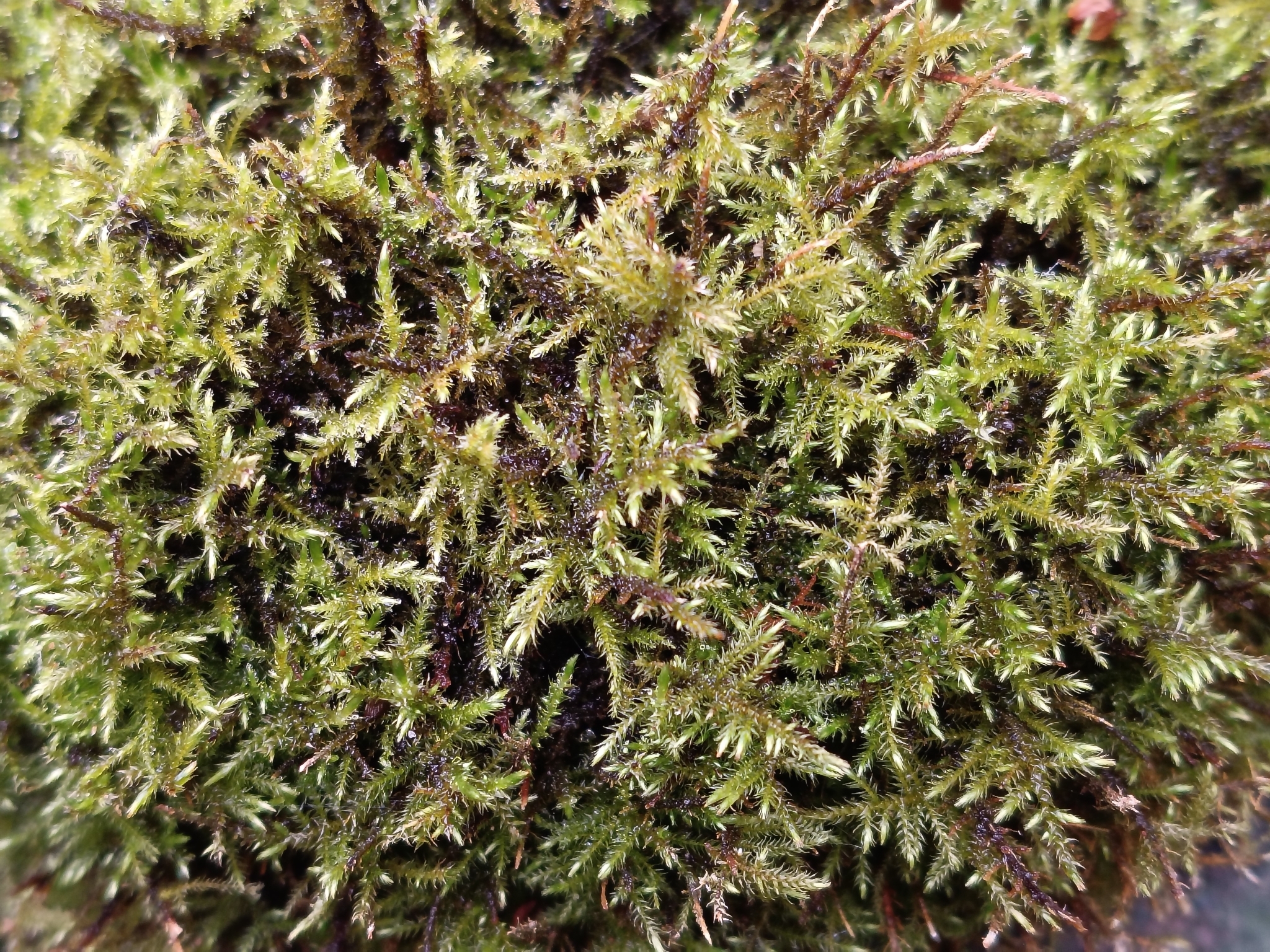
Photo could not load. Follow the source link below to view it.
Source-labelled species observation; identification not independently verified
Daniel Buczkiewicz · CC BY 4.0 · Photo source
Saved locally for offline viewing.- Group
- Moss
- Record type
- species
- Water category
- Wetland / spring moss
- Submerged evidence
- Permanent underwater culture not established
- Emerged evidence
- Natural wet emerged habitat documented
- Suitability
- Specialist habitat-based trial; long-term mossarium culture unverified
- Published temperature tolerance
- Not established
- Published optimum
- Not established
- Published pH
- Not established
- Published KH
- Not established
- Difficulty
- Not established
- Growth rate
- Not established
- Origin / distribution
- Not compiled
Habitat and identification
Wet base-rich springs, flushes and rock ledges; also disturbed terrestrial ground.
Small pinnate shoots with pale tips and a strong midrib reaching the leaf tip.
Identification and evidence limits
The actual species differs from aquarium Triangle moss mislabelled Cratonneuron filicinum.
Species name used by source; global accepted-name audit not performed
Mossarium application · inferred guidance
Use a wetted mineral-rich ledge with tops in humid air; verify identification.
Care profile: Wet margin / intermittently flooded moss.
Not established from reviewed sources
Cultivated supply not checked; no wild-collection recommendation
Sources: S030 British Bryological Society: Cratoneuron filicinum
M030 Curled hook-moss
Palustriella commutata
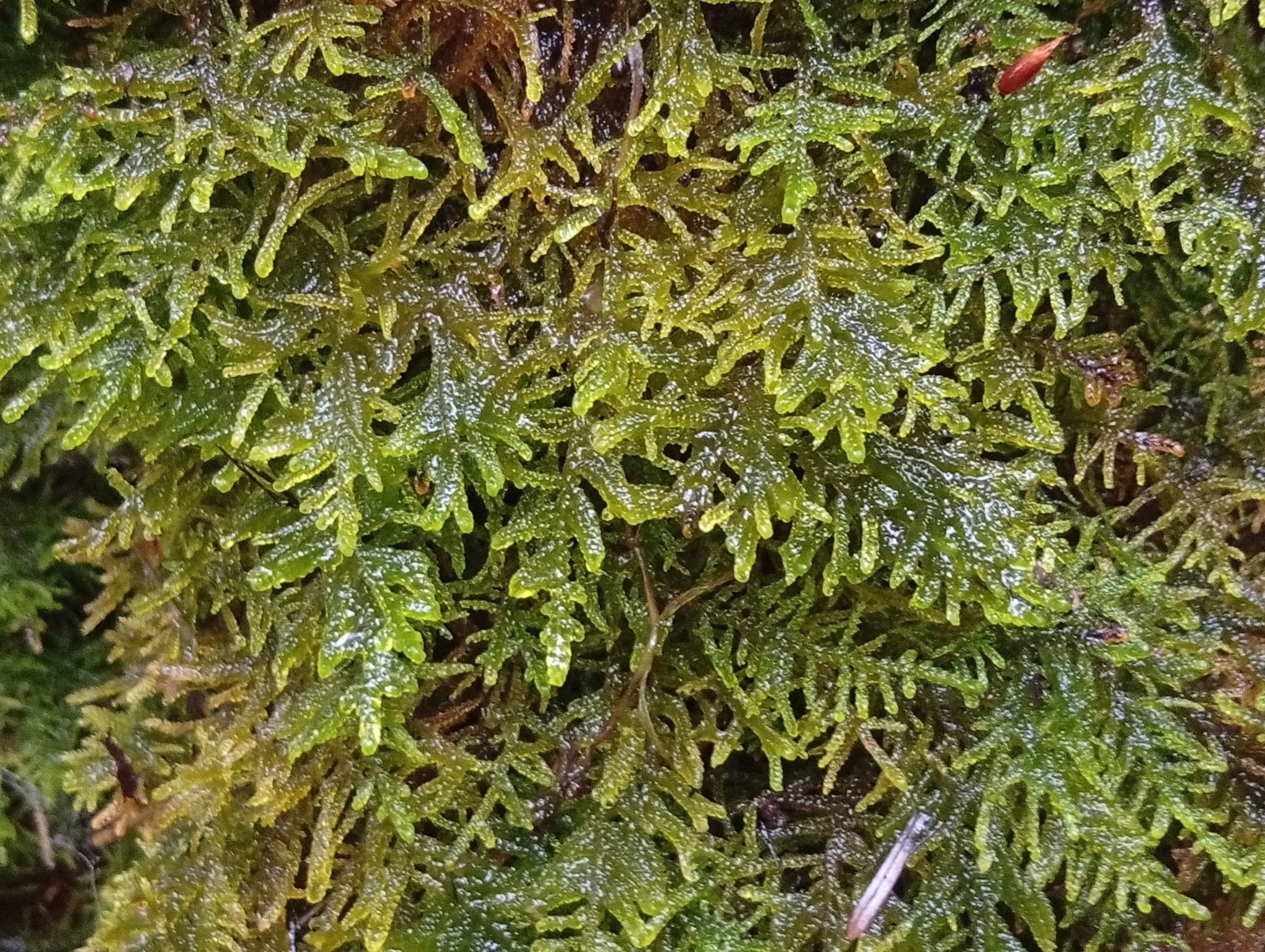
Photo could not load. Follow the source link below to view it.
Source-labelled species observation; identification not independently verified
Daniel Buczkiewicz · CC BY 4.0 · Photo source
Saved locally for offline viewing.- Group
- Moss
- Record type
- species
- Water category
- Spring / seepage moss
- Submerged evidence
- Continuous surface wetting documented; permanent immersion unverified
- Emerged evidence
- Natural wet emerged habitat documented
- Suitability
- Specialist habitat-based trial; long-term mossarium culture unverified
- Published temperature tolerance
- Not established
- Published optimum
- Not established
- Published pH
- Not established
- Published KH
- Not established
- Difficulty
- Not established
- Growth rate
- Not established
- Origin / distribution
- Not compiled
Habitat and identification
Wet base-rich cliffs, springs, flushes and continuously flowing calcareous fountains.
Feather-like curved foliage; may become encrusted with calcium deposits.
Identification and evidence limits
A limestone-spring specialist rather than a generic soft-water aquarium moss.
Species name used by source; global accepted-name audit not performed
Aliases: Cratoneuron commutatum (older botanical name in source)
Mossarium application · inferred guidance
Use a continuously trickling calcareous rock wall in its own mineral-compatible system.
Care profile: Wet margin / intermittently flooded moss.
Not established from reviewed sources
Cultivated supply not checked; no wild-collection recommendation
Sources: S031 British Bryological Society: Palustriella commutata
M031 Hooked scorpion-moss
Scorpidium scorpioides
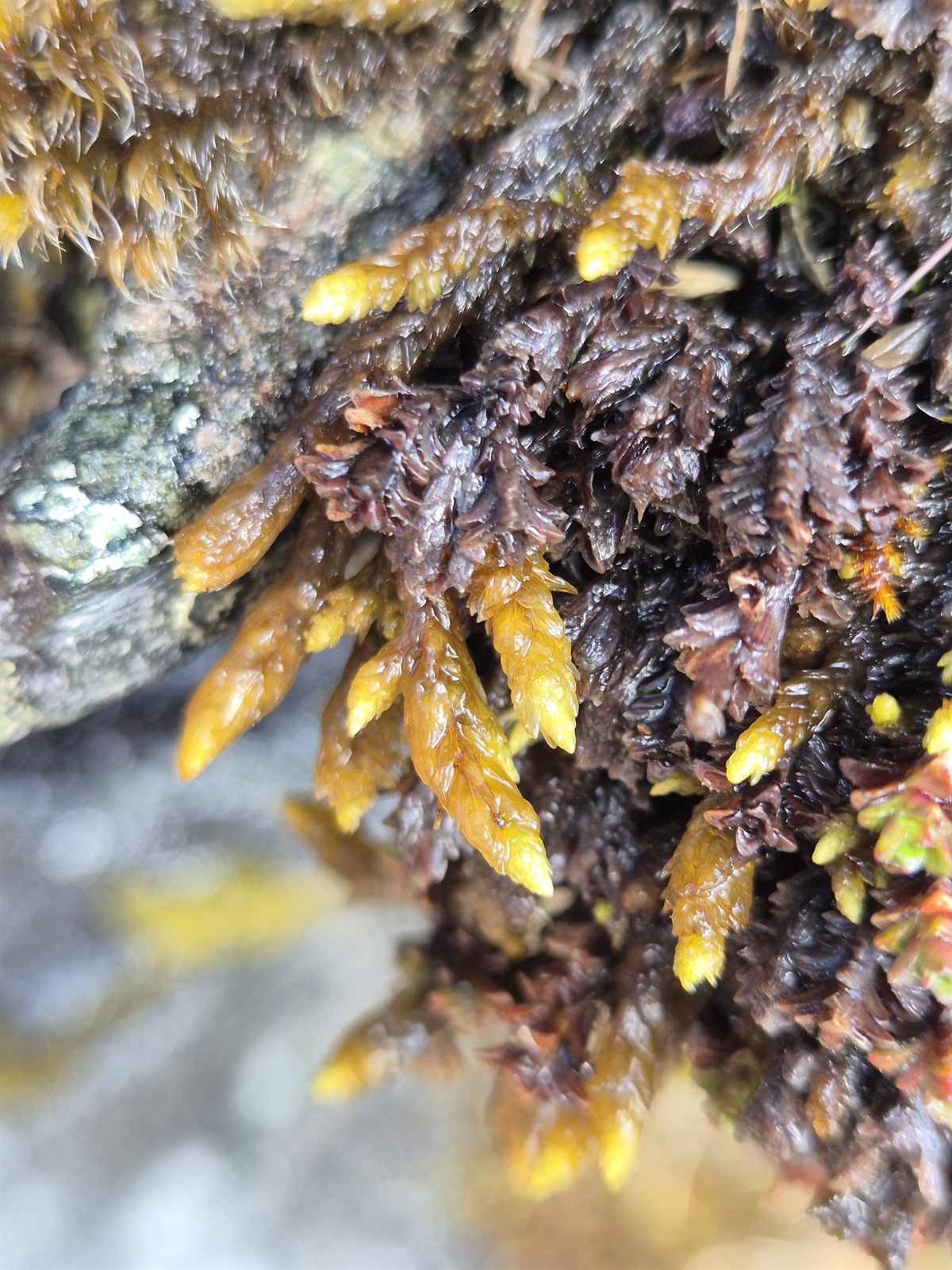
Photo could not load. Follow the source link below to view it.
Source-labelled species observation; identification not independently verified
Per Gerhard Ihlen · CC BY 4.0 · Photo source
Saved locally for offline viewing.- Group
- Moss
- Record type
- species
- Water category
- Fen / shallow-wetland moss
- Submerged evidence
- Long-term underwater culture not established
- Emerged evidence
- Natural wet emerged habitat documented
- Suitability
- Specialist habitat-based trial; long-term mossarium culture unverified
- Published temperature tolerance
- Not established
- Published optimum
- Not established
- Published pH
- Not established
- Published KH
- Not established
- Difficulty
- Not established
- Growth rate
- Not established
- Origin / distribution
- Not compiled
Habitat and identification
Mineral-rich flushes and calcareous fens, often among sedges.
Thick red-brown curved shoots, pale tips and nearly nerveless broad leaves.
Identification and evidence limits
Strong wetland affinity does not supply proof of aquarium culture or a pH tolerance range.
Species name used by source; global accepted-name audit not performed
Mossarium application · inferred guidance
Trial a saturated mineral-rich fen margin; avoid an acid Sphagnum compartment.
Care profile: Wet margin / intermittently flooded moss.
Not established from reviewed sources
Cultivated supply not checked; no wild-collection recommendation
Sources: S032 British Bryological Society: Scorpidium scorpioides
M032 Floating hook-moss
Warnstorfia fluitans
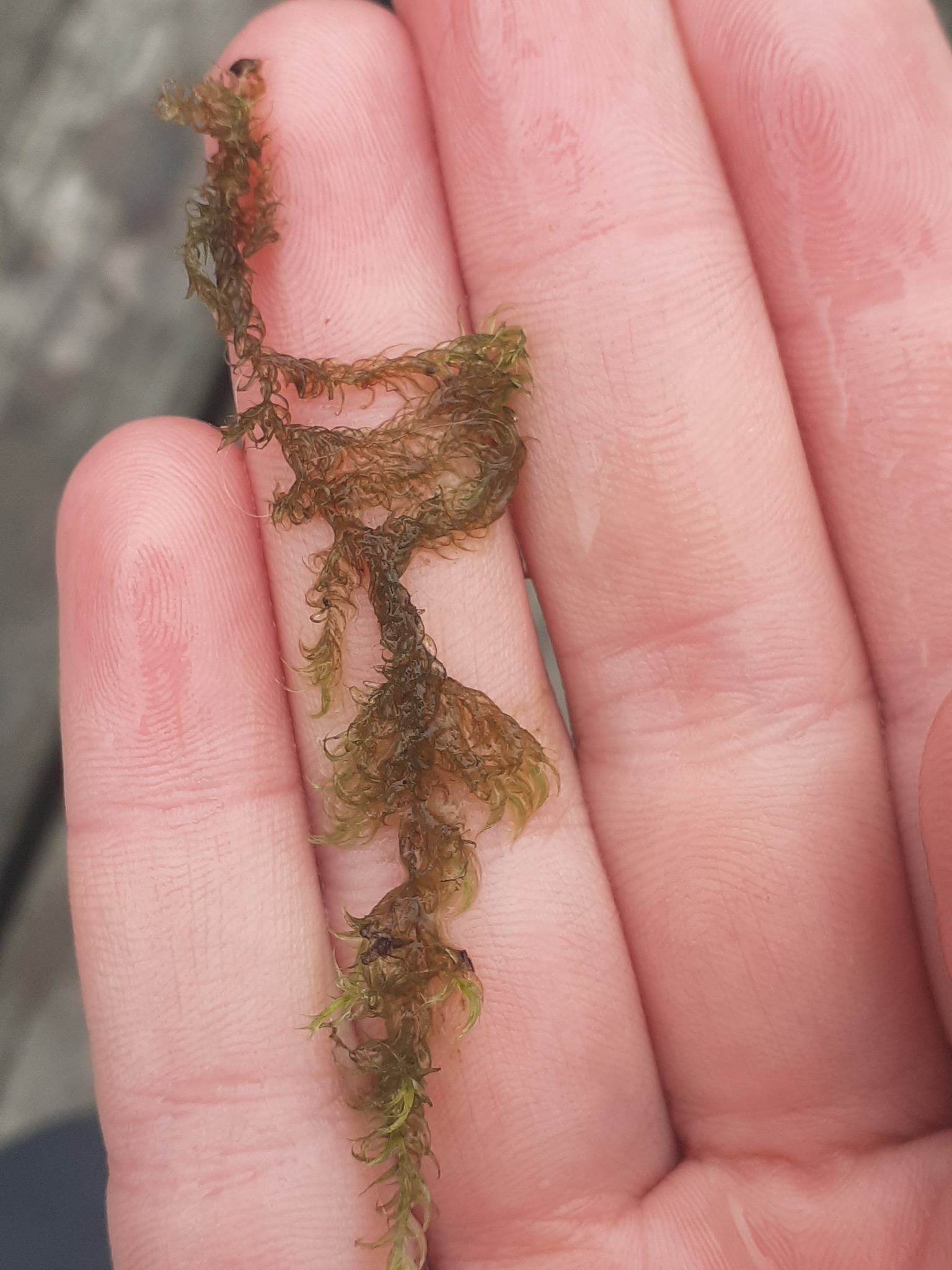
Photo could not load. Follow the source link below to view it.
Source-labelled species observation; identification not independently verified
Anne Heckmann · CC BY 4.0 · Photo source
Saved locally for offline viewing.- Group
- Moss
- Record type
- species
- Water category
- Naturally aquatic bog-pool moss
- Submerged evidence
- Floating / wet-pool occurrence documented
- Emerged evidence
- Natural wet emerged habitat documented
- Suitability
- Specialist habitat-based trial; long-term mossarium culture unverified
- Published temperature tolerance
- Not established
- Published optimum
- Not established
- Published pH
- Not established
- Published KH
- Not established
- Difficulty
- Not established
- Growth rate
- Not established
- Origin / distribution
- Not compiled
Habitat and identification
Nutrient-poor, base-poor still pools, commonly rain-fed upland waters.
Loose dark-green shoots with slightly curved long leaves; often among aquatic Sphagnum.
Identification and evidence limits
Drepanocladus aduncus can look similar but typically occupies more mineral- and nutrient-rich sites.
Species name used by source; global accepted-name audit not performed
Aliases: Drepanocladus fluitans (botanical synonym in source)
Mossarium application · inferred guidance
Use a low-mineral bog-pool trial rather than fertilized hard-water aquarium conditions.
Care profile: Acid bog pool / saturated peatland specialist.
Not established from reviewed sources
Cultivated supply not checked; no wild-collection recommendation
Sources: S033 British Bryological Society: Warnstorfia fluitans
M033 Ringless hook-moss
Sarmentypnum exannulatum
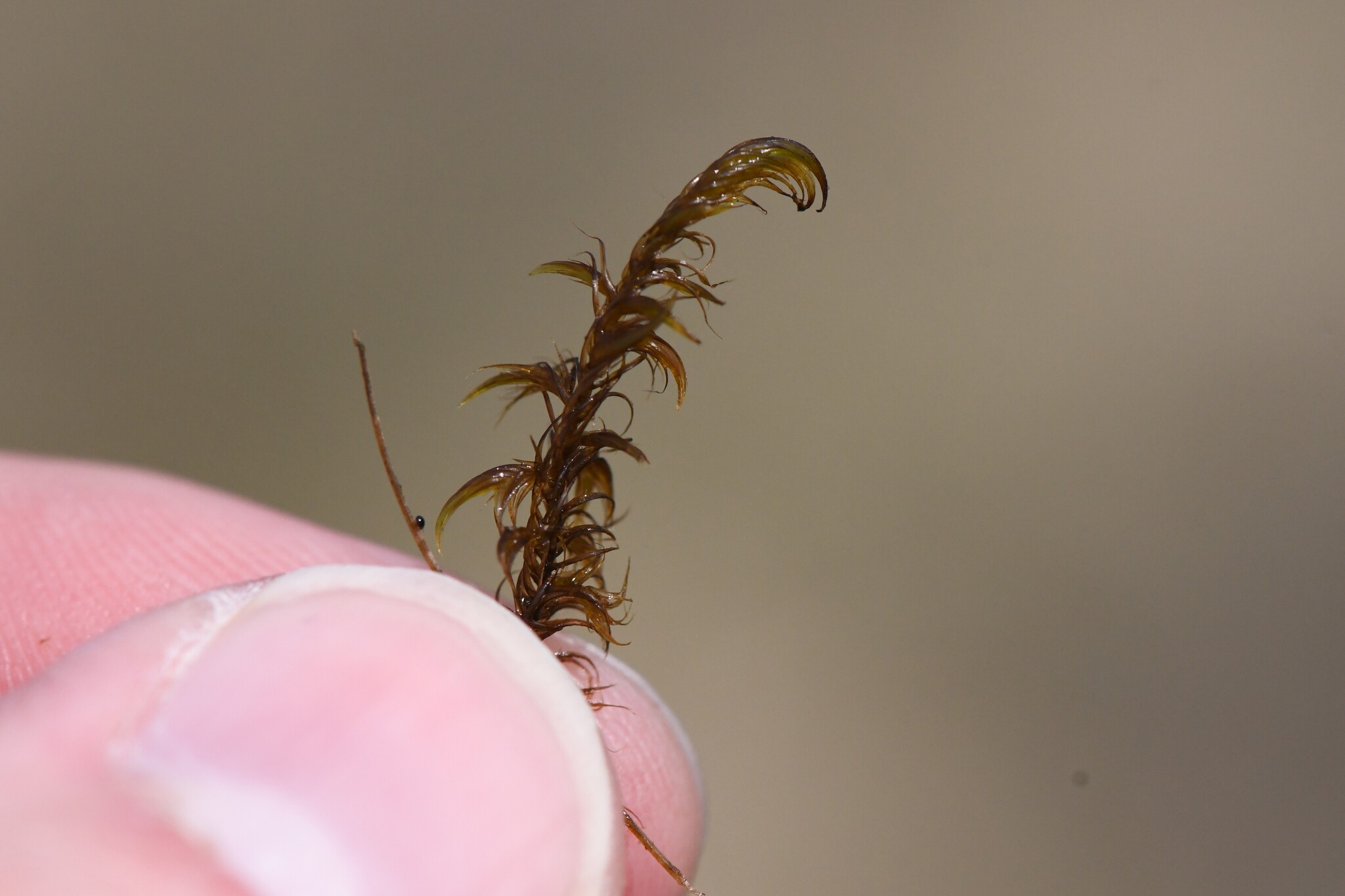
Photo could not load. Follow the source link below to view it.
Source-labelled species observation; identification not independently verified
Kian Hayles-Cotton · CC0 · Photo source
Saved locally for offline viewing.- Group
- Moss
- Record type
- species
- Water category
- Fen / spring-margin moss
- Submerged evidence
- Pool margins documented; permanent culture unverified
- Emerged evidence
- Natural wet emerged habitat documented
- Suitability
- Specialist habitat-based trial; long-term mossarium culture unverified
- Published temperature tolerance
- Not established
- Published optimum
- Not established
- Published pH
- Not established
- Published KH
- Not established
- Difficulty
- Not established
- Growth rate
- Not established
- Origin / distribution
- Not compiled
Habitat and identification
Poor fens, neutral-water springheads and flushes; overlaps pool margins but avoids the most base-poor conditions.
Long upright shoots, green to orange, with moderately curved leaves.
Identification and evidence limits
Guide uses Warnstorfia exannulata. Sarmentypnum combination follows the cited bryological checklist.
Species name used by source; global accepted-name audit not performed
Aliases: Warnstorfia exannulata (older botanical combination); Drepanocladus exannulatus (older botanical combination)
Mossarium application · inferred guidance
Use a separate wet fen margin with modest mineral supply, not an extremely acid bog pool.
Care profile: Wet margin / intermittently flooded moss.
Not established from reviewed sources
Cultivated supply not checked; no wild-collection recommendation
Sources: S034 British Bryological Society: Warnstorfia exannulata, S035 Hill et al. 2008 checklist update
M034 Feathery bog-moss
Sphagnum cuspidatum
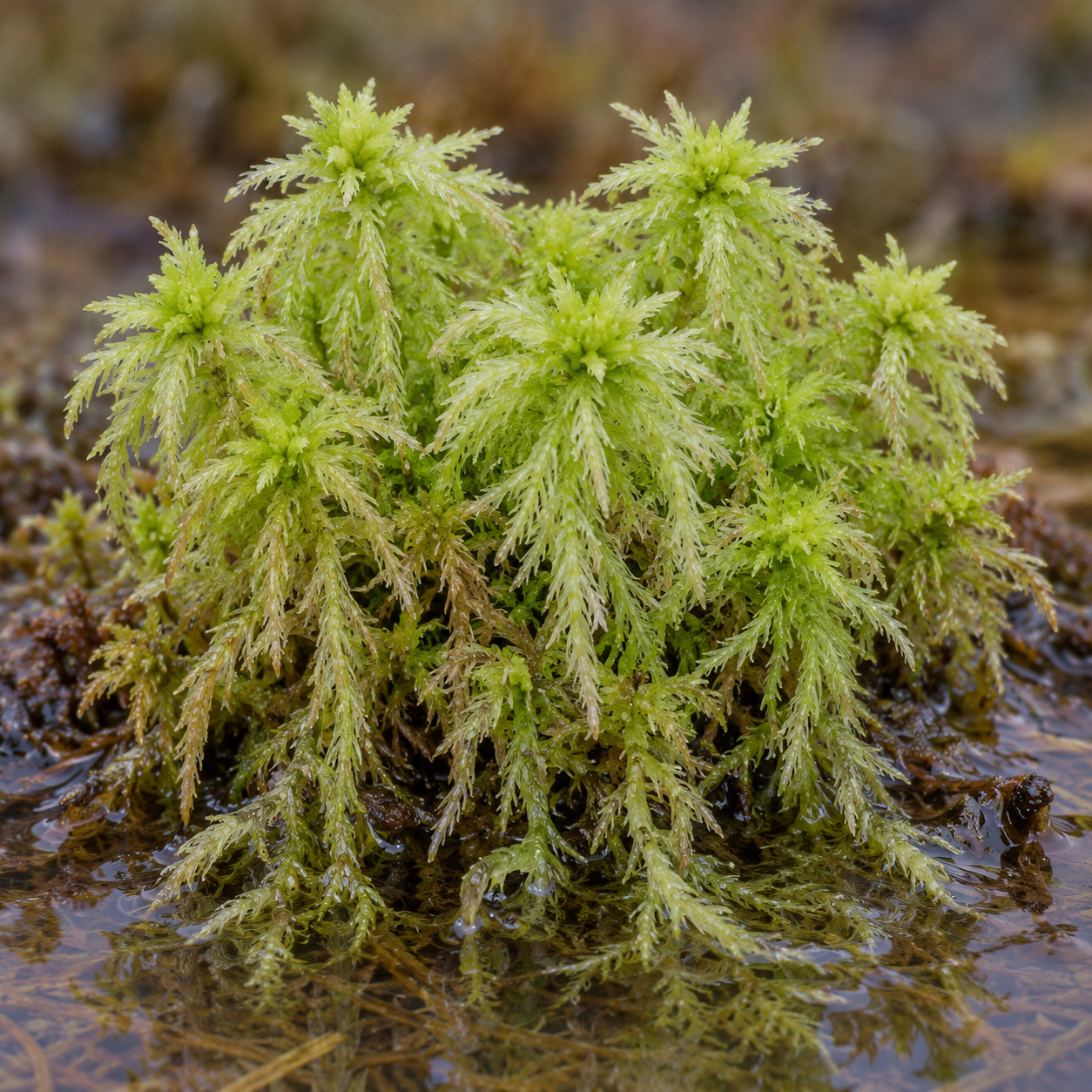 AI illustration · Intended subject: Sphagnum cuspidatum. Not verified for species identification.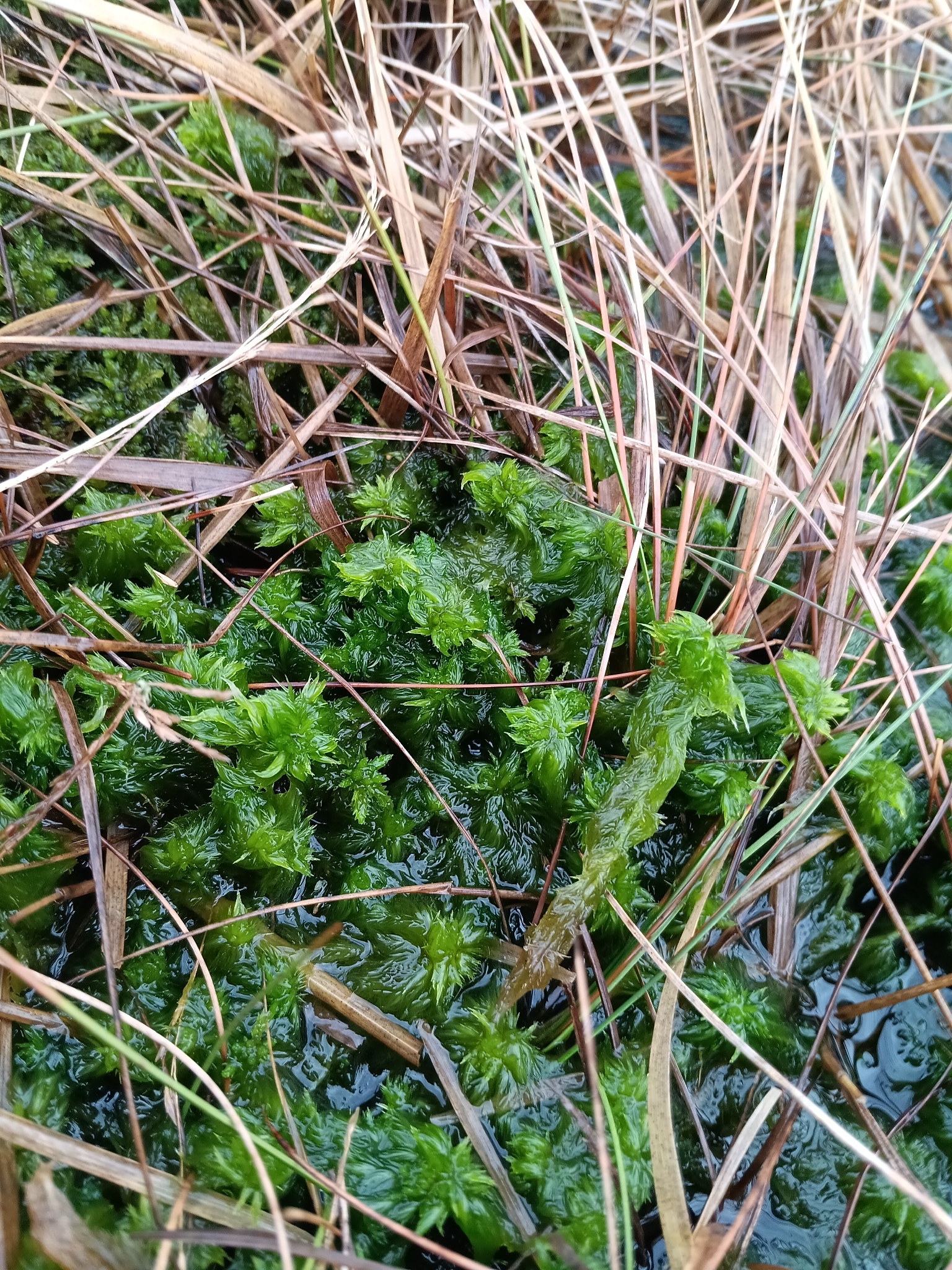
Photo could not load. Follow the source link below to view it.
Source-labelled species observation; identification not independently verified
considerthelilies · CC BY 4.0 · Photo source
Saved locally for offline viewing.- Group
- Moss
- Record type
- species
- Water category
- Aquatic / amphibious bog moss
- Submerged evidence
- Submerged natural growth documented
- Emerged evidence
- Natural wet emerged habitat documented
- Suitability
- Specialist habitat-based trial; long-term mossarium culture unverified
- Published temperature tolerance
- Not established
- Published optimum
- Not established
- Published pH
- Not established
- Published KH
- Not established
- Difficulty
- Not established
- Growth rate
- Not established
- Origin / distribution
- Not compiled
Habitat and identification
Very acidic bog pools, hollows, moorland runnels and ditches.
Aquatic forms have long soft narrow leaves and collapse when lifted from water.
Identification and evidence limits
Both terrestrial and aquatic forms exist; do not generalize this species’ water tolerance to all Sphagnum.
Species name used by source; global accepted-name audit not performed
Mossarium application · inferred guidance
Use a cool low-mineral acid pool or saturated bog hollow, keeping the growing tips lit.
Care profile: Acid bog pool / saturated peatland specialist.
Not established from reviewed sources
Cultivated supply not checked; no wild-collection recommendation
Sources: S036 British Bryological Society: Sphagnum cuspidatum
M035 Cow-horn bog-moss
Sphagnum denticulatum
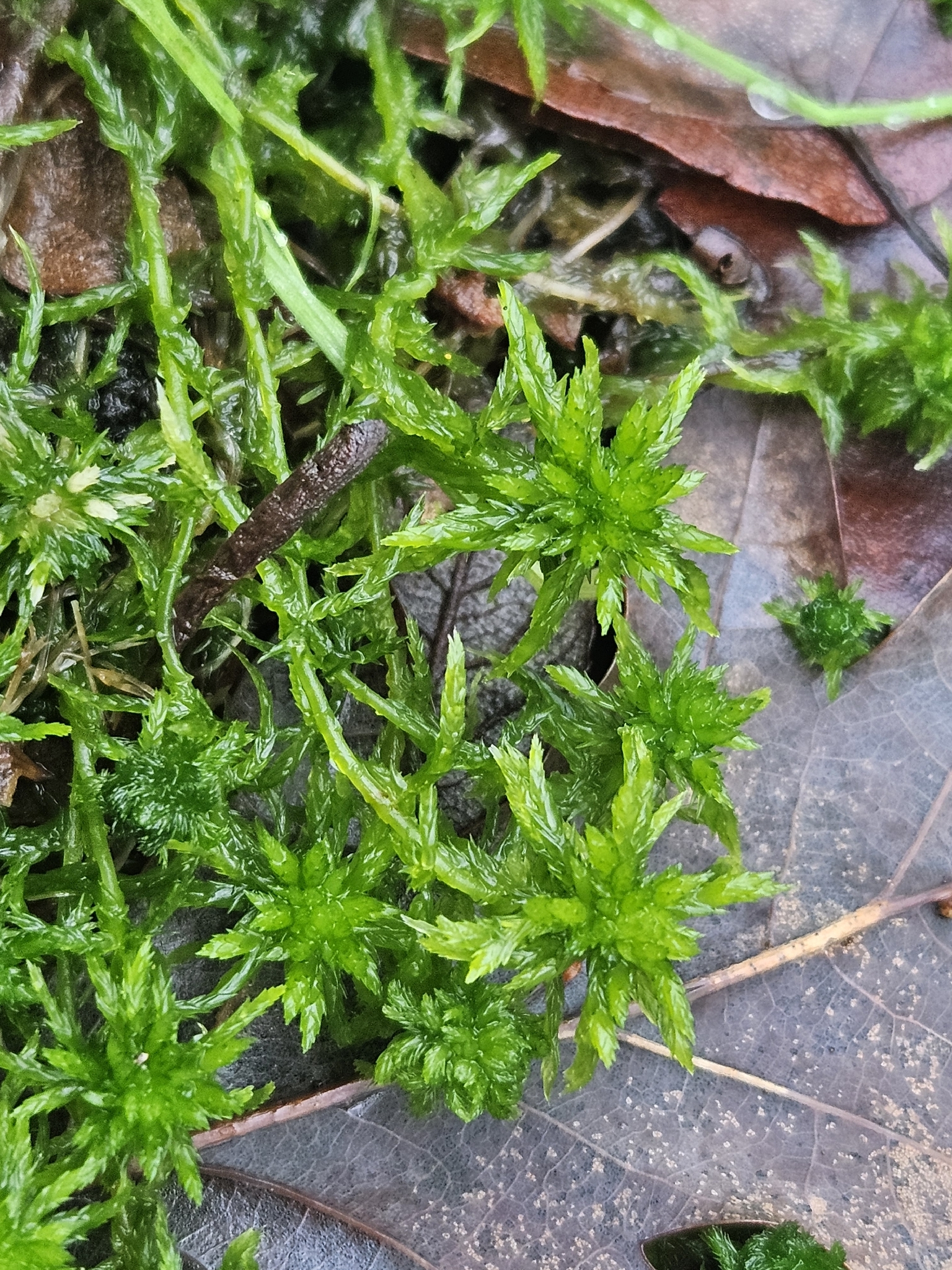
Photo could not load. Follow the source link below to view it.
Source-labelled species observation; identification not independently verified
Helen Waterman · CC BY 4.0 · Photo source
Saved locally for offline viewing.- Group
- Moss
- Record type
- species
- Water category
- Aquatic / amphibious bog moss
- Submerged evidence
- Submerged natural populations documented
- Emerged evidence
- Natural wet emerged habitat documented
- Suitability
- Specialist habitat-based trial; long-term mossarium culture unverified
- Published temperature tolerance
- Not established
- Published optimum
- Not established
- Published pH
- Not established
- Published KH
- Not established
- Difficulty
- Not established
- Growth rate
- Not established
- Origin / distribution
- Not compiled
Habitat and identification
Acidic bog pools, flushes, springs, ditches and irrigated rock; submerged in some pools and lakes.
Very variable, often with swollen curved branches and appressed leaves.
Identification and evidence limits
S. auriculatum is used in some treatments. Separation from S. inundatum can remain difficult even microscopically.
Species name used by source; global accepted-name audit not performed
Aliases: Sphagnum auriculatum (alternative name used in some treatments)
Mossarium application · inferred guidance
Use a saturated acidic support or shallow bog pool; retain provenance and avoid assuming a precise pH range.
Care profile: Acid bog pool / saturated peatland specialist.
Not established from reviewed sources
Cultivated supply not checked; no wild-collection recommendation
Sources: S038 British Bryological Society: Sphagnum denticulatum, S037 British Bryological Society: Sphagnum denticulatum atlas
M036 Lesser cow-horn bog-moss
Sphagnum inundatum
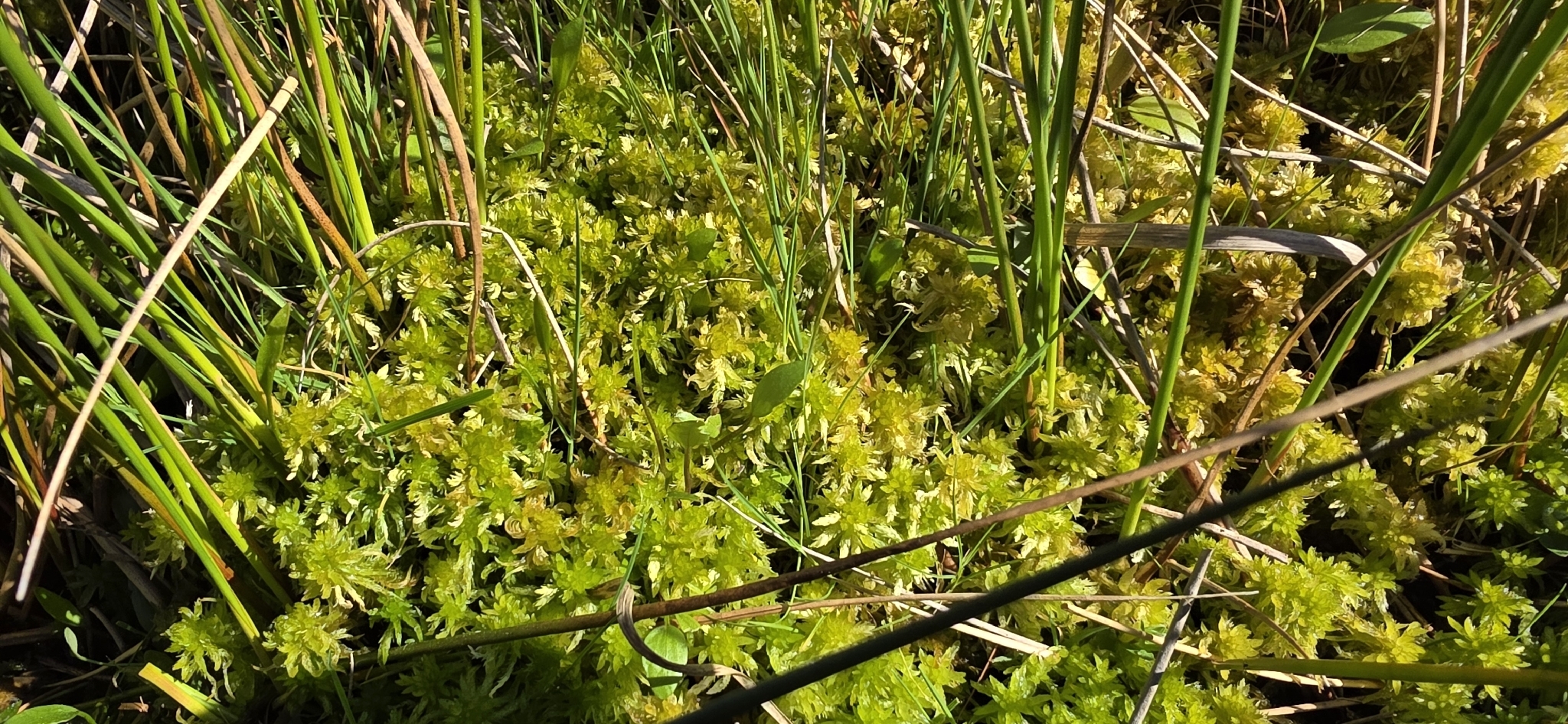
Photo could not load. Follow the source link below to view it.
Source-labelled species observation; identification not independently verified
Barry Stewart · CC BY 4.0 · Photo source
Saved locally for offline viewing.- Group
- Moss
- Record type
- species
- Water category
- Wetland moss; rarely submerged
- Submerged evidence
- Rare natural submersion; permanent culture unverified
- Emerged evidence
- Natural wet emerged habitat documented
- Suitability
- Specialist habitat-based trial; long-term mossarium culture unverified
- Published temperature tolerance
- Not established
- Published optimum
- Not established
- Published pH
- Not established
- Published KH
- Not established
- Difficulty
- Not established
- Growth rate
- Not established
- Origin / distribution
- Not compiled
Habitat and identification
Poor fens, swampy ground, mildly base-rich pools, ditches and edges of flushes.
Spiky spreading branch leaves; green to orange-brown shoots.
Identification and evidence limits
Despite its name the guide states it is rarely submerged. Included as a wet-margin comparison, not a core underwater recommendation.
Species name used by source; global accepted-name audit not performed
Mossarium application · inferred guidance
Use a high-water-table emerged margin. Do not select it for deep permanent submersion based on its name.
Care profile: Wet margin / intermittently flooded moss.
Not established from reviewed sources
Cultivated supply not checked; no wild-collection recommendation
Sources: S039 British Bryological Society: Sphagnum inundatum
M037 Fountain apple-moss
Philonotis fontana
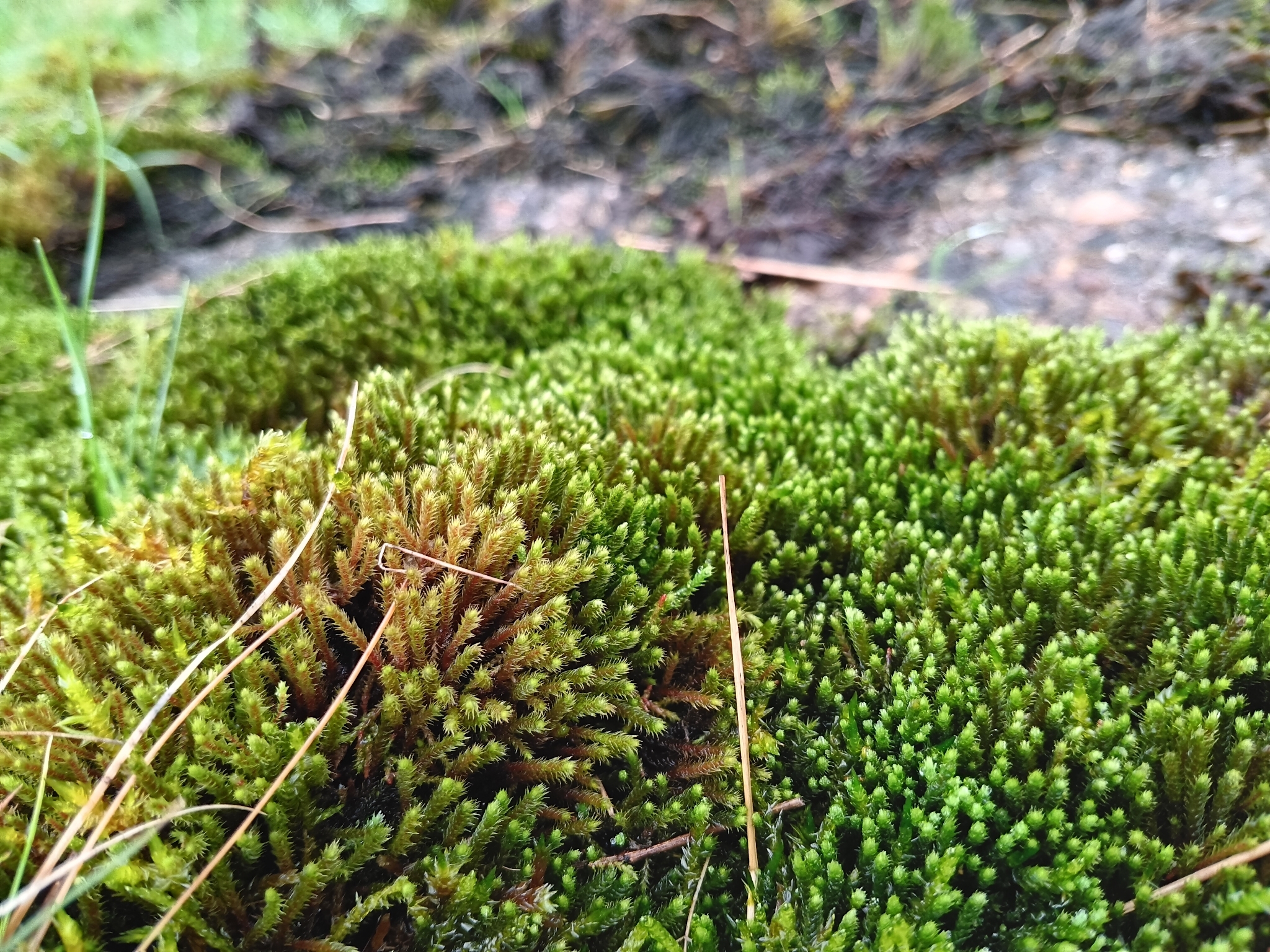
Photo could not load. Follow the source link below to view it.
Source-labelled species observation; identification not independently verified
considerthelilies · CC BY 4.0 · Photo source
Saved locally for offline viewing.- Group
- Moss
- Record type
- species
- Water category
- Spring / marsh moss
- Submerged evidence
- Permanent underwater culture not established
- Emerged evidence
- Natural wet emerged habitat documented
- Suitability
- Specialist habitat-based trial; long-term mossarium culture unverified
- Published temperature tolerance
- Not established
- Published optimum
- Not established
- Published pH
- Not established
- Published KH
- Not established
- Difficulty
- Not established
- Growth rate
- Not established
- Origin / distribution
- Not compiled
Habitat and identification
Marshes, springs, flushes, stream margins, wet ledges and rock.
Upright pale-green shoots, reddish stems and corrugated small leaves.
Identification and evidence limits
Species of Philonotis can require microscopy. Natural wetness alone does not establish permanent aquarium suitability.
Species name used by source; global accepted-name audit not performed
Mossarium application · inferred guidance
Trial an illuminated saturated spring-bank patch with tops above the waterline.
Care profile: Wet margin / intermittently flooded moss.
Not established from reviewed sources
Cultivated supply not checked; no wild-collection recommendation
Sources: S040 British Bryological Society: Philonotis fontana
M038 River feather-moss
Brachythecium rivulare
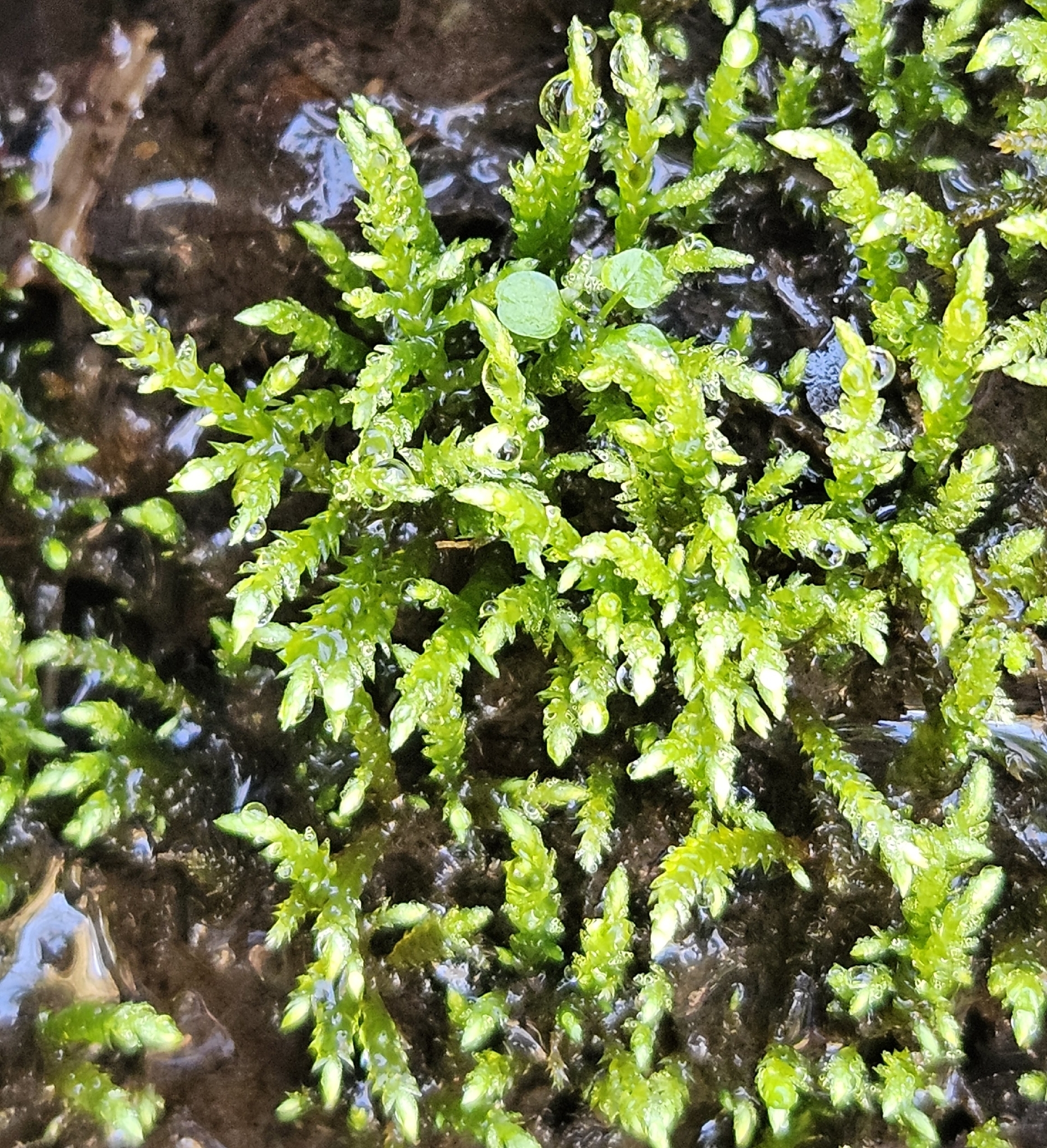
Photo could not load. Follow the source link below to view it.
Source-labelled species observation; identification not independently verified
Helen Waterman · CC BY 4.0 · Photo source
Saved locally for offline viewing.- Group
- Moss
- Record type
- species
- Water category
- Stream-margin / wet-woodland moss
- Submerged evidence
- Wet-margin occurrence documented; permanent culture unverified
- Emerged evidence
- Natural wet emerged habitat documented
- Suitability
- Specialist habitat-based trial; long-term mossarium culture unverified
- Published temperature tolerance
- Not established
- Published optimum
- Not established
- Published pH
- Not established
- Published KH
- Not established
- Difficulty
- Not established
- Growth rate
- Not established
- Origin / distribution
- Not compiled
Habitat and identification
Springs, runnels, wet ledges, stream boulders, carr and wet woods.
Often yellow-green with pinnate branching and distinct pale cells at leaf-base corners.
Identification and evidence limits
Similar to B. rutabulum; identification should be checked. No permanent-submersion culture evidence compiled.
Species name used by source; global accepted-name audit not performed
Mossarium application · inferred guidance
Use a moist bank, wetted rock or spring ledge, allowing ample growing room.
Care profile: Wet margin / intermittently flooded moss.
Not established from reviewed sources
Cultivated supply not checked; no wild-collection recommendation
Sources: S041 British Bryological Society: Brachythecium rivulare
M039 Yellow fringe-moss
Racomitrium aciculare
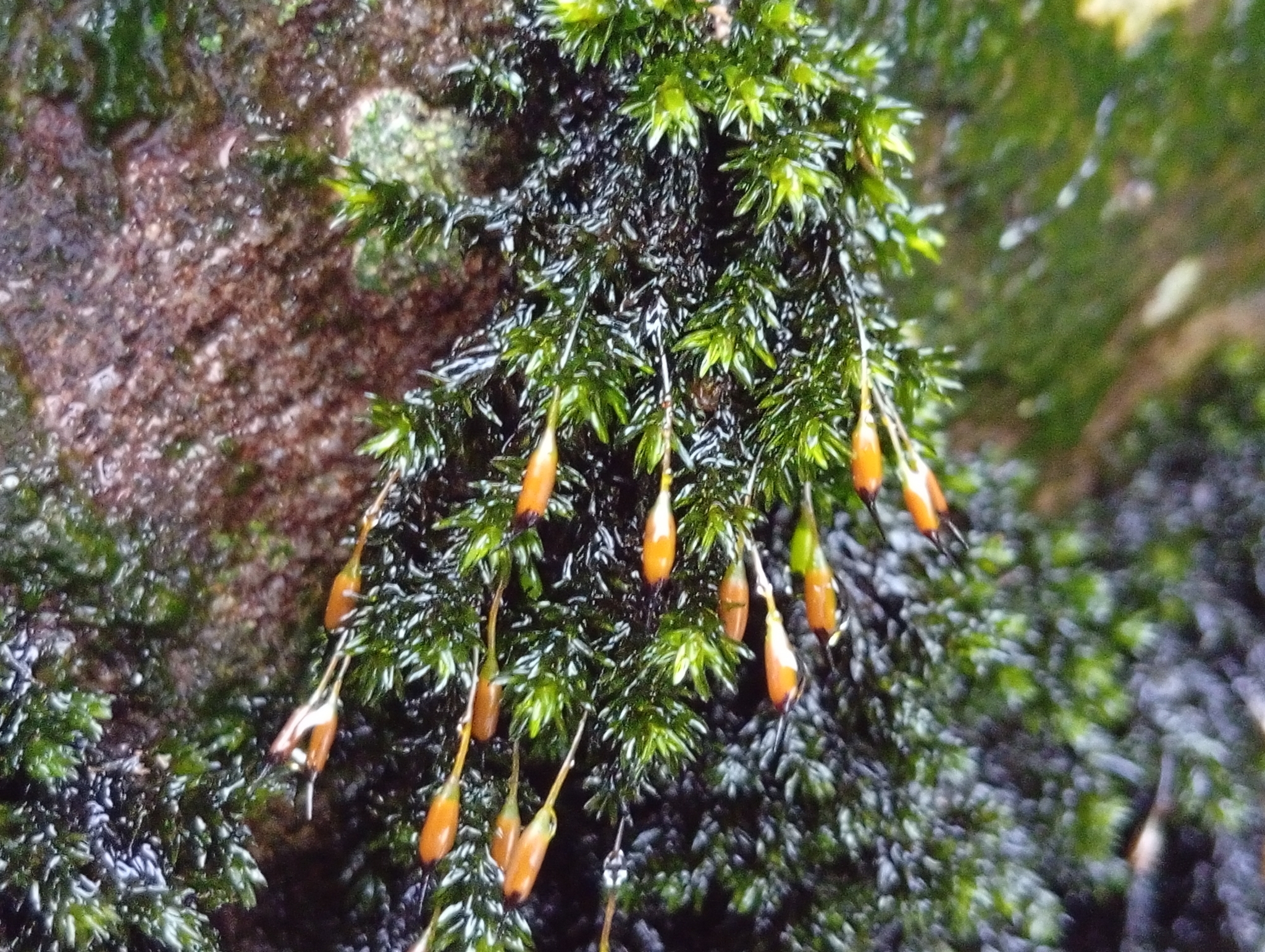
Photo could not load. Follow the source link below to view it.
Source-labelled species observation; identification not independently verified
Daniel Buczkiewicz · CC BY 4.0 · Photo source
Saved locally for offline viewing.- Group
- Moss
- Record type
- species
- Water category
- Riparian splash-zone moss
- Submerged evidence
- River-rock occurrence; permanent culture unverified
- Emerged evidence
- Natural wet emerged habitat documented
- Suitability
- Specialist habitat-based trial; long-term mossarium culture unverified
- Published temperature tolerance
- Not established
- Published optimum
- Not established
- Published pH
- Not established
- Published KH
- Not established
- Difficulty
- Not established
- Growth rate
- Not established
- Origin / distribution
- Not compiled
Habitat and identification
Wet noncalcareous rock, especially exposed tops of rocks in fast rivers.
Yellow-green to almost black shoots with blunt toothed leaf tips.
Identification and evidence limits
A river-rock species, not evidence for a permanently submerged tropical aquarium plant. Name follows guide.
Species name used by source; global accepted-name audit not performed
Mossarium application · inferred guidance
Use a cool wetted noncalcareous rock above the standing waterline.
Care profile: Wet margin / intermittently flooded moss.
Not established from reviewed sources
Cultivated supply not checked; no wild-collection recommendation
Sources: S042 British Bryological Society: Racomitrium aciculare
M040 Portuguese feather-moss
Platyhypnidium alopecuroides
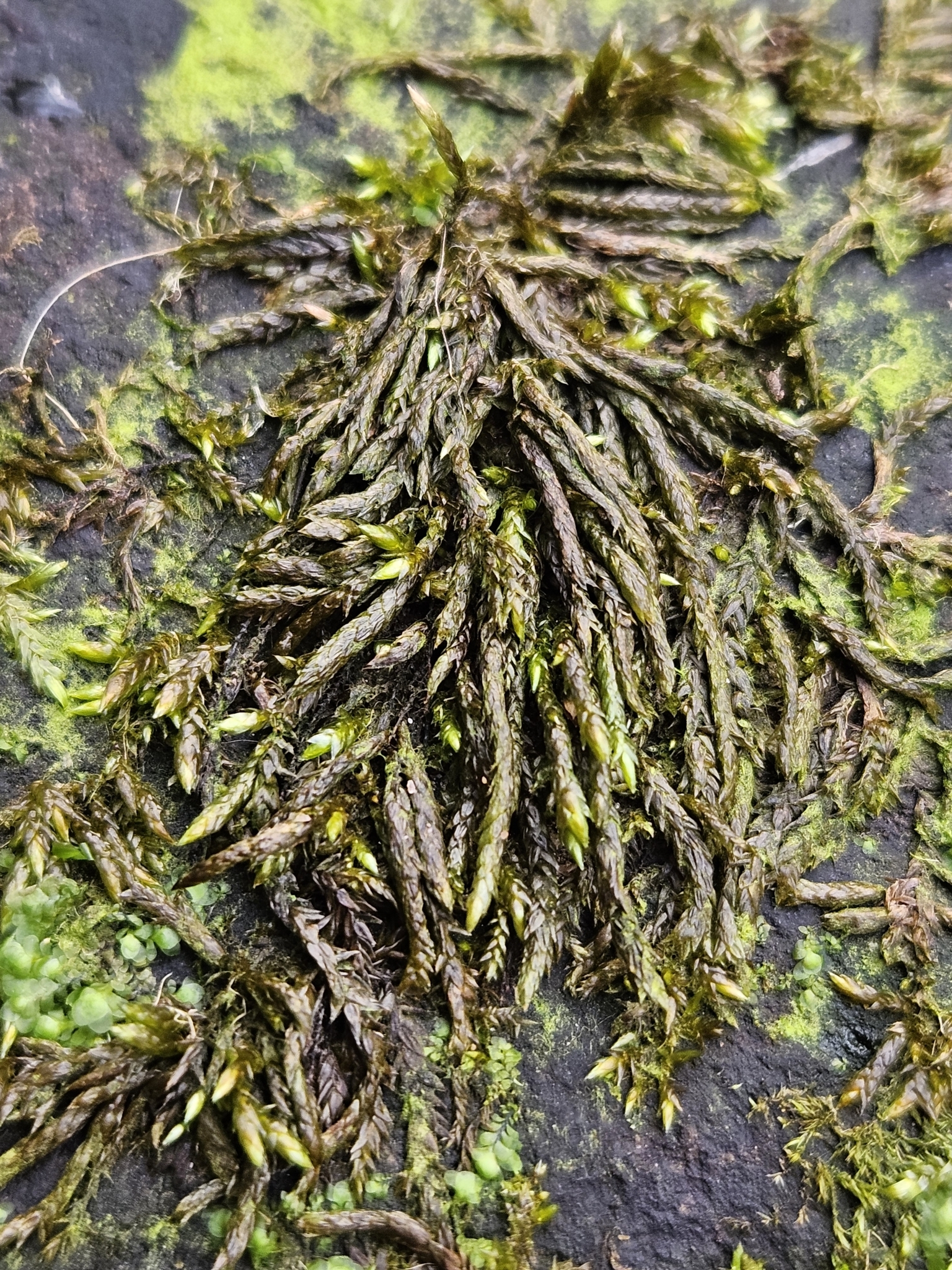
Photo could not load. Follow the source link below to view it.
Source-labelled species observation; identification not independently verified
Helen Waterman · CC BY 4.0 · Photo source
Saved locally for offline viewing.- Group
- Moss
- Record type
- species
- Water category
- Naturally aquatic stream moss
- Submerged evidence
- Usually submerged in nature
- Emerged evidence
- Culture not established
- Suitability
- Specialist habitat-based trial; long-term mossarium culture unverified
- Published temperature tolerance
- Not established
- Published optimum
- Not established
- Published pH
- Not established
- Published KH
- Not established
- Difficulty
- Not established
- Growth rate
- Not established
- Origin / distribution
- Not compiled
Habitat and identification
Clear fast streams on base-poor rock; avoids limestone and calcareous substrates.
Long sparsely branched cylindrical-looking shoots with concave overlapping leaves.
Identification and evidence limits
Guide describes usual submersion, but no hobby cultivation limits were reviewed.
Species name used by source; global accepted-name audit not performed
Aliases: Rhynchostegium alopecuroides (alternative botanical name in source); Platyhypnidium lusitanicum (alternative botanical name in source)
Mossarium application · inferred guidance
Use a cool fast-flowing noncalcareous rock section; keep experimental stock separate.
Care profile: Specialist stream or waterfall trial.
Not established from reviewed sources
Cultivated supply not checked; no wild-collection recommendation
Sources: S043 British Bryological Society: Platyhypnidium alopecuroides
M041 River grimmia
Schistidium rivulare
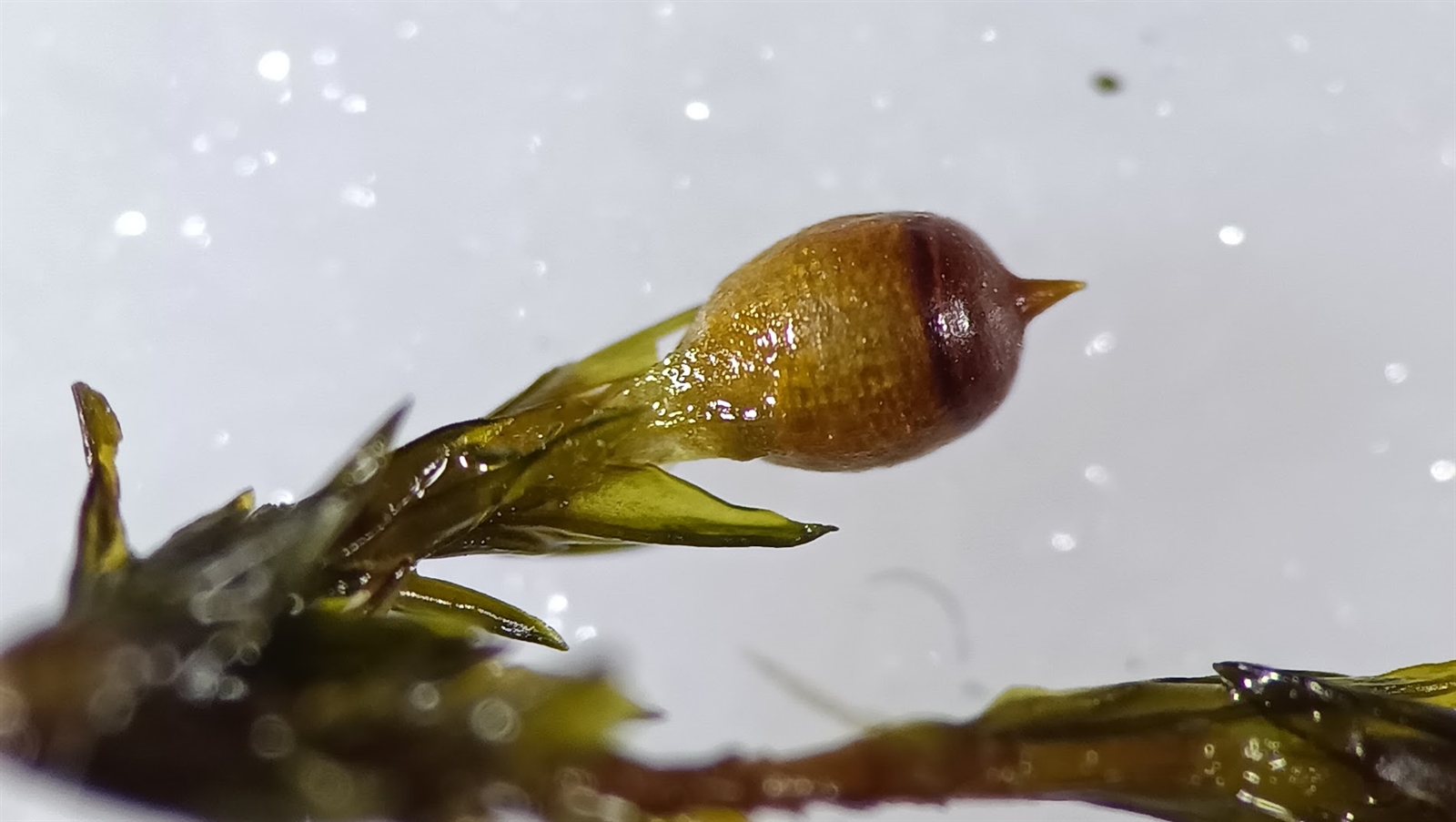
Photo could not load. Follow the source link below to view it.
Source-labelled Schistidium rivulare sporophyte detail; identification not independently verified
Jostein Elvestrand · CC BY-SA 4.0 · Photo source
Saved locally for offline viewing.- Group
- Moss
- Record type
- species
- Water category
- Intermittently flooded riparian moss
- Submerged evidence
- Seasonal submersion documented
- Emerged evidence
- Natural wet emerged habitat documented
- Suitability
- Specialist habitat-based trial; long-term mossarium culture unverified
- Published temperature tolerance
- Not established
- Published optimum
- Not established
- Published pH
- Not established
- Published KH
- Not established
- Difficulty
- Not established
- Growth rate
- Not established
- Origin / distribution
- Not compiled
Habitat and identification
Rocks, tree roots and wall bases in fast rivers, often the sheltered side of rocks.
Dark straggling shoots, no leaf hair-point, and short broad red capsules.
Identification and evidence limits
Typically seasonally submerged and higher in the flood zone than Fontinalis; not a permanent-underwater default.
Species name used by source; global accepted-name audit not performed
Mossarium application · inferred guidance
Use an emerged, wetted river-rock face with air exchange.
Care profile: Wet margin / intermittently flooded moss.
Not established from reviewed sources
Cultivated supply not checked; no wild-collection recommendation
Sources: S044 British Bryological Society: Schistidium rivulare
M042 Giant spear-moss
Calliergon giganteum
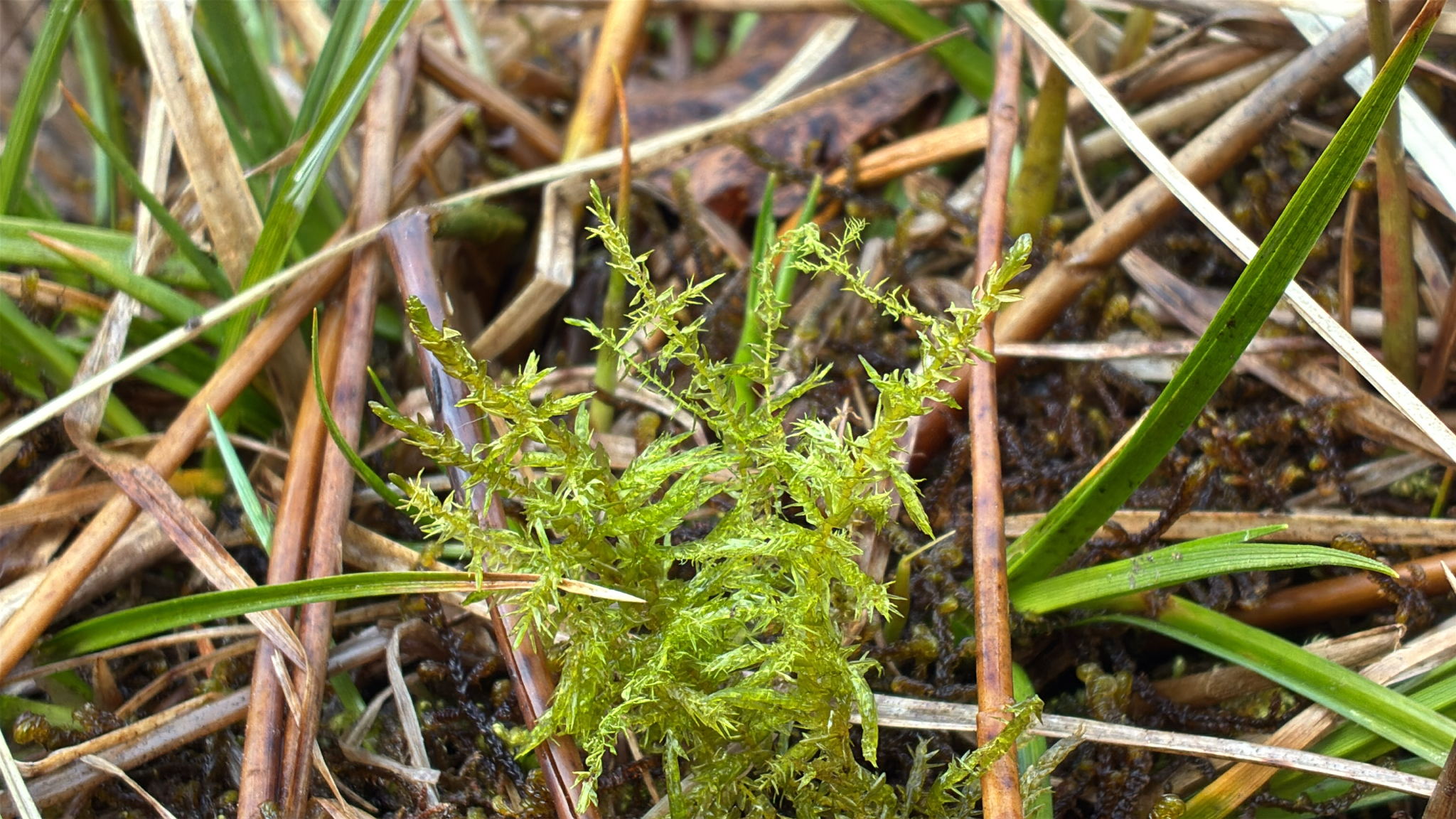
Photo could not load. Follow the source link below to view it.
Source-labelled species observation; identification not independently verified
Pia Stermann · CC0 · Photo source
Saved locally for offline viewing.- Group
- Moss
- Record type
- species
- Water category
- Fen / shallow-wetland moss
- Submerged evidence
- Lower shoots in water; complete long-term submersion not established
- Emerged evidence
- Natural wet emerged habitat documented
- Suitability
- Specialist habitat-based trial; long-term mossarium culture unverified
- Published temperature tolerance
- Not established
- Published optimum
- Not established
- Published pH
- Not established
- Published KH
- Not established
- Difficulty
- Not established
- Growth rate
- Not established
- Origin / distribution
- Not compiled
Habitat and identification
Wet calcareous fens and flushes, usually with the lower shoots in water.
Robust upright tree-like branching, blunt leaves with a strong midrib.
Identification and evidence limits
Feet in water is not proof of a fully submerged display. Guide describes the species as uncommon regionally.
Species name used by source; global accepted-name audit not performed
Mossarium application · inferred guidance
Trial a cool mineral-rich saturated fen compartment with room for tall shoots.
Care profile: Wet margin / intermittently flooded moss.
Not established from reviewed sources
Cultivated supply not checked; no wild-collection recommendation
Sources: S045 British Bryological Society: Calliergon giganteum
M043 Heart-leaved spear-moss
Calliergon cordifolium
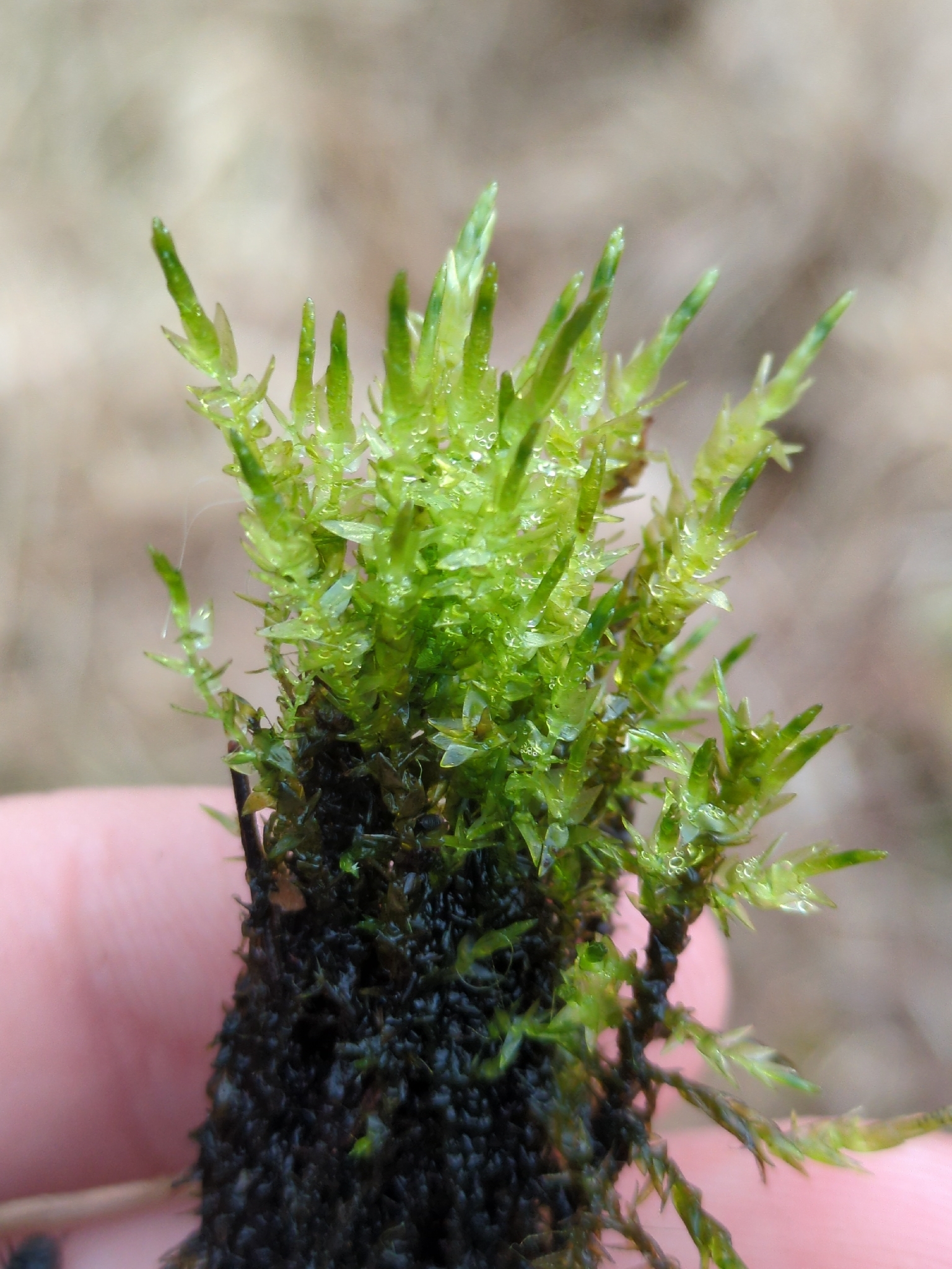
Photo could not load. Follow the source link below to view it.
Source-labelled species observation; identification not independently verified
Alexis Tinker-Tsavalas · CC BY 4.0 · Photo source
Saved locally for offline viewing.- Group
- Moss
- Record type
- species
- Water category
- Wet-woodland / marsh moss
- Submerged evidence
- Fluctuating-water habitat; permanent culture unverified
- Emerged evidence
- Natural wet emerged habitat documented
- Suitability
- Specialist habitat-based trial; long-term mossarium culture unverified
- Published temperature tolerance
- Not established
- Published optimum
- Not established
- Published pH
- Not established
- Published KH
- Not established
- Difficulty
- Not established
- Growth rate
- Not established
- Origin / distribution
- Not compiled
Habitat and identification
Swamp woodland, lake margins, ditches and wet hollows, often shaded and with fluctuating water levels.
Broad-leaved shoots with a strong midrib; less tree-like than C. giganteum.
Identification and evidence limits
Habitat can be nutrient-rich and mildly calcifuge; do not copy the calcareous recipe for C. giganteum.
Species name used by source; global accepted-name audit not performed
Mossarium application · inferred guidance
Use a shaded saturated margin rather than a deep-water planting.
Care profile: Wet margin / intermittently flooded moss.
Not established from reviewed sources
Cultivated supply not checked; no wild-collection recommendation
Sources: S046 British Bryological Society: Calliergon cordifolium atlas, S047 BBS: Calliergon cordifolium identification
M044 Olive bog-moss
Sphagnum majus
Photo could not load. Follow the source link below to view it.
Source-labelled Sphagnum majus habitat photo; individual shoots are not resolved
Theodor Korsgaard · CC BY 4.0 · Photo source
Saved locally for offline viewing.- Group
- Moss
- Record type
- species
- Water category
- Bog-pool margin moss
- Submerged evidence
- Pool-edge / soak occurrence; culture unverified
- Emerged evidence
- Natural wet emerged habitat documented
- Suitability
- Specialist habitat-based trial; long-term mossarium culture unverified
- Published temperature tolerance
- Not established
- Published optimum
- Not established
- Published pH
- Not established
- Published KH
- Not established
- Difficulty
- Not established
- Growth rate
- Not established
- Origin / distribution
- Not compiled
Habitat and identification
Lawns beside bog pools and in soaks; northern boreal and montane distribution.
Greenish or brownish bog lawns; field separation from aquatic relatives requires specialist keys.
Identification and evidence limits
Regional rarity in the atlas argues for cultivated provenance. Specific permanent-submersion culture evidence not compiled.
Species name used by source; global accepted-name audit not performed
Mossarium application · inferred guidance
Use a cool high-water-table bog compartment only if reliably identified propagated stock is available.
Care profile: Acid bog pool / saturated peatland specialist.
Not established from reviewed sources
Cultivated supply not checked; no wild-collection recommendation
Sources: S048 British Bryological Society: Sphagnum majus atlas
M045 Krabi moss
Vesicularia cf. montagnei “Krabi”
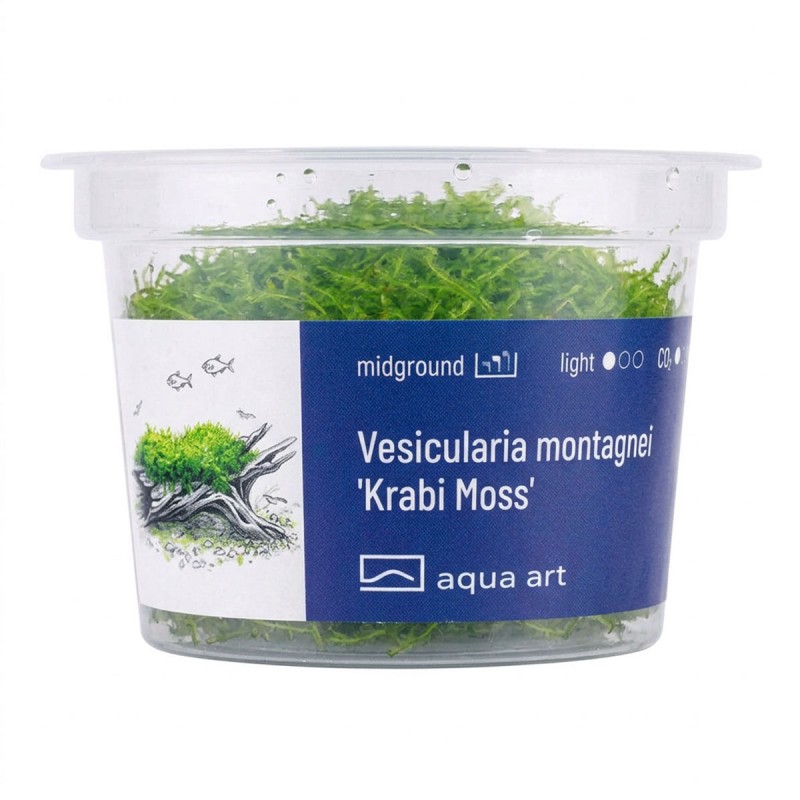
Photo could not load. Follow the source link below to view it.
Supplier-labelled Krabi culture cup; equivalence to the original Krabi culture unverified
GadziSklep / Aqua Art product listing; individual photographer not credited · Copyright retained; external reference · Photo source
External photo · internet connection required.- Group
- Moss
- Record type
- tentatively identified culture
- Water category
- Aquarium-capable amphibious moss
- Submerged evidence
- Documented aquarium culture
- Emerged evidence
- Not established in compiled evidence
- Suitability
- Established aquarium option
- Published temperature tolerance
- Not established
- Published optimum
- Not established
- Published pH
- Not established
- Published KH
- Not established
- Difficulty
- medium
- Growth rate
- slow
- Origin / distribution
- Southern Thailand
Habitat and identification
Reported from lakes near Krabi in southern Thailand.
Slow-growing hardscape moss in the catalog.
Identification and evidence limits
cf. means compared with, not confirmed as V. montagnei. Do not count it as another resolved species.
Tentative identification
Mossarium application · inferred guidance
Keep the provenance label and trial submerged hardscape placement; do not assume emerged performance from the tentative species name.
Care profile: Tropical amphibious hardscape moss.
Not established from reviewed sources
Trade name documented; current stock and local availability not checked
Sources: S049 Flowgrow: Vesicularia cf. montagnei “Krabi”
M046 Crystalwort
Riccia fluitans
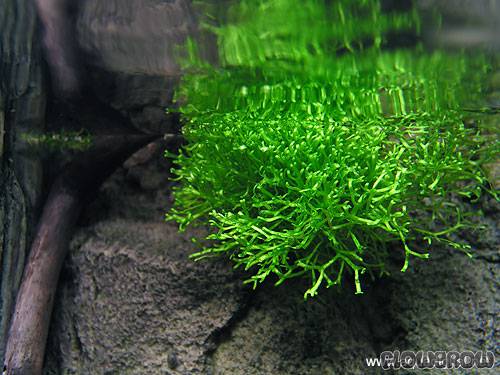
Photo could not load. Follow the source link below to view it.
Source-labelled species photo; identification not independently verified
Bjarne Sætrang (2004) · Copyright retained; external reference · Photo source
External photo · internet connection required.- Group
- Liverwort
- Record type
- species
- Water category
- Non-moss comparison
- Submerged evidence
- Aquarium culture documented for traded entity
- Emerged evidence
- Not compiled
- Suitability
- Comparison only; excluded from moss species count
- Published temperature tolerance
- Not established
- Published optimum
- Not established
- Published pH
- Not established
- Published KH
- Not established
- Difficulty
- Not established
- Growth rate
- Not established
- Origin / distribution
- Not compiled
Habitat and identification
Floating freshwater growth; also used restrained underwater.
Small branching thallus rather than leafy moss shoots.
Identification and evidence limits
A liverwort, not a true moss.
Species name follows source
Mossarium application · inferred guidance
Use as a floating or mechanically restrained aquatic liverwort, not as a naturally self-attaching moss carpet.
Care profile: Non-moss comparison entry.
Not established from reviewed sources
Cultivated supply not checked; no wild-collection recommendation
Sources: S050 Flowgrow: Riccia fluitans
M047 Mini Pellia / coral moss
Riccardia spp.
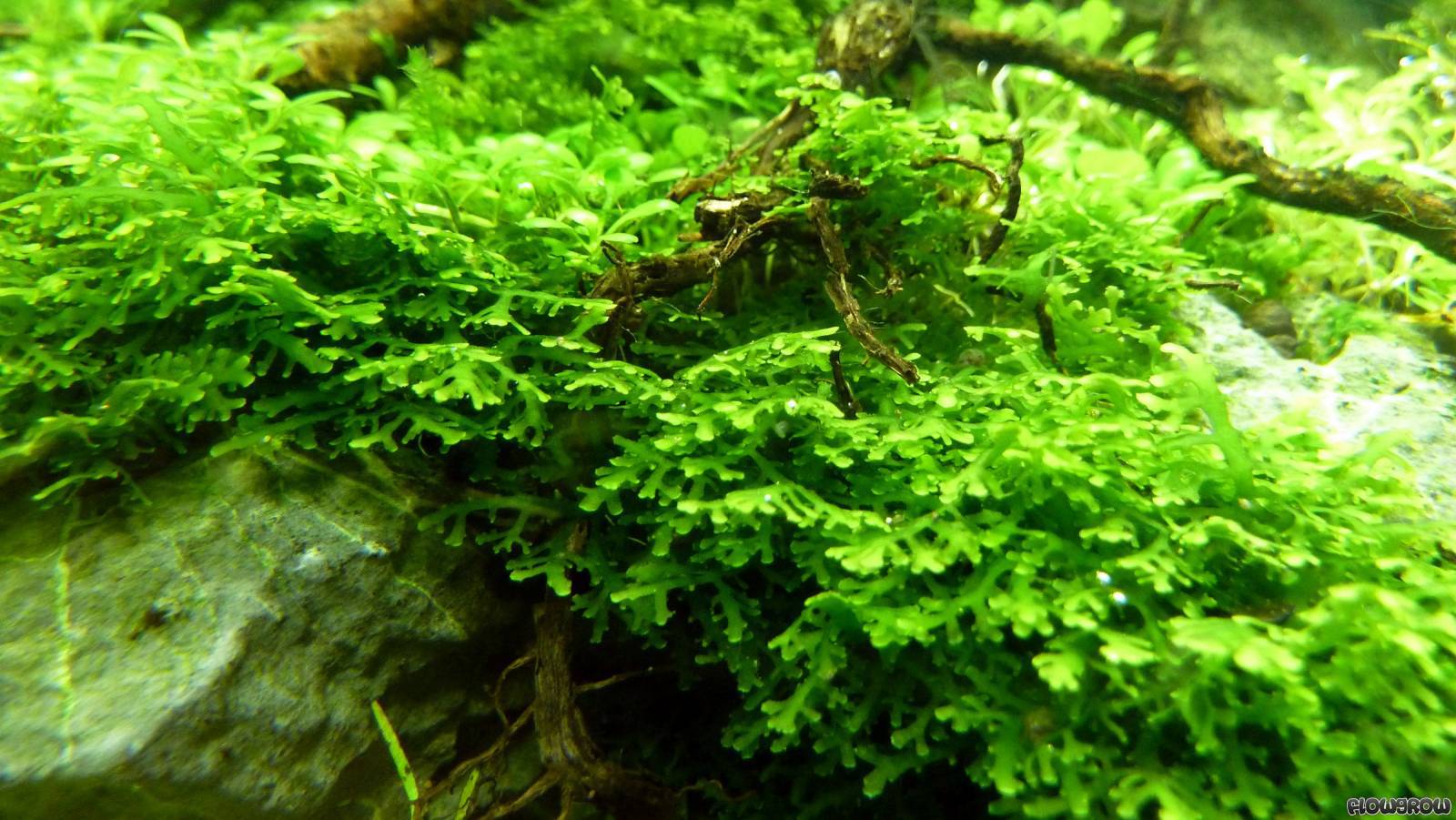
Photo could not load. Follow the source link below to view it.
Genus example: Riccardia chamedryfolia; not confirmation of the aquarium Mini Pellia species
Andreas Ruppert (-serok-) · Copyright retained; external reference · Photo source
External photo · internet connection required.- Group
- Liverwort
- Record type
- unresolved trade group
- Water category
- Non-moss comparison
- Submerged evidence
- Aquarium culture documented for traded entity
- Emerged evidence
- Not compiled
- Suitability
- Comparison only; excluded from moss species count
- Published temperature tolerance
- Not established
- Published optimum
- Not established
- Published pH
- Not established
- Published KH
- Not established
- Difficulty
- Not established
- Growth rate
- Not established
- Origin / distribution
- Not compiled
Habitat and identification
Aquarium cultures sold as several similar tropical Riccardia types.
Fine branching thallus with a coral-like appearance.
Identification and evidence limits
Common R. chamedryfolia labels do not establish species identity. Several Riccardia species circulate.
Species unresolved
Mossarium application · inferred guidance
Keep as a labelled Riccardia culture; do not report it as an identified moss species.
Care profile: Non-moss comparison entry.
Not established from reviewed sources
Cultivated supply not checked; no wild-collection recommendation
Sources: S051 Flowgrow: Riccardia spp.
M048 Pellia (trade name)
Monosolenium tenerum
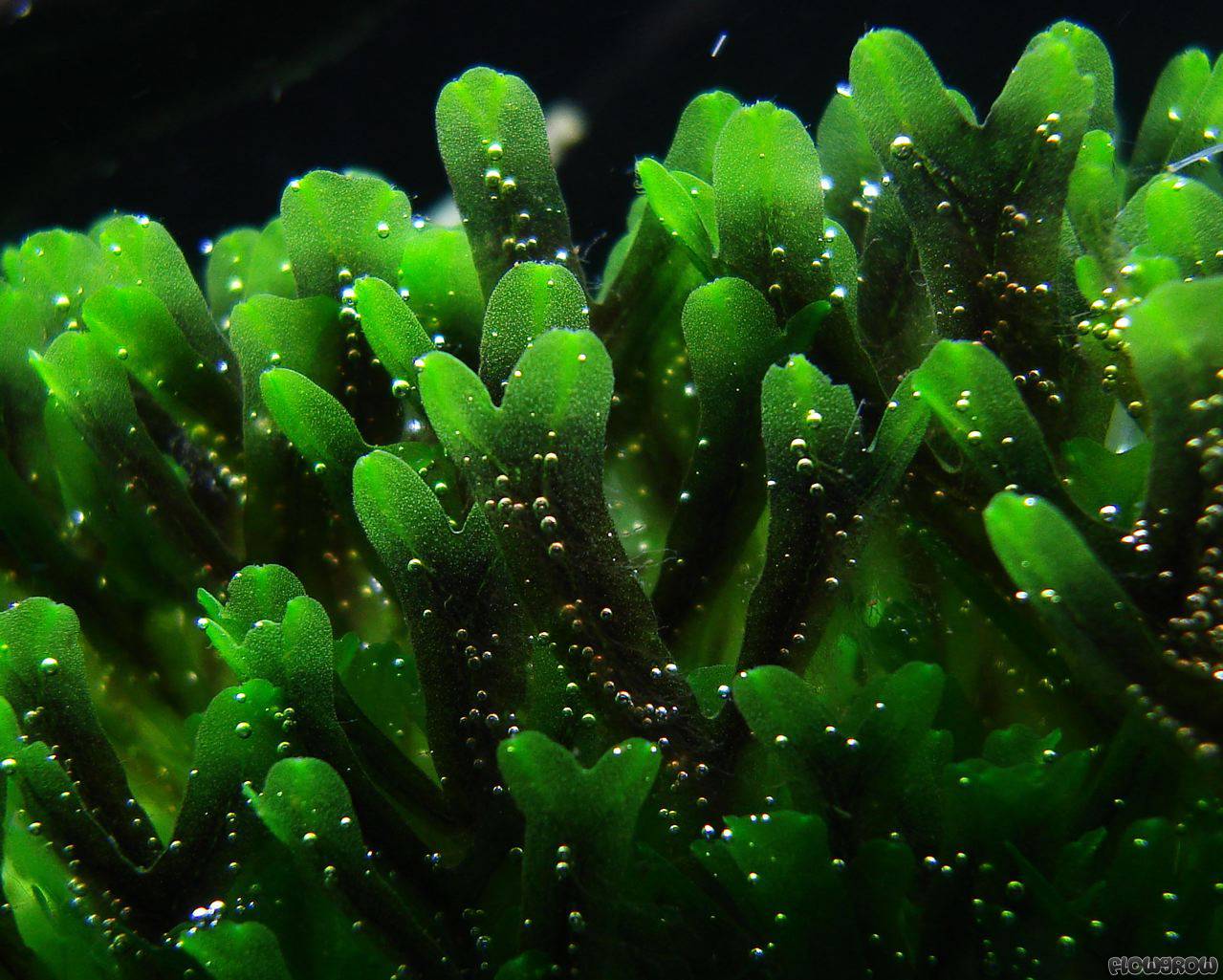
Photo could not load. Follow the source link below to view it.
Source-labelled species photo; identification not independently verified
Sabine (Bini) (2009) · Copyright retained; external reference · Photo source
External photo · internet connection required.- Group
- Liverwort
- Record type
- species
- Water category
- Non-moss comparison
- Submerged evidence
- Aquarium culture documented for traded entity
- Emerged evidence
- Not compiled
- Suitability
- Comparison only; excluded from moss species count
- Published temperature tolerance
- Not established
- Published optimum
- Not established
- Published pH
- Not established
- Published KH
- Not established
- Difficulty
- Not established
- Growth rate
- Not established
- Origin / distribution
- Not compiled
Habitat and identification
Aquarium-cultivated thalloid liverwort.
Forking ribbons with a midrib; thicker and more brittle than Subwassertang.
Identification and evidence limits
Trade name Pellia does not put it in that genus. Distinct from Lomariopsis gametophytes.
Species name follows source
Mossarium application · inferred guidance
Handle gently and restrain loose growth. Keep separate from true-moss selections.
Care profile: Non-moss comparison entry.
Not established from reviewed sources
Cultivated supply not checked; no wild-collection recommendation
Sources: S052 Flowgrow: Monosolenium tenerum
M049 Subwassertang / Süßwassertang
Lomariopsis cf. lineata
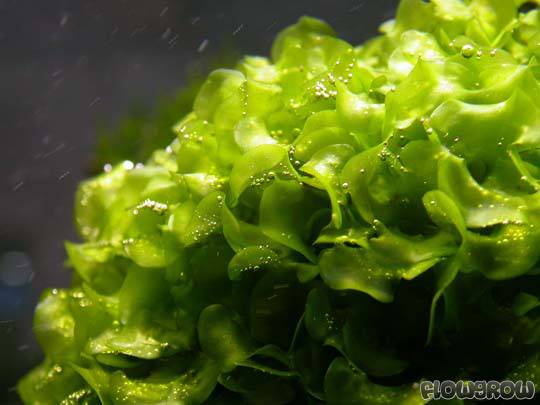
Photo could not load. Follow the source link below to view it.
Source-labelled aquarium fern gametophyte; species assignment remains tentative
Loh Kwek Leong (2006) · Copyright retained; external reference · Photo source
External photo · internet connection required.- Group
- Fern gametophyte
- Record type
- tentatively identified culture
- Water category
- Non-moss comparison
- Submerged evidence
- Aquarium culture documented for traded entity
- Emerged evidence
- Not compiled
- Suitability
- Comparison only; excluded from moss species count
- Published temperature tolerance
- Not established
- Published optimum
- Not established
- Published pH
- Not established
- Published KH
- Not established
- Difficulty
- Not established
- Growth rate
- Not established
- Origin / distribution
- Not compiled
Habitat and identification
Persistent aquarium fern gametophyte; natural origin of the introduced culture uncertain.
Thin translucent rounded thallus lobes without a midrib.
Identification and evidence limits
Fern growth stage, not moss, algae or liverwort. cf. lineata preserves uncertainty of species assignment.
Species unresolved
Mossarium application · inferred guidance
Can provide a submerged moss-like texture; label as a fern gametophyte.
Care profile: Non-moss comparison entry.
Not established from reviewed sources
Cultivated supply not checked; no wild-collection recommendation
Sources: S053 Flowgrow: Lomariopsis cf. lineata
M050 Marimo / moss ball
Aegagropila linnaei
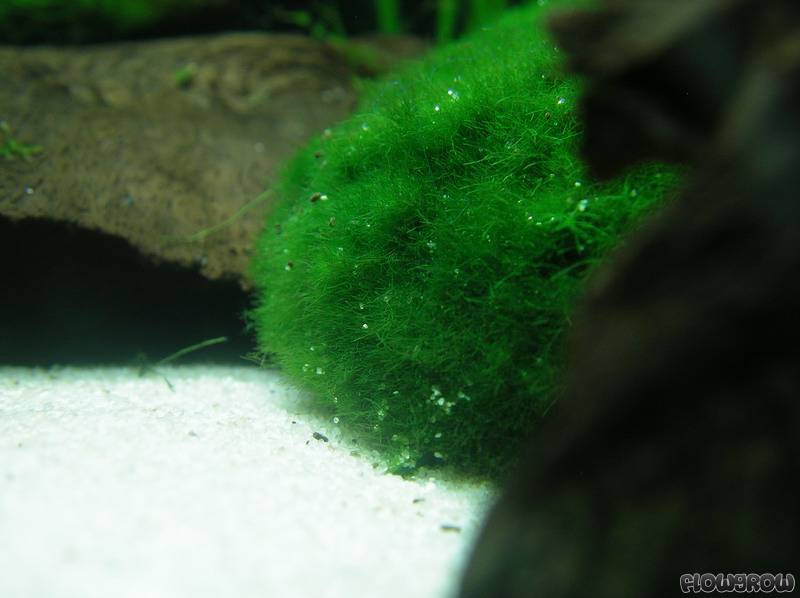
Photo could not load. Follow the source link below to view it.
Source-labelled species photo; identification not independently verified
orinoco (2007) · Copyright retained; external reference · Photo source
External photo · internet connection required.- Group
- Green alga
- Record type
- species
- Water category
- Non-moss comparison
- Submerged evidence
- Aquarium culture documented for traded entity
- Emerged evidence
- Not compiled
- Suitability
- Comparison only; excluded from moss species count
- Published temperature tolerance
- Not established
- Published optimum
- Not established
- Published pH
- Not established
- Published KH
- Not established
- Difficulty
- Not established
- Growth rate
- Not established
- Origin / distribution
- Not compiled
Habitat and identification
Freshwater alga sold as moss balls.
Filamentous green algal growth, often in rounded colonies.
Identification and evidence limits
Not a true moss. Buying a ball does not confirm identity or clean provenance.
Species name follows source
Mossarium application · inferred guidance
Keep out of the moss count; use a separate verified algal care and sourcing protocol.
Care profile: Non-moss comparison entry.
Not established from reviewed sources
Cultivated supply not checked; no wild-collection recommendation
Sources: S054 Flowgrow: Aegagropila linnaei
No records match. Try a broader term or reset the filters.